After finishing the work I wanted to do in the dining room, I had to do something that would trigger another inspection. My permit was due to expire October 8th and I needed to do something that would get the date extended. Whenever you get something inspected and checked off, it adds another six months to your expiration date. I could have returned to the master bathroom and started working on the shower pan, which would require an inspection, but that would be new work for me and I wasn’t sure how long it would take. So I decided to finish up the electrical and plumbing work in the kitchen, which I am comfortable with, wouldn’t take too long, and would culminate in an inspection. Once the inspection was completed (approved), I would be free to hang drywall.
That decision also had me thinking about postponing the work on the master bathroom until I have finished all the drywall in the kitchen and great room (and adjoining areas). With that done, the place would look almost livable. At least it would look less like a construction site, which would be kind of nice. I decided I’d make that call after I’d finished hanging the drywall in the kitchen. However, before I could start on any work in the kitchen, I first had to move the boxed cabinets out of the way. Hmm, where could they go? I know, how about the dining room!
Cabinets temporarily store in Dining Room
With the kitchen space freed up, the first thing I did was install the ice maker outlet box for the refrigerator.
Ice Maker outlet box – wide angle.
You can see from the water on the ground that I tested it. Zooming in a bit, you can see how the water line was secured. I added a piece of blocking between the studs to which I attached the 90 degree bracket.
Ice Maker outlet box – secured to stud and blocking.
And for good measure, here’s a closeup. I know I’ve overdone the pics on this simple task, but I took three, so I might as well show them.
Ice Maker outlet box – closeup.
After that I got busy installing new junction boxes for the wall oven/microwave combo unit, the cook-top, and the range hood. I also added blocking for the cabinets so that fastening the cabinets to the wall would be easier. Without the blocking, I’d be limited to fastening the cabinets to the studs, which offered a much smaller target. Here’s the result of the work.
Blocking and Electrical on East Wall of Kitchen
This was inspected and approved, so my permit date was extended and I was free to enclose the kitchen walls with drywall. So I filled the spaces with insulation.
East Wall in Kitchen Insulated
East Wall in Kitchen Insulated
This wall gets the morning sun, so that should keep the cool in during the hottest months.
Then came the drywall. You’ll notice in the images below that the drywall is purple-ish. This is due to a mistake when I purchased it. I was buying eight 4×8 sheets, so I asked the staff pull it and load it on the truck I rented. Consequently, I did not actually take the product to the cashier, who entered something different from what I intended. I discovered the mistake when it was being loaded, but since the price difference was almost none, I decided not to exchange it. So my kitchen has moisture resistant drywall instead of the usual, which is fine by me.
East Wall and Part of North Wall
East Wall and Part of South Wall
North Wall and Part of Wall Separating Kitchen from Great Room
Wall Separating Kitchen from Great Room
Of course, I did the other side of this wall too.
Great Room side of the separating Wall
With the drywall hung, it was time for another inspection, which went without issue. So I was cleared to start finishing the drywall. At the end of this stage I decided I would tackle all the drywall in the kitchen, great room, foyer, and guest hallway. So it’s going to be all about drywall for many weeks to come. This time, rather than providing the details of the process, as I did when showing the work in the dining room, I’m only going to show summary shots of the various stages. I’ll do that in the next post.
As described at the end of the last post, I decided to put the work on the master bathroom on hold and work on the dining room so that I could use it to store my wood flooring. The flooring will take up a fair bit of space, and since it will not be installed for a very long time, that space will not be very accessible during that time. Consequently, it made sense for me to finish that area before filling it up with the flooring material.
Since I had already prefilled, as mentioned in the last post, the next step was taping. Here are the results.
Dining Room Taped – facing east wall.
Dining Room Taped – facing north east corner.
Notice that the east wall of the foyer was also taped. I did this because I prefer to put the corner beads on last, wanting them to lie on top of the other tape. Since this wall intersects the north wall of the dining room, where a corner bead was going to go, taping that wall was a prerequisite.
Also notice the bulkhead that separates the dining room from the living/great room. There is a small gap between the drywall and the coffered ceiling. I haven’t decided yet how I’m going to address that interface. I have two ideas. The first involves simply putting up a modest trim piece; something that will close the gap between the drywall and the wood of the ceiling. Alternatively, I could use a “tear-away bead”. This required that I leave a small gap between the two materials (which is why the gap is there) into which a section of this bead will be inserted. The bead will butt up against the ceiling but leaving a small lip, allowing me to apply mud without getting it on the ceiling. After the drywall is finished, the small lip can be torn away, leaving a nice clean edge.
Tear-away Bead
I’ll probably explore the trim option first to see how it looks. The tear-away bead could look very nice, but I think it will be a challenge to get it just right. But I don’t have to make the decision for a long time, so it will remain on the back burner.
As usual, the next step was covering the tape. I will do two cover coats. Here is the result of the first one.
First Cover Coat
First Cover Coat – bulkhead
I also coated the ceiling, as it will be changed from knock-down texture to no texture (smooth). For the first cover coat over the tape, I used topping mud. For the first cover coat over the knock-down texture, I used the heavier all-purpose mud. Unlike topping mud, all-purpose mud has a stronger adhesion, which is required when covering a painted surface. For subsequent coats I used topping mud.
First Cover Coat- ceiling
I took a couple of weeks off in August to visit friends and family. When I returned I started the second cover coat. I also skimmed the ceiling; kind of a second cover coat. Here are some shots of that.
Second Cover Coat
Second Cover Coat – bulkhead
For the bulkhead, I actually did a rather heavy cover coat over the entire underside. It was a bit concave, so I wanted to flatten it out some. I’ll do more of that with the skim coats that will follow.
Also, notice how much wider the coating is for the lower joint versus the upper one along the long wall. I started the second cover coat with the lower joint along that wall and stacked two passes using my 14″ blade. This is normally how you would do it for a butt joint, where there is a need to spread the joint compound out over a wider area to lessen the hump. However, since this was not a butt joint (both edges at this joint are beveled), I overdid it. I decided it added no value, so I simply did a single pass with the 14″ blade on subsequent joints.
After a bit of sanding, I started the first of two skim coats. I covered all surfaces within the dining room, including the bulkhead and ceiling, but decided not to do the adjoining surfaces outside the dining room space, which included the great room side of the bulkhead, and the adjoining wall in the foyer. Although they were taped and a single cover coat was applied, I will address them fully when those areas are my focus.
First Skim Coat
After the first skim coat I did a light sanding then applied the second skim coat. In the end, the ceiling got two cover coats and two skim coats, or, arguably, one cover coat and three skim coats. I originally planned to do just a single cover coat of the ceiling followed by two skim coats, but added one more skim coat just to make it perfect, and I was glad I did.
Second Skim Coat
After the second skim coating was dry, I spent quite some time sanding in preparation for painting (primer). I was very happy with the results. It almost looks like it has been painted. Here are a couple of other shots.
Second Skim Coat – bulkhead and ceiling.
Second Skim Coat – bulkhead and ceiling.
Although it was ready for primer, I still had to add the crown molding. That was next. However, before I started on that I decided to pickup my wood flooring. Recall that it was the need for storage space for my wood flooring that motivated me to work on the dining room area. While working on it, I changed my mind about where I would store the flooring. Instead I decided to store it in the master bedroom. The walls and ceiling in that room were already primed and/or painted, so I would not need access to those areas for some time. Consequently, I decided to retrieve the wood flooring from where I purchased it before they started getting fed up holding it for me.
Rather than have the retailer deliver it to me, I decided to rent a truck and do it myself. Not only would it be less expensive, but there would be no need to schedule/wait on a delivery. So I drove over to HomeDepot and rented their flatbed truck. The retailer loaded the truck using a fork lift. There were two pallets. A total of 79 fifty pound boxes. I drove the truck home slowly because it was carrying a lot of weight. The clock was running on the truck rental, so I unloaded the boxes into the garage, and then returned the truck. When I returned, I moved the boxes from the garage to the master bedroom, where they will sit for a long time.
79 Fifty Pound Boxes
So I moved close to 4000 pounds, twice! I was happy to be finished with that job. Here’s a shot of one of the boards. It’s an engineered wood, white oak, that will be glued to the concrete slab.
One of the Planks
With that job out of the way I returned to the dining room and installed the crown molding. That was a bit of a job on my own. I ended up using the lift to get the first piece in place along the long wall. My joints were not as well done as the crown I put up in the coffers in the great room. That was because the spans were longer and I had mostly odd angles to work with. However, it turned out just fine after some lipstick was applied. Here are some shots of the dining room after the crown was installed and primer applied to all surfaces.
Priming Complete
Priming Complete
Priming Complete
Priming Complete
The last two images show off the crown a little better than the first two images. I don’t intend to keep the walls white and the ceiling will probably be a off-white. I haven’t settled on that yet. What you’re seeing now is just the color of the primer. Still, I think it looks quite nice. This is where I will leave it for now.
Although this was a diversion from the work on the master bathroom, I do not intend to return there for a while. I have a pressing need that requires I turn my attention to the kitchen, which I’ll discuss in the next post.
Before any shower walls go up, there is some preparatory work required. I added a nailer to the left side of the wall and, of course, the sound insulation had to go in.
Sound Insulation on Back Wall
Before putting up the Kerdi board, and in order to make tiling easier, I spent some time locating the high and low spots in the framing so that they can be compensated for. The idea is to make the walls as flat as I can so that I don’t have to struggle with undulating surfaces during tiling. To do this I employed a technique known as wet shimming. I discovered this online and thought it made good sense, so I gave it a go. The idea is to identify the parts of the studs that need to be brought out a bit and put thinset mud on them. Then, when applying the boards, you use a straight edge (my longest level) to press it into place. The thinset should collapse a bit under the pressure applied by the straight edge. I used the screws and washers to keep it in place, but did not secure them. That would be done the next day after the thinset had setup and was strong enough to maintain its shape.
Wet Shimming lower half of back wall
And here is the first Kerdi board set in place.
First Kerdi board in place
The next wall I tackled was the one where the shower head would emerge. It proved to be difficult because it was not at all flat.
Shower Head wall ready for Kerdi board
If you look closely, and at previous pics, you’ll notice that I removed a stud. That stud was severely bowed. I started by planing it, but that would have taken forever. After realizing it wasn’t supporting anything (no drywall screws on the other side), I pulled it out. I then cut it up into shorter pieces and straightened them on my little 4″ jointer to use them as nailers for the shower head wall. You can see them if you look in the corner. That made things much better. I still needed some wet shimming, but not too much.
The Kerdi board for that wall went up vertically, as opposed to how I did the back wall. Doing it this way meant less seems to address later.
Kerdi board on Shower Head wall
The wall with the mixing valve was next, along with the bits remaining on the top.
Kerdi board on all walls
Something I should have done before putting up the Kerdi board, was test the water connections for leaks. That was a silly mistake and one I won’t make when I do the shower in the guest bathroom. If there was a bad connection, I would have to pull off some of the Kerdi board to address it. So I attached a small bit of PEX to the drop ear elbow where the shower arm will go and hooked up the water lines. I turned them on and was happy to see there were no leaks. Actually, I would have been surprised if there had been any because I’ve never seen a PEX crimp connection fail. Still, it was a relief to see no leaks. You can see the makeshift shower head I created in the image below. I did this just before I started adding Kerdi band to waterproof the walls.
To waterproof the walls, all seems must be covered along with all fasteners and any other penetrations (intended or accidental). Kerdi band is applied much like drywall tape, except using a special Schluter thinset. I started with the horizontal seems.
Horizontal seems and some squares
For the shower head wall, which is the shortest length wall, I decided to use a full length of Kerdi band rather than cutting little squares. I did this because I saw it done online and thought it would be a good idea. For the longer back wall, I did it the usual way by covering each fastener separately with a square piece of Kerdi band. After trying both, I actually preferred doing the little squares. It seemed easier to me, and faster. Perhaps with more experience I will change my mind. After this, the thinset I mixed up ran out, so decided to call it a day.
The next day I tackled the inside corners, including one vertical and the three that meet the ceiling.
Inside corners and more squares
Once again, I didn’t mix up the right amount of thinset, so I ran out before completing the job. You can’t store thinset, so you have to guess how much you’ll need. Mixing it up is a process. You have to get the ratio right and then it takes 5 minutes of continuous mixing, followed by 10 minutes to let it “slake”, then another 3 minutes of mixing. And you can’t just put the new stuff in the bucket with the remains of the old stuff you just used, like you can with drywall compound. So cleaning up is also a process. It’s not just about cleaning the mixing bucket, but also the tools have to be cleaned, and the dirty water used to clean everything needs to be disposed of outside so it doesn’t mess up your drains. Consequently, I only want to do the cleanup at the end of my day. So when I ran out of thinset this time, with time still left in the afternoon, I bailed out and decided to do the cleanup and then head home rather than mix up another batch.
The next day I replaced my makeshift shower head with the real thing, since that opening would need to be waterproofed too. In doing that, I ran the water again to make sure there was no leak between the shower arm and drop ear elbow in the wall. Even though I placed a bucket under the shower arm, there was still some spillage. You can see evidence of that by the water in the pan area.
All walls done
With that done, I added the remaining Kerdi band, finishing up with the two circular pieces: one around the mixing valve, and the other around the shower arm. Further waterproofing will be needed between the walls and the shower pan, once installed. But I won’t do that until the walls and ceiling in the bathroom are skim coated and primed. I’ll also wait until the ceiling is painted; not only to eliminate the risk of spilling anything on the shower pan, but also so that I don’t have to put a ladder, or whatever else I need to reach the ceiling, on the shower pan. Once the shower pan is in and waterproofed, it will need to be guarded to ensure nothing punctures it until the tile is in.
Before starting the first skim coat on the ceiling, I had to cover coat the Kerdi band between the shower and the drywall, which included the ceiling. I used all-purpose mud for that. After that dried, I applied the first skim coat to the ceiling.
First Skim Coat Ceiling – above shower
First Skim Coat Ceiling – rest of Master Bathroom
As with the other rooms, I give each new surface (walls and ceilings) two skim coats before primer and paint. I let the first skim coat dry overnight then gave it a light sanding before applying the second skim coat.
After the first skim coat I discovered an issue. Before leaving for the day, I decided to take my 6.5′ level and check for flatness along the walls. The long wall where the vanity will go was not at all flat. It was quite wavy, actually. For some reason I never thought to check for that before hanging the drywall. It would have been at that time when I could have easily corrected for it. In one area it was 7/16th of an inch out. This would be evident once the vanity was in place and the backsplash installed, so I had to do something to even it out. This meant “mud framing”, which involves adding a ton of mud to make up the difference.
I started by simply applying all-purpose mud to the low spots to build them up. With such an amount of mud, it would take a couple of days for it to dry before I could put another layer on. So I decided to switch to hot mud, which would dry in a matter of hours. Also, I decided that rather than just slap it on and slowly build it up, as I started out doing, it might be a good idea to create “mud ridges”; a term I just made up. The idea is to just put down mud in the deepest troughs and use a straight edge as a screed to flatten the ridge relative to the higher parts of the wavy wall. They look like this
Mud Ridges
Mud Ridge closeup
In the closeup you can see how thick the mud is. That is how much was required to bring it up to the level of the adjacent parts. Once that dried, I would use it and the other end of the wall that were at the same level to support the screed and even out the mud.
Creating these mud ridges didn’t take long, so I had to find something else to do while I waited for them to dry. I could have started the second skim coat on other parts of the bathroom, but I’d just ordered a set of skimming blades by a company called Level-5, and wanted to wait for them to arrive. So I decided to do some prefilling of the drywall I installed long back in the guest hallway and elsewhere.
Guest Hallway Prefilled
Foyer Prefilled
Dining Room Prefilled
The next day I returned to the master bathroom to build up the recesses in the vanity wall to meet the mud ridges. I used 90 minute hot mud.
Building up the recesses
As you can see, the mud ridges are no longer obvious. The surface is still pretty rough, but improving. At this point I just had to let the mud dry overnight before checking for flatness. Even though I used 90 minute mud, it was put on quite thickly, so it would take some time to dry. I didn’t expect it to be flat yet. I just wanted to see evidence that I was getting closer.
My fancy skim blade set arrived.
Level-5 Skimming Blade Set
The longest blade in this set is 32 inches. My hope was that it would speed up the skimming process and provide me with nice flat surfaces. I tried using them on the wavy vanity wall as I continued to fill it, but they didn’t help much. I think they are best suited to skimming walls that area flat to start with. So I ended up building up the wall using my 14″ blade (not part of this set) until it was close enough. Eventually I got it to a point where it was far from flat, but good enough that it shouldn’t be obvious with the vanity and mirror in place, which is all I ask.
I then proceeded with skim coating the walls. As usual, I did two skim coats and it resulted in this:
Second Skim Coating
Second Skim Coating
In the images above, it not only received two skim coats, but also was prepped (i.e., sanded) for primer. It almost looks like it has been painted, except you can still see some of the blue drywall color in places. I was pretty happy with the result. Definitely a level 5 finish.
The next few days was all about priming and painting. As with the master bedroom, I primed all surfaces with a single coat, then applied two coats of paint to the ceiling. I will leave the walls with only primer for some time. I’ll probably do the final painting just before I’m ready to put the flooring down. Following are images of the walls and ceiling after priming and painting. Because the walls are still to be painted, I did not mask them off when painting the ceiling, letting the ceiling paint get on the walls at the junctions.
Entrance Hall Primed and Ceiling Painted
Entrance Primed and Ceiling Painted
Entrance to Shower
Shower Area
Main Area of Master Bathroom
In the image above you can get a sense of how the vanity wall came out. It looks fine to the naked eye. Let’s hope it remains so once the furniture is in place. Also, the walls look a bit streaky in the picture above. They are not. That is just some light reflection. The primer on the walls looks good and consistent.
Outside of Toilet Alcove
Inside Toilet Alcove
Inside Alcove showing Ceiling Painted
At this stage I am ready to put the shower pan in, but that will be put on hold until I address something else. I ordered my wood flooring quite a while ago, thinking I would need it by the fall. The company I purchased it from was willing to hold it that long, but after doing some estimating, it is clear to me that I won’t be ready for that for a very long time; well into next year, given my pace. As a result, I am going to have to find space in the house to store the flooring, since they will grow impatient with me after the fall. I’ve decided to store it in the dining room. In general, I’d like to have all the painting (walls and ceiling) done before the flooring goes down to avoid the need for drop cloths. However, once the flooring arrives and is stored in the dining room, it will seriously limit access to that area. So I’ve decided to finish the walls and ceiling in that area before the flooring arrives. I’ll return to the master bathroom once that is done. In the next post I’ll be covering the work in the dining room.
Continuing with the master bathroom, I hung more drywall. I started with the ceiling on the other side of the door. While technically not part of the master bathroom, I’ve decided to include it here because it is the hallway to the master bathroom and I will be working that area at the same time.
Hallway Ceiling to Master Bathroom Hung
Above you can see where the new attic access will be. I haven’t decided yet if I’ll have drop down ladder or simply put a cover that can be pushed up and out of the way so that a ladder can be put in place. More research will be required for that.
With the ceiling out of the way, I could start working on the walls. Walls are far more “fun” than hanging drywall on the ceiling, so it was nice to be able to graduate to the walls. I started with the west wall, which is an exterior wall. As usual, the insulation went in first and then I started hanging the boards.
First Sheet on West Wall
West Wall Hung
This was the easiest wall to work on because it was straight and required no cut-outs.
Before hanging drywall around the toilet alcove, I had to fasten the water supply line. I picked up some dedicated hardware for that.
Toilet Supply Line Fastener
I like this because it did not require a 90 degree connector. I could simply bend the PEX 90 degrees and fit it to the metal bracket. I also added supports for the rest of the line as it rose to the ceiling.
Supply line fastened to Stud
After adding a couple of staples to keep the wires from the switch box together and secured to the stud, I put up the drywall around the outside (only) of the toilet alcove.
Outside of Alcove Hung
Before enclosing the electrical in drywall, an inspection was required, so I turned my attention to preparing for that. This meant securing any wiring I hadn’t and adding the required spray foam in the openings where the wire enters from the attic, which acts as a fire block. I also secured the water supply lines to the vanity, which I show below.
Vanity Supply Lines Fastened
Here’s a closeup.
Closeup of Supply Lines fasteners for Left Sink
I scheduled the electrical rough in inspection on the weekend, so I had some time to wait for that, so I started hanging drywall in the places where I do not need pre-approval. This meant I could start on the entrance to the master bath and just inside the master bath.
Left side of Hallway
Below I show a picture of the work in progress just so you can see that I have added sound insulation.
Right side of Hallway in Progress
Right side of Hallway Complete
Other side of Hallway Entrance
In the image above you’ll notice that I used some of the left over pieces I had of the water resistant drywall (blue). They were a suitable size, so I used them. I try to use as many of the off-cuts of drywall as I can. I have many hanging around, so I always look for opportunities to use them before cutting up a fresh sheet.
While working on the area I’m showing above, the inspector came and gave me the green light, so I was free to cover the rest of the master bathroom walls. Ideally I’d have started work on the shower, but the materials I ordered still hadn’t arrived, so I pushed on hanging drywall. The toilet alcove was next. As usual, I added sound insulation first. Very important in this area ;-).
Walls of Toilet Alcove Insulated for Sound
Even though the toilet alcove is not fully enclosed (no door), adding the sound insulation does make a difference. It noticeably deadens the sound. The drywall was added next.
Alcove Drywall Hung
The next day, my kitchen cabinets arrived!
Kitchen Cabinets in Garage
But there is an unfortunate story behind this, so we’ll take a bit of a detour before returning to the work in the master bathroom.
I first purchased cabinets from Chris Haley in December of 2019. I have referred to Chris on multiple occasions in much older posts. I paid in full for the cabinets and the installation. When Covid became an issue a few months later, I stopped work on the house. I contacted Chris and asked him to have the cabinets delivered. I wanted store them in the house because I didn’t want the order just hanging out there indefinitely. I didn’t know when I would resume work on the house. He was adamant that I not do that because of warranty issues, and that it was best to leave them in the warehouse of the manufacturer. So I took his advice and backed off.
It turned out that Chris’ insistence was really due to the fact that he never ordered the cabinets. When the time came to have them delivered, he stopped communicating. I could not reach him via phone, text, nor email. He blocked me. I did have one avenue open to me and that was via the fellow who he worked through to order cabinets. His name is Jared and just happens, by coincidence, to be someone I know. We used to work at the same company and had come to know each other from our mutual interest in working out. It was just a fluke that I discovered his relationship with Chris. One day Chris learned where I used to work and mentioned that his supposed “silent partner” Jared worked there too. When he told me Jared’s full name, I exclaimed “I know him!”. So that was kind of cool. Of course, this was way back before I knew Chris hadn’t ordered the cabinets. Jared was an engineer, but did this cabinet thing as a side hustle. It was only through Jared that Chris was able to get cabinets. So Jared was important to his business.
I hadn’t spoken with Jared in years, so when I could not get in touch with Chris, I contacted some former colleagues and they were able to put me in touch with Jared. My subsequent conversation with Jared made it clear to me that Chris never ordered the cabinets. Jared explained that no manufacturer would store cabinets for very long, let alone years. He was of the opinion that Chris could not have ordered them. Jared also tried to contact Chris, but he too had been blocked. It wasn’t quite as simple as this. It happened in stages, but I won’t bore you with the details. The bottom line is that I am no longer in contact with Chris and the money I gave him.
Fortunately, Jared did me big favor. Although he had nothing to do with this fraud, he volunteered to allow me to purchase the cabinets I wanted through him at his cost. That was very nice of him and I was very thankful for his help. We spent an afternoon at his house going over my order and he was able to steer me in the right direction. He was also able to speak directly with the delivery driver and the cabinets were delivered directly to my house. Normally they are delivered to Jared’s warehouse where I would have to rent a truck to pick them up and drive them to the house. So, despite being ripped off, my experience with Jared made this a whole lot better. Thank you Jared! Jared has since shut Chris off. Chris is no longer able to order cabinets through Jared. We both do not know what he is up to. I decided not to take legal action because it would mean more expense and effort that would likely not result in any benefit. I’m quite sure Chris doesn’t have any money, so would likely just declare bankruptcy. I mentioned the incident in a review on his web site and decided to move on.
Although I may never know, I don’t think Chris originally intended to rip me off. I suspect that when he cashed my check at the end of 2019, and knowing I would not be needing the cabinets for some time, figured he had plenty of time to place the order. That money should have been sitting in a separate business account, but I bet he wasn’t that organized. So it was probably just a pile of money available to him. He probably had some more pressing financial issues/desires at hand and used the money for them. After all, he kept in touch with me for more than three years, so he probably figured he’d come up with the money when needed (Charles Ponzi would relate). When time ran out, he just ran away, so to speak.
So that is the background and I am pleased that I now actually have kitchen cabinets. I’ve since moved the cabinets into the house to store them in an air conditioned space. I gave them a quick inspection and they looked fine. I’ve left them in the boxes to keep them from harm and then got back to work on the master bathroom.
Returning to the main thread, i started work on the vanity wall by first adding sound insulation.
Sound Insulation added to Vanity Wall
Lots of nooks and crannies, so this was a bit of a chore. Since this wall backs onto the guest bedroom, it was important to add the sound insulation. This will also be added, and probably most importantly, to the area around the shower. The first board I added was the one that will be right beside the shower, so it was a moisture resistant board.
Blue board adjacent to Shower
Unlike most of the boards I hang, I put this one up vertically. I did this because there was a pair of studs on the left edge where I could fasten it and retain the bevel (i.e., no trimming). But I also liked the idea of having no seem to tape, except up high, where there is unlikely to be any risk of splashing. It probably doesn’t really matter, but that is why I did it. The rest of the wall was hung in the usual manner.
Vanity Wall Hung
I used regular drywall for the area further from the shower. Being far enough away from the shower, I didn’t think there was a need for the moisture resistant variety. I used some of the off-cuts of the blue board to cover the small area up top.
The wall adjacent to the shower entry was also hung using the blue board, since it too is subject to splashing.
Entry to Shower
I figured that after hanging the drywall, I would start working on the shower, but the Schluter products I ordered had still not arrived, so I pushed on with prefilling the gaps in preparation for taping.
Prefill – Entry
Prefill – Vanity Wall
After some light sanding, I moved on to taping.
Entry Hall
Vanity Wall and Ceiling
Toilet Alcove
Entry to Shower
While this was being done, I picked up the Schluter shower system materials and the floor tiles. But I didn’t just switch to working on the shower. Instead, I decided to continue with the drywall and take it further, adding two cover coats over the tape.
Toilet Alcove
Vanity Wall
Inside Toilet Alcove
Shower Entrance
Entry Hall
After the cover coats, I would normally start the skim coats. However, I decided I would leave that until the shower had been waterproofed. The waterproofing would have to interface with the drywall I just coated, and that interface will require a kind of taping that will overlap with the drywall. So I did not want to apply any finishing coats only to have to redo it at that interface. In preparation for hanging the Schluter Kerdi boards around the shower walls a few things would have to be done. The first was to hook up the shower valve and add water hammer arrestors.
Shower Valve hooked up
This was done on the last day of June. Tomorrow, I start putting up the walls around the shower. But that will be chronicled in my next post.
As I did in April 2023, I divided my time between work on the master bathroom and kitchen. Just like last month, I’ve created two separate posts. The work in May started in the kitchen, so it’s best to start with that post. Within it I’ll mention when I switched to working in the master bathroom, which you can choose to jump to if you wish to follow the sequence. I also mention in this post when I switched to working in the kitchen.
The vanity arrived as expected and was deposited in my garage.
Vanity Delivered
It was a really large box, requiring two skids to transport it. I left it sitting for a day as I was still working on the kitchen drain and water lines in the trench. When I finished with that and had a day to wait for the inspector, I turned my attention to this. I started opening it and discovered this defect right away.
Finish messed up on Leg
I immediately stopped unpacking it due to the possibility for the need to return it. I sent the picture you see above to the place I ordered it and waited to discover how they wish to deal with it. My preference was to have someone come out and refinish that part. That this was damaged was not a major concern for me because I won’t be installing it in the bathroom for a long time. What I was really after were the measurements, which I was able to get with the vanity sitting where is was.
With the knowledge of where the sinks were with respect to the center of the vanity, and the size of the opening in the back I had to work with, I was able to relocate the drain for the left sink (the drain for the right sink was fine as it was). This required I cut off the drain that needed to be extended and cut notches into the studs in the wall to make room for a longer drain pipe.
Here is the drain before cutting began.
Left Drain Pipe before cutting.
And here it is after cutting.
Making space for a longer Drain Pipe
You can see that there are a lot of studs in this wall. I’m not entirely sure why so many were added. I suspect it was due to the fact that many of them have great big notches in them to make room for the drain, so they added more for reinforcement, but this is not a load bearing wall, so it seemed like overkill. Nonetheless, I had to add more notches to make room for the extended drain pipe. I used my SkilSaw and a hammer and chisel to create the notches. In the process, one of the lower sections below one of the notches no longer had any support to I just pulled it out.
I added the new section along with nail plates to protect it.
Drain Extended
With that done, I returned to working in the kitchen. The inspector gave the thumbs up with respect to the drain placement in the trench and gave me some advice regarding how to run the electrical wires, so I got to that next. I continued work in the kitchen until after the trench was refilled with dirt. I then had to wait for the pest control guy to spray for termites, so I returned to the master bathroom and began pulling the water lines down from the ceiling.
This required some rerouting of the PEX in the ceiling and I had to move some of the support clamps I fashioned. Here is the setup in the attic before I decided to relocate the vanity.
And here it is now.
New Routing of Water Lines
In the image above, the two lines on the far left are what were originally intended for the bathtub. Since they are no longer needed, they are just pushed off to the side where they will not be in the way when I need to move around up there.
Below I am showing the where this run of four lines head down into the wall where the vanity will be located.
Routed down into the Wall
And here they are at their final destination. These four lines will enter the back of the vanity and be hooked up to the faucets.
Vanity Water Lines in place
After preparing the trench in the kitchen for the pre-pour inspection, I unpacked the vanity. I was asked to fully unpack it by the vendor in order to determine if there were any other issues with it. There was another problem, which I’ll get to in a moment. Having unpacked it, I moved it into position, which you see below.
Vanity in Position
I put the marble top elsewhere because it is so heavy and was not needed to give me a sense of how the vanity would look in place. I will use this to help me decide where to place the electrical boxes.
With the vanity in position, I discovered a problem with the door under the sink on the right.
Damaged Door
I notified the vendor and recommended they simply send me another door. This thing is very difficult to move, so I don’t want to have to move it out of the house and bring another one in. After some back and forth we decided to simply return this one and replace it with another, hopefully undamaged, sibling.
After filling the trench in the kitchen, I turned my attention to the shower in the master bathroom. I hadn’t yet decided what shower system I would be using. I first wanted to have a good look at the existing drain situation, so I cut out a section for the shower pan to have a look.
Original Drain Flange
In the image above, I have already removed the drain that screws into the flange you see. Of note is how the screws are rusted. That tells me that water was getting in there, which is not what you want. So I decided to remove all the drypack mortar in the shower pan to get a closer look at what is going on.
The shower pan sits on top of a recessed portion of the concrete slab. The shower pan is then built on top of this recessed part of the slab using a much drier sand and concrete mix (mostly sand). This mix is often called deck mud or drypack mortar. It is much more malleable than the concrete used for the slab, so it can be shaped more easily to form a slope from the edges of the shower pan to the drain. It dries hard, but is not as strong and the slab. It is sufficiently strong for a shower pan. Because it is not as strong as concrete, removing it was not difficult, especially using my demolition hammer. It broke up easily. Here is what it looked liked after I removed it.
Drypack Removed
What you see above is the concrete slab and the section I cut out around the drain to have a look. Also notice the drain pipe coming in from the middle left. Until I removed the drypack, I didn’t realize that was where the drain connected.
Below you can see the nine buckets full of the mortar I just removed, ready to be taken to the dump for disposal. I managed to get them all in the back of my vehicle, avoiding the need for multiple trips.
Old Shower Pan Material ready for Disposal
Although I had not committed to the shower system I would use, I did know that it would be a curbless shower, so the shower pan would have to be built up to meet the floor of the bathroom, so I cut out the flange and installed a riser pipe that will be cut down once the final height is known.
Flange Removed
Note that the drain pipe below the flange I removed connects to the pipe on the right side of the image above via a p-trap, which means it flows down and then up again to meet the drain that takes the water to the street (sewer system). The p-trap provides place for water to reside, preventing sewer gases from flowing back into the house.
New Riser Pipe
The cap on the riser is not glued. I just placed it there to prevent any debris from getting into the drain, especially after having just vacuumed it out.
The next step was to start filling in the shower pan, but I would need an inspection first and I didn’t want to schedule an inspection until I had the shower valve installed so that could be inspected too, and I didn’t have that yet. I’d have to decide what fixture (aka trim kit) I wanted for the shower first because that would dictate the shower valve I would need. So some research was needed. That required a lot more work than I expected. It was very confusing because different manufacturers do things differently. After some frustration at not getting a clear answer online, I ended up sending an email to Moen support to help me understand what valve was compatible with the trim kit I wanted. They got back to me and gave me the answers I needed, so I ordered the valve and trim kit. Since that would take several days to arrive, I started on some miscellaneous tasks that needed to be done.
I needed to put the water lines for the shower where they needed to go, including the one that will go from the valve up over the ceiling then down to the shower head on the opposite wall.
Water Lines for Shower in place
After that I decided to grind smooth the concrete I poured in the trenches in both the master bathroom and kitchen. That was a messy job, but it was worth it.
I wasn’t sure what to do next. I could just take a day off, but I was keen to keep making progress, so I decided to do some prefilling of the drywall in the great room. Even though this post is supposed to be about work in the master bathroom, I wasn’t about to create a separate post for work in the great room since this was likely to only be a brief diversion, so here is a picture of that.
Long wall in Great Room Prefilled
Originally I was reluctant to do this because it meant relocating a lot of drywall off-cuts I had leaning against this wall, but I’m glad I did because, with the wall now accessible like this, I can come back to it (tape it) the next time I find myself having to wait on something or someone. What you see in the image above is all that I did, which is to say that the rest of the great room drywall was left for another waiting period, which turned out to be the next day.
The next day I received my shower valve for the master bath and installed it. That didn’t take long. I then scheduled an inspection for the next day so I stopped work on the shower for the day to wait for the okay from the inspector. I used the remainder of the afternoon to continue prefilling in the great room. I completed the south wall, extending into the kitchen.
South Wall of Great Room/Kitchen Prefilled
The inspection went without a hitch. As usual I use the inspections as an opportunity to ask questions. One of them was what the next inspection would be, which I learned would be the water test for the shower after I’d water proofed it. Therefore, I was clear to start on that. So I had to figure out what materials I would use and order them. I decided to go with Schluter products. They are pretty expensive, but reportedly top notch, and I did not want to skimp on this. Making the shower waterproof is very important. Getting it wrong can lead to all sorts of problems, some of which may not appear for years. So I ordered what I needed.
The Schulter products would not arrive for a while, which gave me time to start putting the ceiling up, which was required before working on the shower. I picked up some special moisture and mold resistant drywall for the ceiling and the areas near the shower. Since this will be a curbless shower with no door, I wanted to make sure the drywall adjacent to the water proofed area was somewhat resistant to any splashing.
Before hanging the ceiling I put up the electrical boxes for the vanity lights and the GFCI outlets and ran the wiring to them.
Junction Boxes for Vanity lights
I got started on the ceiling, beginning with the area above the shower. Notice the blue color of the drywall. This is how you can tell it is the moisture resistant variety.
Starting the Ceiling
Hanging this area was surprisingly tricky. I could not use my drywall lift because the shower pan area is recessed (as shown in images earlier in this post), so I didn’t have a level surface for it to sit on. So I ended up cutting the drywall into a rectangular piece and a small triangular one so that I could manage it on the ladder with the aid of a couple of temporary supports (sorry, I forgot to take a picture of that). I also added some additional nailers between the joists, two of which you can see at the edge of the drywall. A lot of nailers were added to the ceiling to make sure I had plenty of places to secure the drywall.
I extended out from there toward the opposite wall.
Moving to opposite Wall
The sun tunnel fell right between two sheets of drywall, so I was able to get on the ladder and use my small router to cut out half the circle at a time. The cuts were a bit rough, but were good enough that the trim piece will hide the irregularities. I’m still not very good with that tool.
Next I filled in the small triangular pieces then worked on the area in the toilet alcove. I decided to use regular drywall there because it is far enough away from the shower and has its own vent fan, so I’m not too concerned about moisture issues. Also, I only have a limited supply of the moisture resistant drywall on hand, so I want to place it where it matters most.
Ceiling Hung in Toilet Alcove
Ceiling Hung in Master Bathroom
That was the last work I did inside the house in May. On the same day I also ordered a bunch of items, including the shower wall tile and shower floor tile, the master bath floor tile, and also the counter tops for the kitchen. These things will not be delivered for a while. Of them, the only one I am dependent on is the floor tile. I need that, together with the Schluter products, in order to move forward on the shower. While I wait for that I will push on with drywall work, hanging what I can on the walls of the master bathroom and also the entrance hall to the master bathroom. That will start tomorrow, in June, so will be part of a separate post. So for May, here endeth the post.
As I did in April 2023, I divided my time between work on the kitchen and master bathroom and, just like last month, I’ve created two separate posts. The work in May started in the kitchen, so it’s best to start with this post. Within it I’ll mention when I switched to working in the master bathroom, which you can choose to jump to if you wish to follow the sequence.
My concrete saw arrived right on time, but the blade took a week to arrive, which was frustrating. I was keen to get going. When the blade arrived I got right on it and started extending the existing trench at a 90 degree angle toward the small wall where the services would be. Below you can see that I removed half of the trench and am working on the second half.
Trench partially done.
I was happy with the performance of the saw. It is rated at 15 amps and I had it plugged into a 15 amp circuit, so I had to go easy with it, which I discovered the first time I tripped the breaker. It was a bit tricky getting into that corner. I got as close as I could. Here’s as far as the saw would take me.
Trench cut.
The next part would be tricky because I had to remove the concrete from under the bottom plate of the wall so I could feed the water and electrical lines down. I used my big honkin’ saw to get as close as I could, but resorted to a drill bit and cold chisel and hammer to get the rest of it.
Working on trench under Bottom Plate.
You can see how I used the saw to get as close to the bottom plate on the one side (cutting into the plate a bit) and how I used the saw again to give me a starting point on the other before resorting to the drill. I chipped away at this for some time using a hammer and cold chisel before giving up. So I went home to look into renting a small powered jack hammer. While exploring that option, I decided to buy one instead since I expect I’ll need it for the two showers too. So I picked one up from Harbor Freight and it made quick work of it.
Tench under Bottom Plate complete.
Trench under Bottom Plate complete.
Next, I cleared away the dirt to get at the existing drain and connected the new section to it, as shown below. The new section will come up into the bottom of the cabinet that will house the sink. The dishwasher, which will be located next to the sink cabinet, will also tie into this drain.
New Drain Installed
I placed a hose in the drain and ran the water for a while, feeling under the joints for any sign of leakage. The joints were well sealed, so no evidence of water around them.
Running along side the drain are the water supply lines for the sink (red and blue) and dishwasher (red).
Water Lines in Trench
Here they are coming down from the ceiling entering the trench. Note the bracing I added to support the lines within the wall.
Water Lines entering Trench
Here is another angle.
Water Lines emerging at Island
With this done, it was time to call for a plumbing inspection. I had to wait a day because it was the weekend, so I shifted my attention back to the master bathroom (see that post).
The inspection went well and I used the time to ask about how best to run the electrical lines to the island. Online there were differing opinions about whether one should use a conduit under a slab. After speaking with the inspector he said that no conduit was needed if you used underground feeder (UF) cable, which is what I was planning to use. This is considered fine for direct burial. However, he recommended I use a conduit anyway, so that’s what I did. So off to the store I went to pick up a 1″ conduit that would house 3 wires (two 12/2 wires – dishwasher and GFCIs, and one 14/2 for kick plate lighting).
A wire fishing line was required to pull the wires through the conduit. I pulled one at a time. The last one required a lot of effort because the space in there was getting limited. Here are the wires entering the conduit from the wall.
Wires entering Trench
Here they are en-route to the island.
Wiring En-route
And here they are emerging at the the island location.
Wiring at Island
The conduit was made up of a single 10 foot section of PVC and four 90 degree bends. They are glued in the same was as the drains. Before entering the conduit, I put the wires in their respective junction boxes ready to be hooked up. The wire for the dishwasher was not long enough, so I introduced a junction box in the attic where I spliced in a new length of wire that would reach the island. I wired it up and tested it.
So it was time to get this inspected. While waiting for the inspection I drilled the holes for the rebar. Rebar is needed if the width of the trench is over 22 inches, so I only needed rebar along the wide section of the trench. The part of the trench that runs along the wall is only 15 inches, so that does not require reinforcement. Shortly after drilling the holes, the inspector arrived and gave me the okay to fill in the trench, as you can see below.
Dirt added back to Trench
I had a couple of days to wait the pest control guy to arrive and treat the soil for termites, so I returned to work on the master bathroom. I also made a run to the store to get all the concrete I would need. I estimated seventeen 60 lb bags based on what I used in the master bathroom, which, coincidentally, was about the same amount of area to fill.
After the soil was treated, I prepared the trench for the pre-pour inspection, which was scheduled for the next day.
Ready for Inspection
Ready for Inspection
The inspection went without incident and I began the process of filling in the trench with concrete.
Trench Almost Filled
A closer look of Work in Progress
And here it is finished.
Trench Filled
Here are a couple of closeups of the area where the services enter.
The next day it looked like this.
Trench Cured
You might be interested to learn that I used almost all of the seventeen bags I bought. There was very little waste, so I was pleased. After this I returned to the master bathroom to start removing the existing shower pan.
As mentioned in the post about the master bathroom for this month, I had a period where I had to wait on deliveries, so I decided to grind smooth the concrete I had poured in the master bathroom and kitchen. Here is an image of the trench in the kitchen after I smoothed it out.
The master bathroom is getting some serious changes made to it from what I originally intended. My initial plan was to include a tub, kind of like this:
Original Plan for Master Bathroom
But after some thought I decided not to include a bathtub. I originally purchased this tub:
Tub I intended to use.
This tub was acrylic. It looked nice, but was not substantial. A cast iron tub was more what I had in mind, which would cost a significant amount more. After some thought, I decided it didn’t make sense given the cost and limited use it would get. I haven’t had a bath is a very long time. It would sure look good as the center piece to the bathroom, but in reality it would not be used very often and would just be something I’d end up cleaning far more than I would use it. So I decided to pass on it. I sold the tub on Craiglist.
The new design without the tub will look something like this:
New Plan for Master Bathroom without Tub.
One of the first things I needed to do was remove the PEX lines I had for the two vanities that were originally going along the west wall (wall on the right in image above) and reroute the vanity wiring. Below you can see two blue and two red PEX lines, and to the right of them is wiring for the vanity.
PEX and Wiring for Vanity prior to change of plan.
Here is a shot after I removed them.
West Wall and Ceiling of Master Bathroom
Notice that I’ve just pushed them up into the attic for now. I will eventually bring them down into the wall once I know what vanity I am getting. This is necessary because the vanity I choose will dictate where the lines need to go. I will pull the hot and cold lines originally intended for the bathtub up into the attic and just leave them there. Although I don’t have a use for them, I don’t see the point in pulling them out completely. They will remain routed to the Manabloc, just not hooked up. If, someday, I find a use for them, I won’t have to climb up there and run them (just reroute).
You’ll notice from the image above that the ceiling is no longer in place. I decided to pull down all the drywall on the ceiling in the master bathroom. This was primarily motivated by my desire to reposition the sun tunnel. It was installed in a position that was not centered on the entrance to the master bathroom, so I always thought it looked a bit odd. To fix this I would have had to create a round opening in the ceiling, maybe a foot or more to the right (as you look at the image below), then patch the original opening. That would be a tricky proposition.
Sun Tunnel
There was also another other issue that contributed to my decision to pull down the ceiling.
Entrance To Master Bathroom
I also intend to move the attic access from where it is now in the large closet to the entrance hall to the bathroom. Having attic access in the closet would severely limit what I could do in the closet with respect to cabinets, so I needed a better location, and I think the hallway will do. That change required some ceiling demo too. I wasn’t entirely sure where to put the opening within the hallway. After demoing the ceiling, I was able to get a better idea of it. I decided I would put the opening near where the A/C vent is shown above. So I’ll reposition that vent to a more suitable location.
In doing this demo, I removed the wall that had been framed between the shower and the large closet. This wall was secured to the ceiling by sandwiching the existing ceiling drywall between the top plate and the joists. With the drywall removed, I that wall will be rebuilt and attached directly to the joists before the drywall is replaced (assuming I use drywall). Here is an image of that area after the wall was removed.
Framed wall between Shower and Large Closet removed.
Below you can see the north wall and ceiling after the demo. You can still see the PEX intended for the bathtub, which, as I mentioned, I’ll pull up and store in the attic. You can also see where I rerouted the wires (yellow for outlets and white for lights).
North Wall
With the ceiling removed, I have much more flexibility with respect to positioning of ceiling lights and vents. Although I did not originally intend to remove the ceiling, I’m glad I did.
Following the demo, I got to work re-framing the wall I pulled down.
Closet Wall Framed
I also added nailers in anticipation of the drywall and ceiling work that would come.
Nailers at Top of Framed wall from Outside of Closet
Nailers at Top of Framed wall from Inside of Closet
These were a bit tricky as it involved many very acute angle cuts. I attached 2x4s to the top of the top plate so that half of one of the 2×4 was overhanging on the outside and half of another overhung on the inside. This will provide a good amount of surface to attach the wall and ceiling covering.
Next I moved the A/C vent and centered the sun tunnel, as mentioned above.
A/C Vent and Sun Tunnel Moved
The A/C Vent will now reside on the other side of the door (when framed), providing more direct A/C to the bathroom. The sun tunnel required a bit of surgery, as I had to remove part of an insignificant board between the rafters that prevented me from putting it where I wanted. I then added a couple of nailers between the rafters to create a square to firmly capture the circle and provide something proper to attach to. In the image above, I have inserted the circular flange and used a couple of clamps to hold it in place until the ceiling is installed and I can attach it permanently.
Now that I am no longer locating the vanity sinks on the west wall, the drain that leads to them is no longer needed, so I pulled out the shovel and started removing the dirt to get access to the drain. To my surprise, the pipe had several cuts which would have happened when I hired someone to cut out the concrete. Fortunately, I was pulling out this pipe anyway, but it made me look closely at the rest of the pipes. Although I didn’t take a picture of the cut pipe, here is an image of the area after I removed the cut portion. You can see the cut lines in the concrete on the left half of the image.
After Removing the Cut Drain
Having seen the damage to the pipe I removed, I had to check the drains from the toilet, where the same crew removed that concrete too. Sure enough, it was damaged.
Cut Toilet Drain Pipe
Notice the cut across the pipe in the top half of the image and the scoring near the bottom. There is also significant scoring from the concrete saw in the middle of the pipe along its length. So this had to be pulled out and replaced. I was planning to open all this up for the inspectors, so it’s not like it would have gone undetected. It’s just a nuisance really.
Below I show how I used my reciprocating saw to cut out the damaged section.
Cutting out Damaged Section
The pipe you see to the right is what was left of the drain from the original toilet location. That is now just a dead section of pipe. I capped the end, which was probably overkill. Here is the new pipe.
New Toilet Drain
After this I called for and inspection to get the okay before filling in the trench. As I was waiting for the inspection, it occurred to me that the drain location for the vanity was kind of far from the wall. So I measured the distance and, sure enough, it was. After all, it was positioned to service a bathtub, not a vanity sink. Although the vanity cabinet would cover it, it would still be right there as you opened the door under the sink. So when the inspector arrived I discussed this with him and he agreed it needed to change. Essentially, what I did was restore the drains to what they were when the house was built. Here’s what I mean.
New Drain Configuration for Vanity
New Drain Configuration for Vanity
This is much simpler. The drain to the original tub remains capped, but that is the only extraneous pipe in the system. The inspector, who was a plumber for more than 30 years, recommended I use the black flexible rubber couplers you see. These made all the difference when trying to squeeze the pipes into position. The next day I ran water through the pipes with no evidence of leakage. Later that day the inspector returned and gave me the green light to fill in the trenches.
To fill in the trenches, I have to have the soil treated for termites, cover the soil with a plastic barrier, and install rebar before I pour the concrete. I called my pest control guy right away and arranged to have them come out. It would be a few days, so I got to work preparing the rebar. This meant drilling holes and cutting and arranging the rebar in a grid pattern. Here’s what I came up with.
Rebar for area under Vanity
Rebar for area under Toilet
Note that in the images above, the rebar is not attached yet. That will happen after the soil has been treated and the plastic barrier has been put down. So I removed the bars and set them aside so they would not get in the way as the soil was treated.
After the soil was treated, I put down the plastic and secured the bars, then summoned the inspector to give me the okay for the pour.
Under Vanity, ready for Concrete pour.
Under Toilet, ready for Concrete pour.
The inspector gave me the okay, so I mixed up the concrete and started filling in the trenches.
Concrete added to Vanity trench.
Concrete added to Toilet trench.
I used almost seventeen 60 pound bags of concrete mix, and mixed it together with water in a 5 gallon bucket. I gradually added the mix to the water at the bottom of the bucket and used a small trowel and a mixing drill (with appropriate bit) until the texture was right. This was a lot of work. A concrete mixer would have been ideal, which is what I used the last time I did this. But that required I rent a pickup truck in addition to the mixer because my vehicle is not big enough to transport the mixer. The inspector was the one who suggested I use the 5 gallon bucket, which worked just fine. It was a bit slow, but didn’t involve a long drive and the hassle of renting.
I left the concrete to cure for a week before I resumed work in the master bathroom. I would be drilling screws into some of it when I put up the walls around the toilet, so I wanted to make sure it was well set. I also needed to get together with Jennifer (the designer) to settle on the vanity, mirrors, and lights so that I know where locate the electrical boxes and make any adjustment to the drains (in the wall) while they are still accessible. She would not be available for a couple of weeks, so I turned my attention to the kitchen while I waited (you should jump to Kitchen – April 2023 now if you want to follow the April 2023 time line).
After finishing up the work I wanted to do in the kitchen, I returned to the master bathroom where I felt comfortable that the concrete was fully cured. So I framed the toilet alcove.
Toilet Alcove Framed
Recall that I had done this a long time ago, and when I removed the walls to redo the plumbing, they came down in two fully assembled pieces. However, rather than simply reinstall these two pieces, I pulled them apart and started from scratch. I did this because I am a better framer from when I first did it and wanted to do a better job. I am pleased with this. Below you can see where I added some more framing (nailers) to help with drywall installation, added the wiring, and pulled the cold water line down from the ceiling where it had been patiently waiting for so long.
Alcove Wiring Added
If you look closely to the left, you can see that I took this picture after framing the entrance door. I actually forgot to get a picture of the wiring I added to the alcove, so took it while I was capturing pictures of the door framing, which I got to right after the alcove wiring was done. Here are a couple of better shots of the door framing.
Entrance Door Framed – looking into the bathroom.
There is quite a bit of space above the header of this door, so I’m thinking of adding a window in that space. I think it would provide additional light during the day while not affecting privacy.
I will end this post here because I must wait for the delivery of the vanity I purchased for this bathroom. I need that to arrive so that I can get specific measurements so that I can determine where to locate the water supply lines, drains, and electrical. It is not expected to arrive until early May, so I might as well wrap up the April post here. However, before I do, here is a pic of the vanity I purchased. It is a dual sink, 84″, white oak free standing vanity.
This post was written concurrently with the one for the master bathroom, so you should start with that one (Master Bathroom – April 2023) to keep the time line straight.
Since I had to wait for the concrete in the master bathroom to cure (I wanted to give it a week to be certain it was safe to drill into it), I turned my attention to the kitchen. While I was doing the concrete work in the master bathroom, I received word that the revisions to my permit, that I submitted a couple of weeks prior, were approved. So now it is time to reveal the changes to the kitchen. I start by showing images of the original plan.
Original Plan
And here is what the new plan looks like.
New Kitchen Layout
This rendering is not exact. It just gives you a sense of what is coming. The entry to the dining room will not have an arch, and who knows what vent hood will be selected. What is worth noting is that I will be removing a significant part of the wall that divides the kitchen from the great room. The designer, Jennifer, convinced me that my original plan provided very little prep space. The part I really liked in my original plan was that I would be looking out over the beautiful view I have as I stood at the sink. But she was right, and this makes more sense. The refrigerator will move to the opposite wall from where it was and the dishwasher will be housed in the island. To prepare for this, I had a lot of electrical and plumbing lines to relocate. I’ll also have to do some more cutting into the slab to route the water and electrical lines, and there will also be some modifications made to the drains (so more concrete to pour in my future – yay!). But that will be covered in another post.
I began by removing most of the existing wall that divides the kitchen from the great room. Here is the before image.
Before demo
Notice the electrical and water lines that had to be relocated. In the image below I have moved the lines and removed most of the wall.
Removal In Progress
And here is the result. Note the new framing up top to connect to the existing part.
New Opening Framed
There is about 2 feet of the wall remaining, and that is there because we needed somewhere to put switches and water lines.
Here are some images of a mock-up of the kitchen island to give you a sense of how it sits in the space.
From the French Doors
From the Laundry Room
From the Great Room
After doing this mock-up, it became apparent that something was a bit off with respect to the dimensions. It was too big, leaving little room to maneuver around it at the ends. I discovered that there were measurement issues and spoke to Jennifer about it. The upshot is that I will reduce the size of the cabinets at either end to open things up a bit. No big deal. But you can get a sense from the images above how the island will sit in the kitchen.
Although not planned that way, the existing trench is well positioned and will line up nicely with where the sink will go. I’ll just have to move the drain in by a couple of feet. However, to accommodate the supply lines, a new trench will have to be cut to connect from the small wall where the electrical and plumbing lines are to the existing trench. Before getting to that, though, I relocated the water line for the ice maker in the refrigerator.
I moved the water line so that it enters the kitchen from the ceiling within the wall that separates the kitchen from the laundry room. I would have preferred to send the line most of the way above the ceiling and bring it down directly above the refrigerator, but with the spray foam insulation and the sloping ceiling, there was no way I could access that area. It was tough enough bringing the line down here. Very tight quarters. I was laid out flat on my stomach to reach the opening I drilled.
Ice Maker Water Line coming down from the Ceiling
Once the line was pulled down I had to extend it almost the entire distance along the east wall of the kitchen, which was easy enough, just a lot of holes to drill.
Ice Maker Water line extended to Refrigerator location
This required a 90 degree connection; the only connection along the span, which isn’t bad. I had to remove the vertical 2×4 that was installed as a nailer so that I could get access. When I put the nailer back in place (you can see it in the pic above), I cut out a notch to make room for the connection.
90 degree Connection
I had to do something similar with the electrical connection for the refrigerator. Like the water line, I couldn’t simply drop the wire down from the ceiling at it’s destination due to the spray foam insulation being in the way, so I routed it through the plumbing closet in the laundry room.
Fridge Junction Box in Plumbing Closet
Since the length of wire from the original fridge location was not long enough to reach the new location, a junction box was needed to splice in a length of wire sufficient to finish the journey. The wire exiting the junction box followed the path of the cooktop wire (black) until the dividing wall, where I had to drill a separate hole because it was just too tight from that point on. Below you see it emerging from the laundry room into the kitchen.
Fridge Wire emerges from Laundry Room
And finally to the fridge location, shown below beside the end of the blue water line. I had just enough wire to reach (I was trying to avoid having to buy more). It was too close, actually. I ended up installing the outlet box a bit higher than I normally would just to make sure I had enough to play with when it was time to install the receptacle. The location of the outlet is not critical because it will be hidden behind the fridge, so I chose to take advantage of that rather than make the final hookup more finicky than it needed to be.
Refrigerator Wiring
After that, I sorted out the services on the interior wall.
Interior Wall Services
This short span of wall was retained as a place to mount switches (both great room and kitchen) and a place to route the water and electrical lines to the island. In the original plan, I had a 4-gang box: one for a light above the old island location, a second for the can lights in the ceiling, a third for the under counter lights, and a fourth for the kick plate lights. In the new plan, there is no need for separate island lighting. Consequently, the 4-gang box is replaced with a 3-gang box. Beside it is a blue 1-gang box that will house the only Ethernet connection within the kitchen. Below the 3-gang box is another 1-gang box for the GFI outlet (12/2 wire – yellow). This outlet was originally at counter top height, so the wire was not quite long enough to reach to where you would normally put an outlet box (about a foot above the floor), so I raised it up a bit to make it work. I don’t think it looks too odd. That box will also be where I splice in the GFI wire that will be routed under the slab to the island.
The blue and red water lines will also be routed under the slab to the island, along with a separate yellow wire for the dishwasher (separate circuit) and a white wire (14/2) from the 3-gang box to supply power to the kick plate lights there.
After finishing this work, I returned my attention to the master bathroom, where I began framing the toilet alcove (jump back to Master Bathroom – April 2023 to continue the story).
I have ordered a concrete saw in order to cut the new trench that will connect to the existing one. I considered renting a saw or hiring this work out, but after exploring the purchase route, I felt the cost was reasonable and would give me more flexibility. Having my own saw will allow me to attack this without a rental clock running and is way cheaper than hiring it out. The saw is not limited to just cutting concrete, so I’ll have use for it in the future. It will show up in the next post. That’s all for this one.
When I returned from a really fun mini-vacation in Mexico, I arranged to have an inspection of the drywall I recently hung in the master bedroom and workshop so I could move forward with those walls. The inspector not only approved them, but could see that I was doing a thorough job, so gave me a drywall final approval, meaning that all the drywall was approved, even though I had not hung all of it. This was really great because it means that I no longer need further inspections when it comes to drywall. Of course, there will be many other inspections to come, but I have a lot of drywall work ahead of me, so it’s nice that I don’t have to bring an inspector in for that part.
After the approval, I got right to prefilling the walls in the master bedroom, which involves adding a quick-set mud to all cracks and seems before taping. This mud has a hardening compound, so it dries very hard. I used a 90 minute quick-set mud, which means you get about 90 minutes to work with it before it becomes too stiff to manage. By prefilling, one hopes to reduce the likelihood of cracks developing down the road. In the interest of speed, the prefill phase is often skipped.
I also used the quick-set mud I had remaining after the prefill to cover the screws. The screws will receive several coats, but the first one will be with the quick-set mud. Subsequent coats will be with whatever mud I am using.
South Wall Prefilled
East Wall Prefilled
The other walls Prefilled
The next step was taping the joints, but first a bit of theory. Drywall is manufactured with beveled edges along the long sides of the board. The short sides are not beveled. When two beveled edges meet they create a tapered edge, which provides a place for the mud to go when taping and coating the joint. The mud will fill the recess, bringing it up to the level of the rest of the board. A butt joint is one that is missing this taper. Without the recess, the mud that is applied to the joint will create a small hump (think speed bump). To hide the speed bump, one must apply mud in such a way that extends the speed bump, making it very gradual. It will be there, but hopefully not visible. Because of the need for this extra effort, one strives to minimize the number of butt joints and, when unavoidable, place them in places that are less noticeable.
I put most of my butt joints above and below the windows. This way they are not very long and in places that are unlikely to show. My largest butt joint runs vertically between the door and window on the east wall. I also have a butt joint at the bottom edge of the window on that wall. So on the east wall I have two butt joints: one long and one short. Alternatively, I could have arranged it in a way where I had a butt joint above the door and one above and below the window, resulting in three short butt joints. In retrospect, I think I should have gone for the three short butt joints. I think it would have made finishing easier. I’ll keep that in mind in future.
I started by taping the flat joints, beginning with the butt joints (vertical joints). By doing that, I was able to avoid any “dangling” tape ends. That is, the ends of the tape of the butt joints would subsequently be covered by the tape used to cover the horizontal flat joints. The tape ends of the horizontal flat joints would be covered by either window/door casing or meet another wall, so they would not be dangling either.
After taping the flat joints, I did the inside corners where the walls meet. After that, I did the outside corners, then finally I taped the inside corners where the walls meet the ceiling. After that, the screws were coated again using the all-purpose mud I had remaining in the pan. Here is the result.
North Wall Taped
East Wall Taped
South Wall Taped
West Wall Taped
The next step is to coat the taped joints. I used an all-purpose mud to apply the tape. All-purpose mud is a heavier mud than the mud I use for coating. The all-purpose mud provides better adhesion, but is more difficult to work with and to sand, so once the taping is complete, I switch to the lighter and more friendly topping mud.
Cover coating the taped joints is done to make the joints flat (or appear flat). I’ll be doing two cover coats. The first one is to cover/hide the tape and, in the case of the flat beveled joints, bring the joint to, or near, the level of the rest of the wall (filling in the recess). For the butt joints, the objective is to taper the hump, consequently, butt joints have a wider coat.
For inside and outside edges, I coated only one side, waited for it to dry over night, then coated the other. As a result, it is a two day job. After finishing the first coat I taped around the outlet box openings where I did a poor job routing them out. I’m getting better at using the roto-zip tool to route out the box openings, but it’s still a “fingers crossed” operation. I had a few with significant gaps that required some attention to make them snug to the box. This was done with paper tape and quick-set mud. Here is the result after the first coat.
North Wall First Coat
East Wall First Coat
South Wall First Coat
West Wall First Coat
The second cover coat is used to provide a surface that is ready for paint (or primer). In my case I will be skimming the walls in order to get the best finish I can (level 5 – see https://nuntawob.com/2021/08/01/drywall-level-1-june-july-2021/ for definitions), so the second cover coat is more about flatness and getting the walls to a point where I could paint them. I will also be skimming the ceiling, changing it from knock-down texture to flat, so for the second coat I will not be touching the tape on the ceiling where the walls meet. That will be addressed when I skim the ceiling. Therefore, the second coat is only focused on the walls.
Prior to applying the second cover coat, I quickly and lightly sanded the first coat to remove any significant irregularities that the second coat could not cover. Not a lot of difference to see, but here are images of the walls after the second cover coat.
North Wall Second Coat
East Wall Second Coat
South Wall Second Coat
West Wall Second Coat
Rather than move on to skim coating the walls, I decided to work on the ceiling first. As previously mentioned, I will be skim coating the ceiling, changing it from knockdown texture to smooth. I did this in the guest bedroom and was happy with the result, so I will do it in the master too. I’m switching to the ceiling at this stage because it’s likely that while doing the ceiling, mud will drip onto the walls. I don’t want to be scraping mud off my newly skimmed walls. Once the ceiling is done (but before priming and painting), I will return to the walls and prepare them for skimming.
The first thing I have to do to address the ceiling is to coat it with all-purpose mud. As with the taping, I’ll use this first due to it’s superior adhesive qualities compared to the Plus 3 mud I’ll use to skim over top of it. The ceiling is a tray ceiling, so the perimeter meets the wall at an angle, so I started covering that first.
North East Perimeter Coated
South East Perimeter Coated
North West Perimeter Coated
I did not have enough all-purpose mud after finishing the perimeter to work on the main part of the ceiling, so I finished for the day. After I picked up another bucket of all-purpose mud I got to work on the rest of the ceiling.
North East Corner
Since the perimeter has had time to dry, you can see how much lighter it is compared to the rest of the ceiling.
South East Corner
South West Corner
North West Corner
Here is a close up of the south west corner.
Close up
This image shows a relatively smooth surface compared to the original knockdown surface which, to remind you, looks like this.
Knockdown Texture
The splotchiness you see in the closeup is due to the fact that part of the cover coat is still wet and that the cover coat has not completely concealed all evidence of the knockdown texture. The next coating will be with the lighter mud and should make all the difference.
Before starting the skim coat, a light sanding is required to remove any obvious lines or other types of irregularities. It doesn’t need to be completely smooth, just enough to make the job of slimming a bit easier. I did two skim coats of the ceiling and then did the same on the walls. By skim coating the walls I am creating a surface that is consistent, not a mix of joint compound and bare drywall. If I did not skim coat the bare drywall, which is optional, the texture difference might show through depending on the paint used and the lighting. Here is the result.
South East Corner – Walls and Ceiling Skimmed twice.
South West Corner – Walls and Ceiling Skimmed twice.
As you can see, the walls and ceiling are looking much better. They are now ready for priming and painting. The type of primer I used was “high build”. This type of primer is a bit thicker than the one I used in the guest bedroom and supposed to be better for filling in small scratches and such, so I thought I’d give it a try, even though I was happy with the regular primer (Kilz) I used before. It seemed to work well, but I can’t honestly say it was noticeably better than the Kilz. In the images I present below, the walls have been primed and the ceiling has been primed and also given two coats of paint. Both the primer and paint is white, so I didn’t see much point in showing images of the various coats, so what you see below is the final product, at least until I decide what color to paint the walls. For now, I am done with the walls and ceiling in the master bedroom.
North Wall Primed, Ceiling Primed and Painted
East Wall Primed, Ceiling Primed and Painted
South Wall Primed, Ceiling Primed and Painted
West Wall Primed, Ceiling Primed and Painted
Ceiling Primed and Painted
I also added new outlets and face plates (except for one on the south wall because I was missing a wire nut). The outlets were installed so I could supply power to the master bedroom. I intend to start work on the master bathroom next, so I wanted to have a power source nearby. I’ll not bother adding face plates for the Ethernet and cable connectors until much further down the line.
I’m pretty happy with how this turned out. On to the master bathroom. Lot’s of unknowns to deal with there (I’m frightened Auntie Em, I’m frightened!).
After returning from the holidays, I knew I would still be waiting for a while before I would have anything from Jennifer, so I decided to continue work in the garage as best I could. I was still missing a 24″ pantry cabinet that would be the center cabinet along the back wall of the garage, so I did as much as I could in the meantime. This meant adding baseboard, painting the walls, and installing two cabinets of the five cabinets that will go along that wall.
InstallingInstalled
This was all I could do along the back wall since the next cabinet to go in was the missing 24″ pantry cabinet. Not wanting to be idle, I shifted my attention to a task I was not looking forward to; preparing the kitchen and great room ceilings for painting.
Prepping the ceilings meant filling all cracks with wood filler, sanding, then caulking. This would be a long, slow, and laborious task, and one that would require standing on a scaffold working above my head. However, it is a very important task, as it would mean the difference between a great looking ceiling and something less than that. So I got to it.
First Coffer PreppedFirst Coffer Prepped, alternate angle.
I started with the kitchen ceiling and then moved on to the coffered ceiling. I didn’t take any pics of the kitchen ceiling because there wasn’t much to show other than sanding marks and such. You can kind of see it in the background of the images above. These images are the only ones I took of the coffer prep because once you’ve seen one, you’ll have seen them all. I had 17 coffers to prep and the images above are of the first one. It took about four weeks to complete both the kitchen ceiling and the coffered ceiling. It was hard work, but I am pleased with the results. Once the primer goes on, I’ll know if any further action is needed, but I suspect not (only very little if any). I don’t plan on priming/painting the ceiling until all the walls are ready to prime/paint, and that is a long way off.
I finished the ceiling prep work the day before the missing garage cabinet arrived, so I was able to return to the cabinet installation in the garage right away. I finished installing the cabinets along the back wall in a single day, resulting in this:
Back Wall Cabinets
Note that above the base cabinet on the right, I will add open shelving, but not anytime soon. Here is a shot of all the garage cabinets before adding the hardware.
All Cabinets Installed
The next day I added the handles. Doesn’t that look nice!
Handles AddedHandles and Butcher Block Countertop
You’ll also notice that the butcher block counter top is in place along the east wall, but not attached. It is still wrapped in plastic and I won’t remove the plastic and apply finish to it until I have moved in (or am at a stand still – heaven forbid), as it is of low priority. I’m still waiting on the corresponding countertops for the outside base cabinets on the back wall, but, again, no hurry.
With the work in the garage done for now, I was ready to return to work on the inside of the house, but unfortunately and frustratingly, still no construction drawings from the designer. We had settled on the design changes to the kitchen and master bathroom, so she is supposed to produce construction drawings that I will submit to the permitting office to update my permit. Not wanting to wait, I scheduled an inspection of the master bedroom (framing and electrical) so I could push on. The inspection went without incident, so I resumed work in the master. The first job was to add insulation.
Once that was done I started hanging drywall. I started on the south wall.
South Wall
The next day I worked on the west wall, which required I first add a patch to the ceiling where I previously opened it up to feed the Ethernet cable.
West Wall
I used the two remaining 12 foot long sheets along the west wall so that I could limit the butt joints to above and below the window, so less work required when taping.
I continued in a clockwise manner to complete the room.
North WallNortheast CornerEast Wall
On the ceiling along the east wall I had to do another patch, again due to adding an Ethernet line.
When the inspectors came to look at the master bedroom, I also had them look at the wall in the workshop that I framed. Recall that I originally hung drywall along the west wall of the workshop only to pull it down when I discovered that the entrance to that room was messed up. So I framed that wall as I did in the master and had the inspectors give me the okay on it too.
West Wall of Workshop Framed
So I insulated and hung drywall along that wall next.
Redo of Drywall on West Wall of Workshop
My next step will be to bring the inspectors in again to okay the drywall I just put up so I can begin taping and mudding. My preference was to call them in only after all the drywall was up, but with the poor response time from the designer, I am requesting inspections piecemeal so I can push on with the things I can control.
I will be off to Cancun for a few days to meet up with family and friends to celebrate a significant birthday of a family member, so I will resume work at the beginning of March.
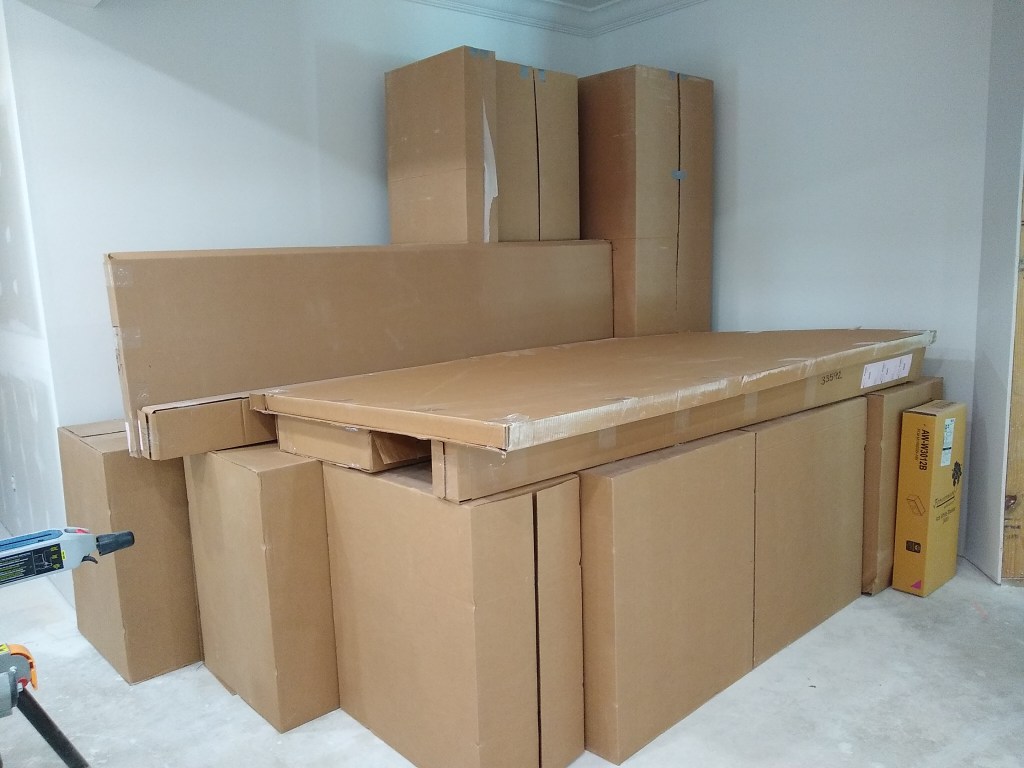

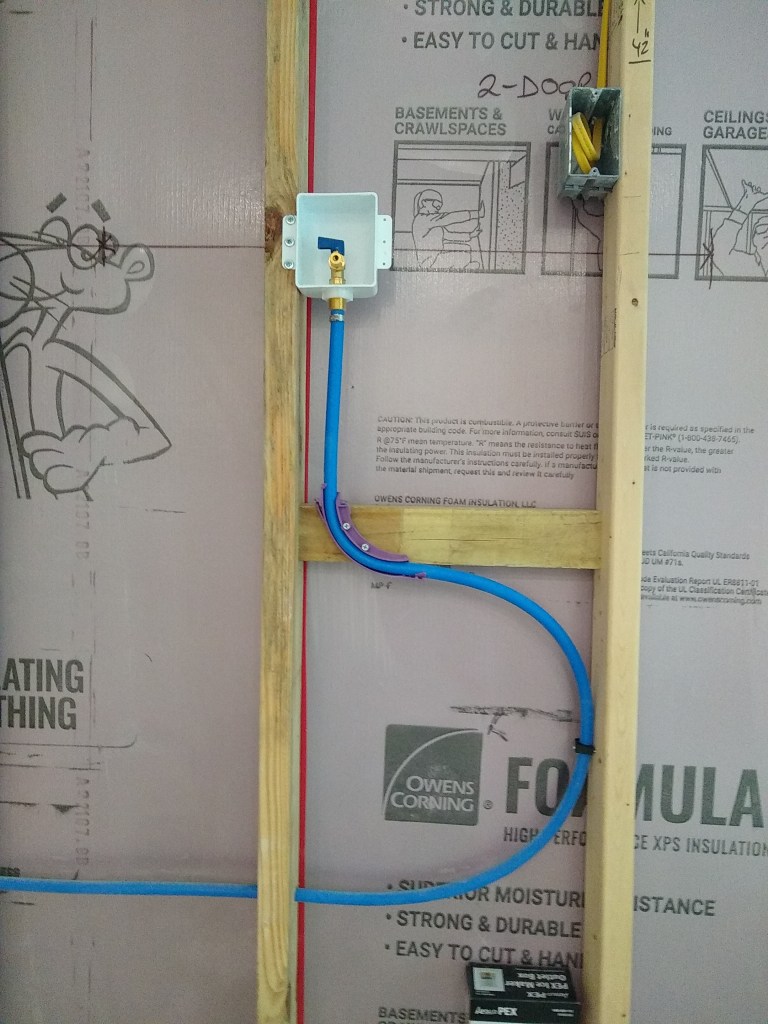
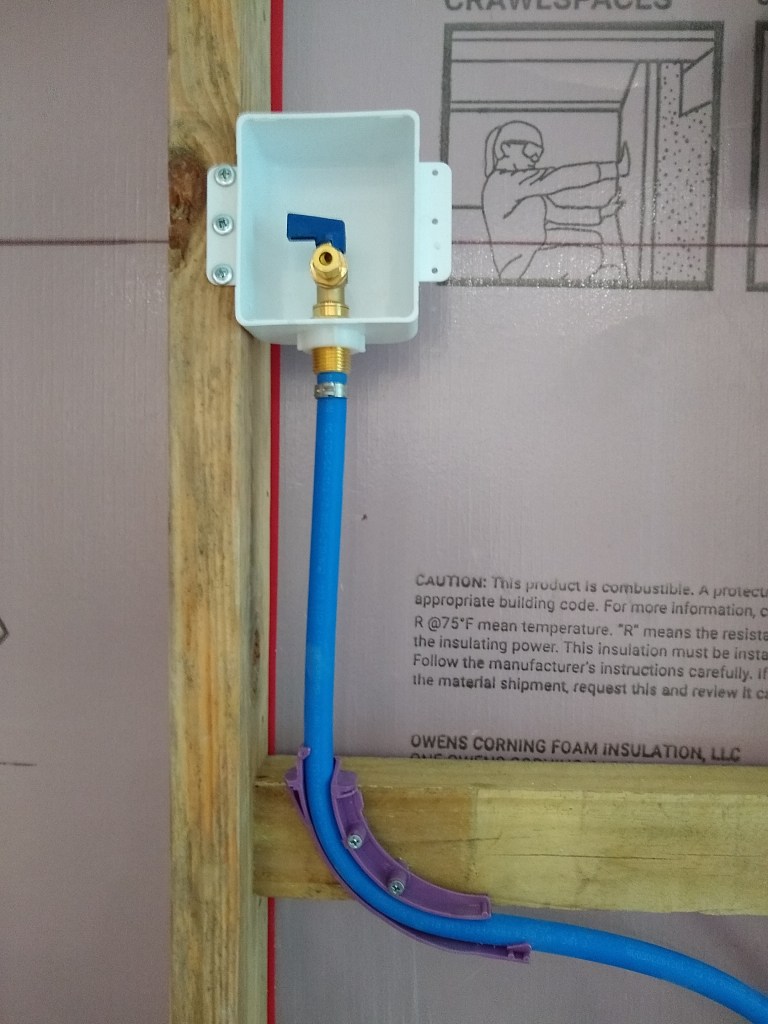
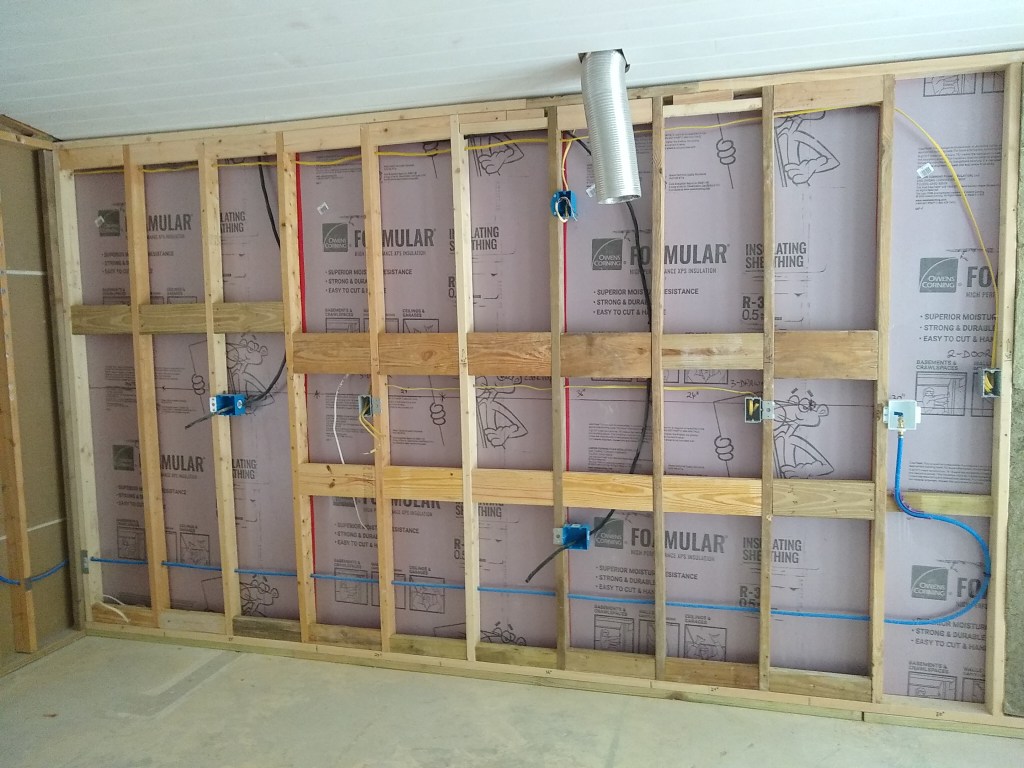
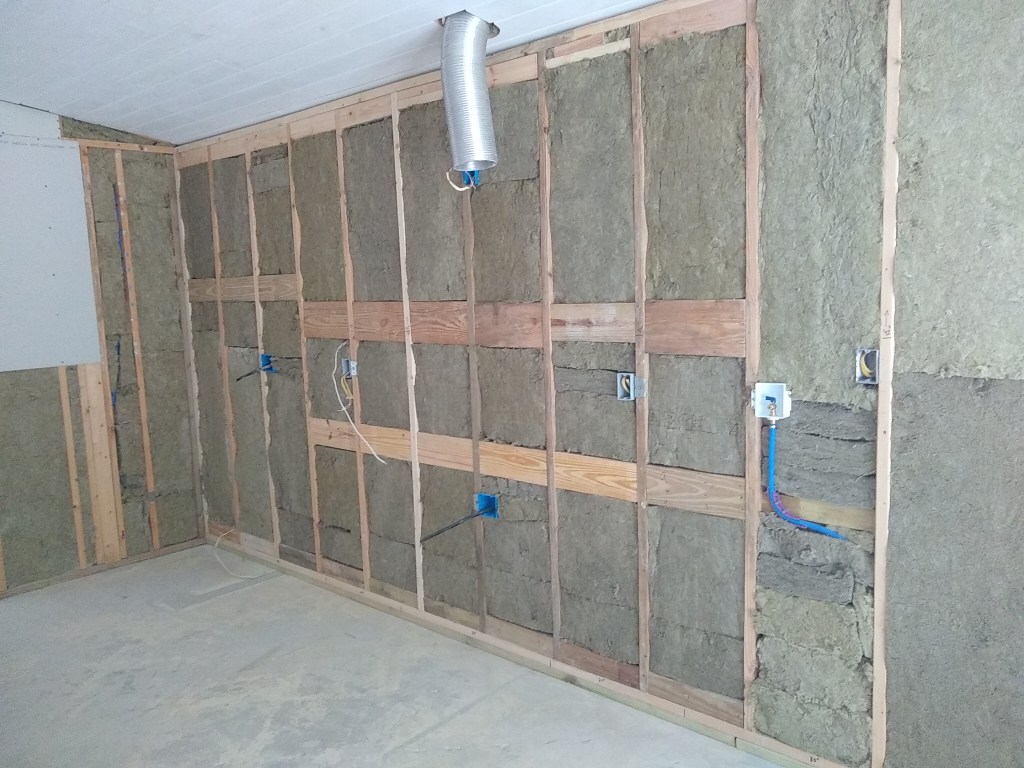
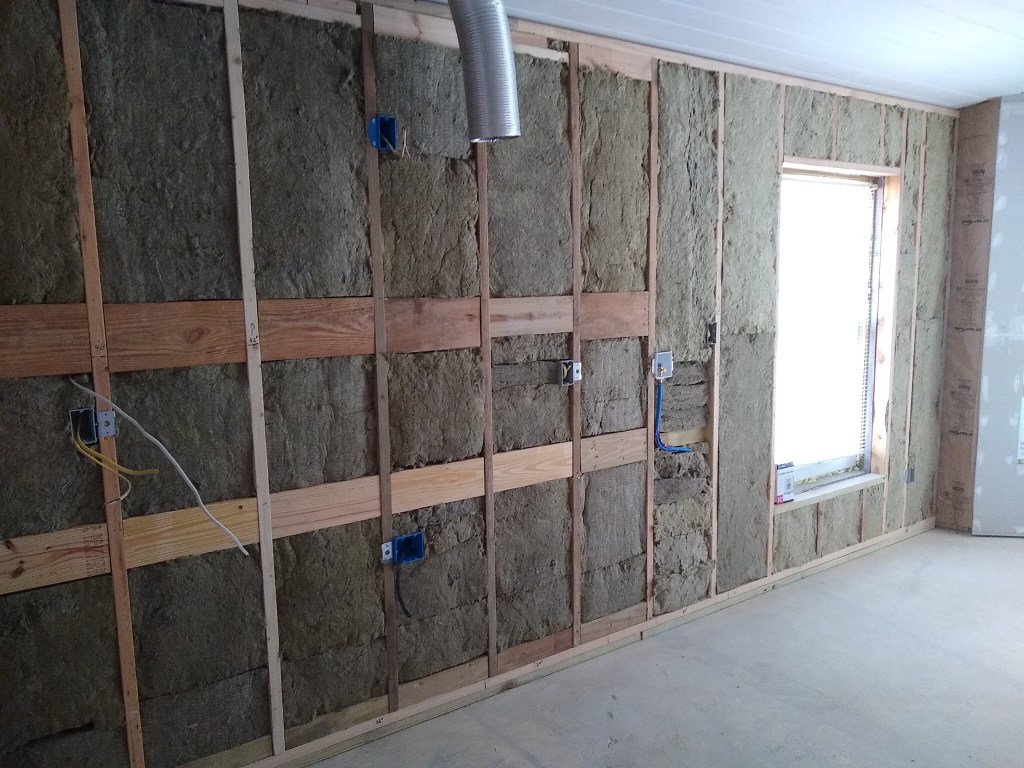
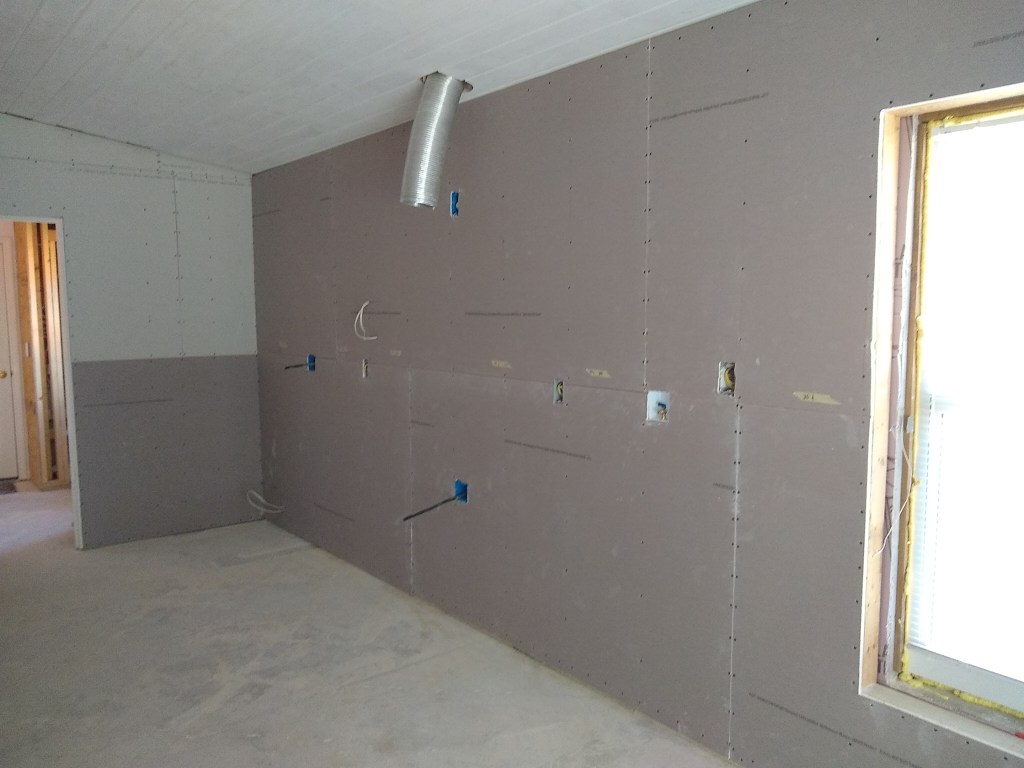

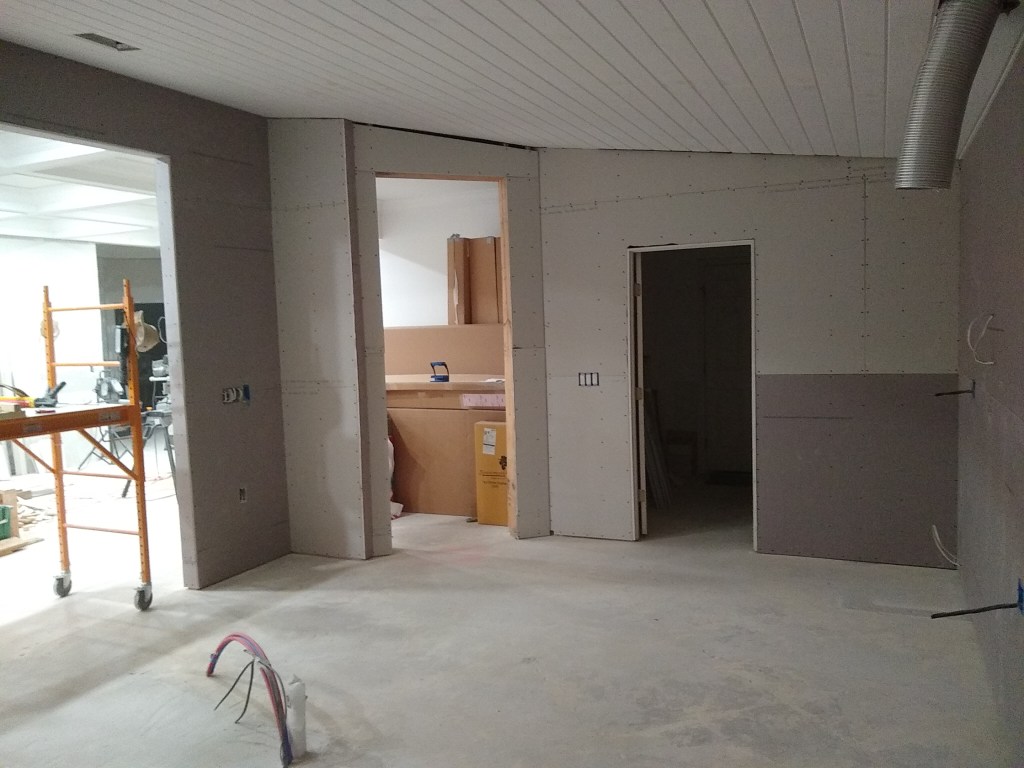
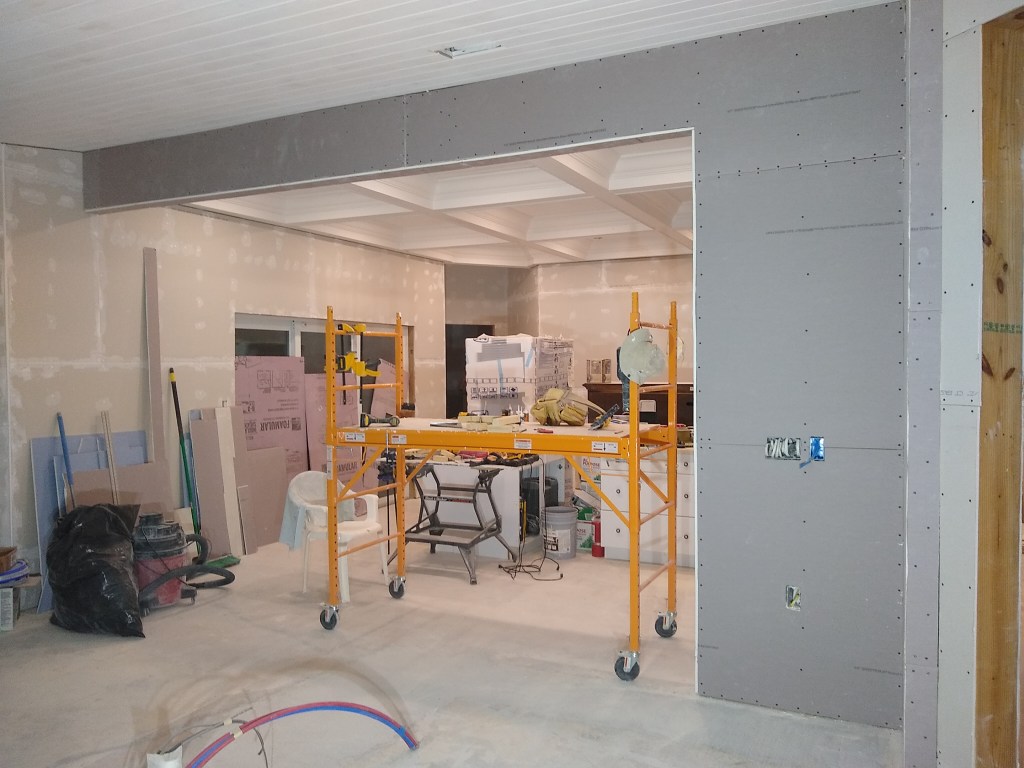
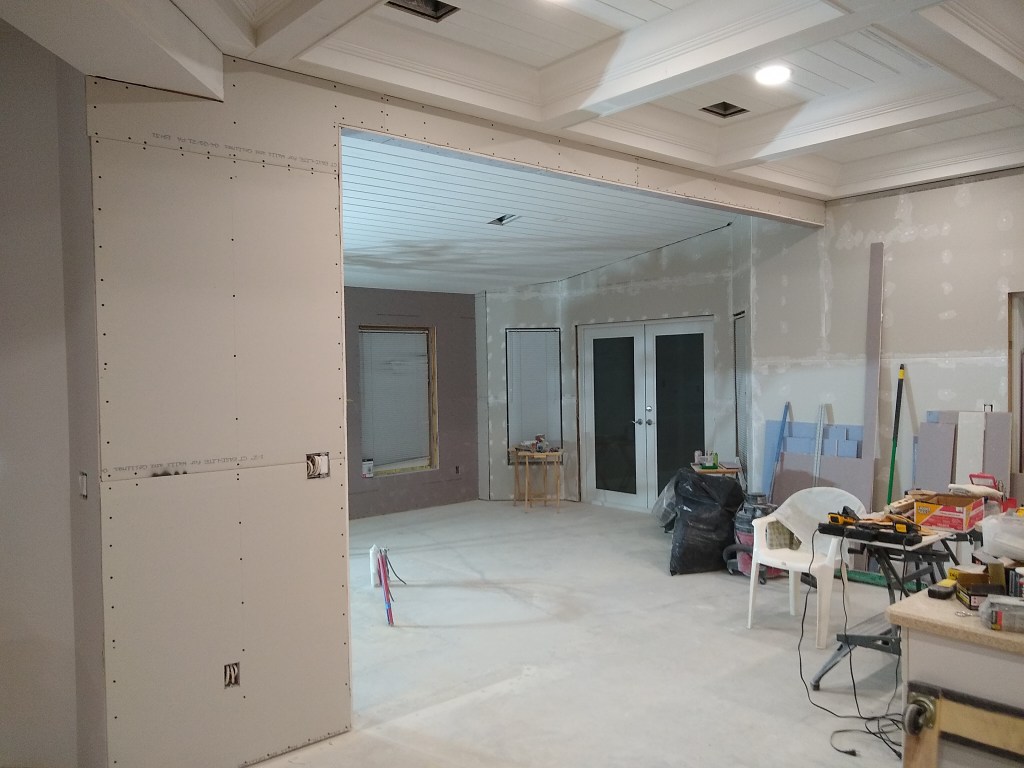
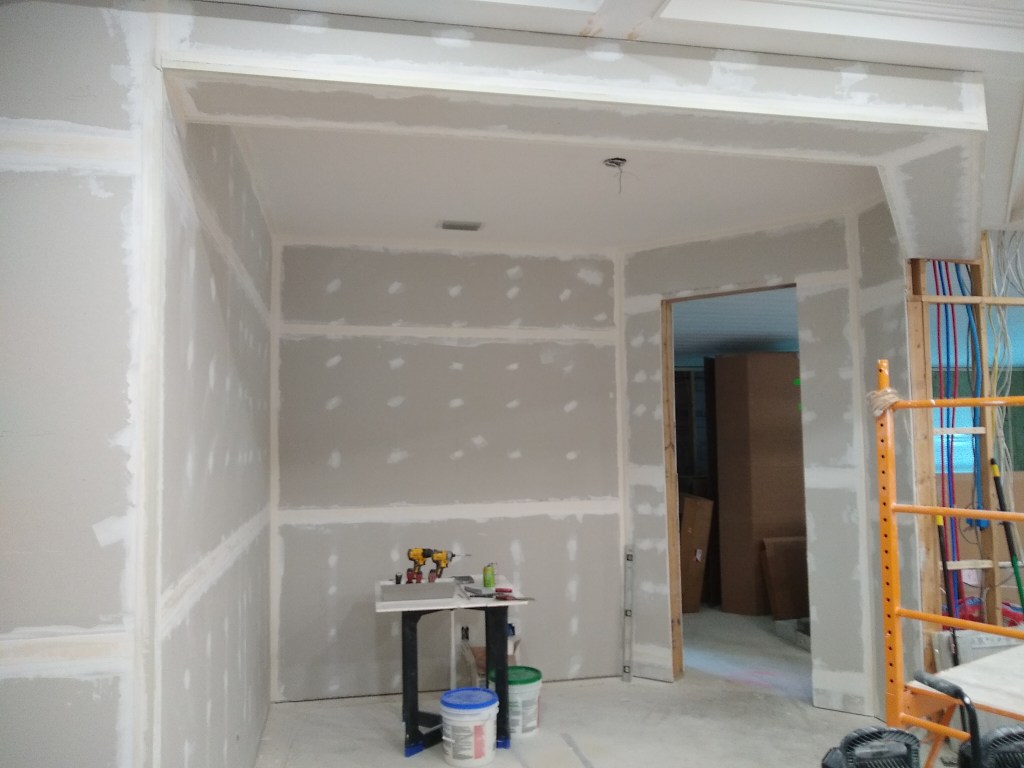

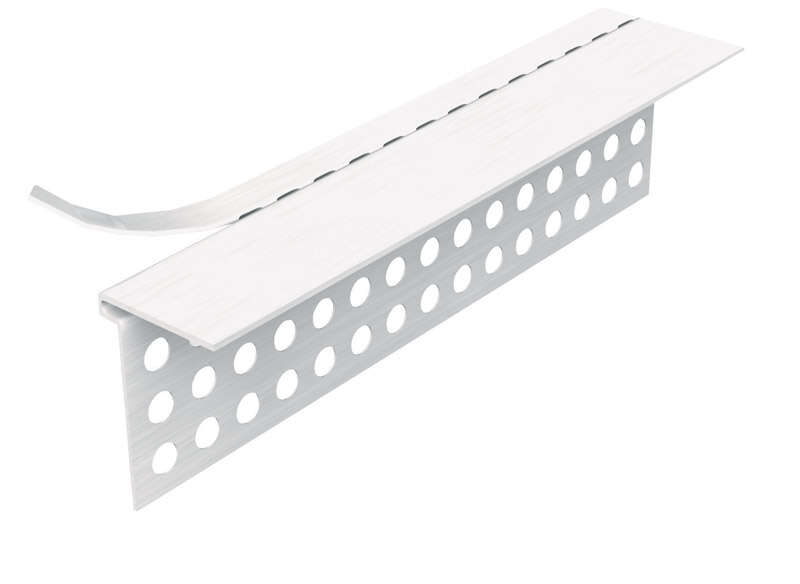

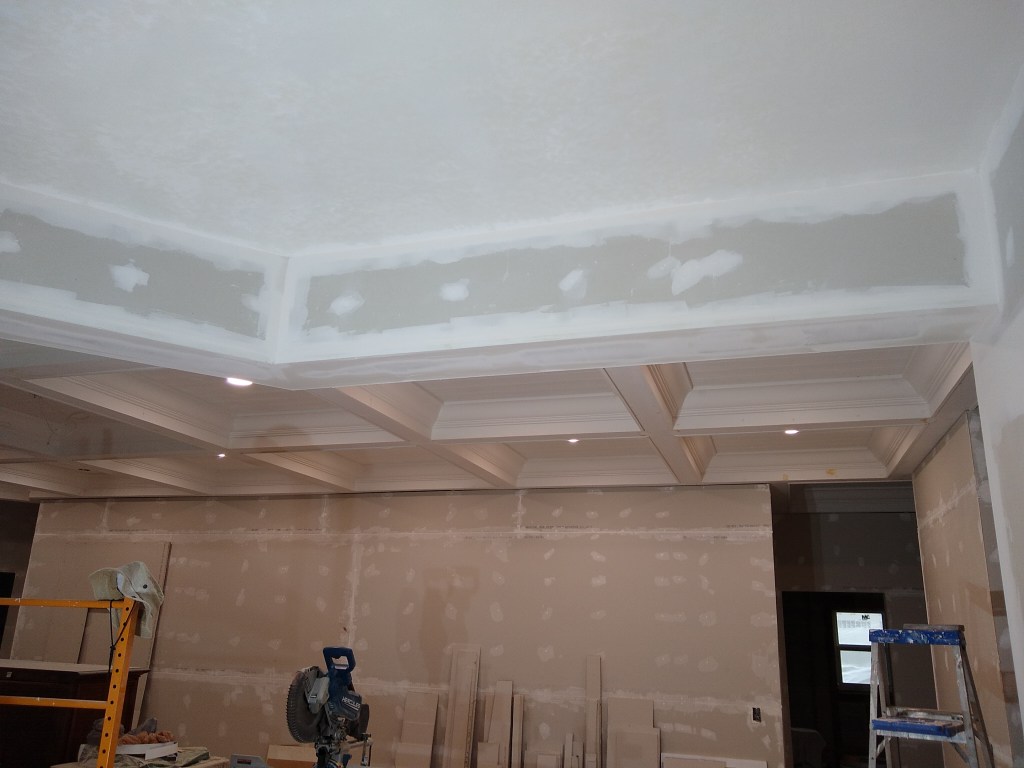
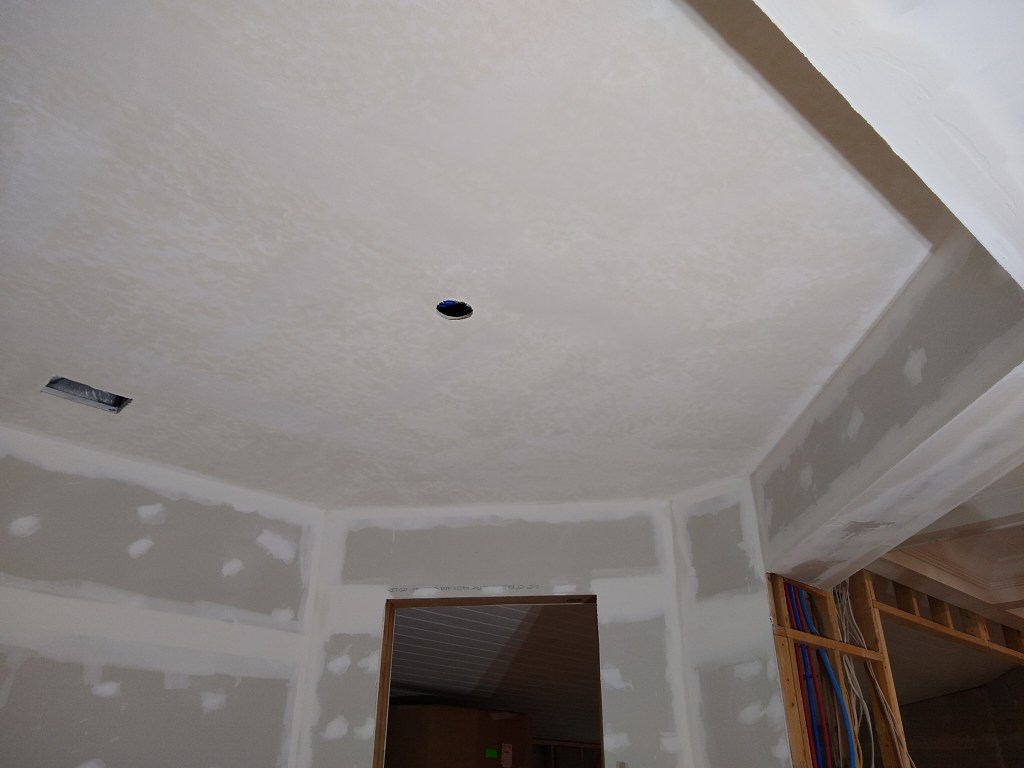
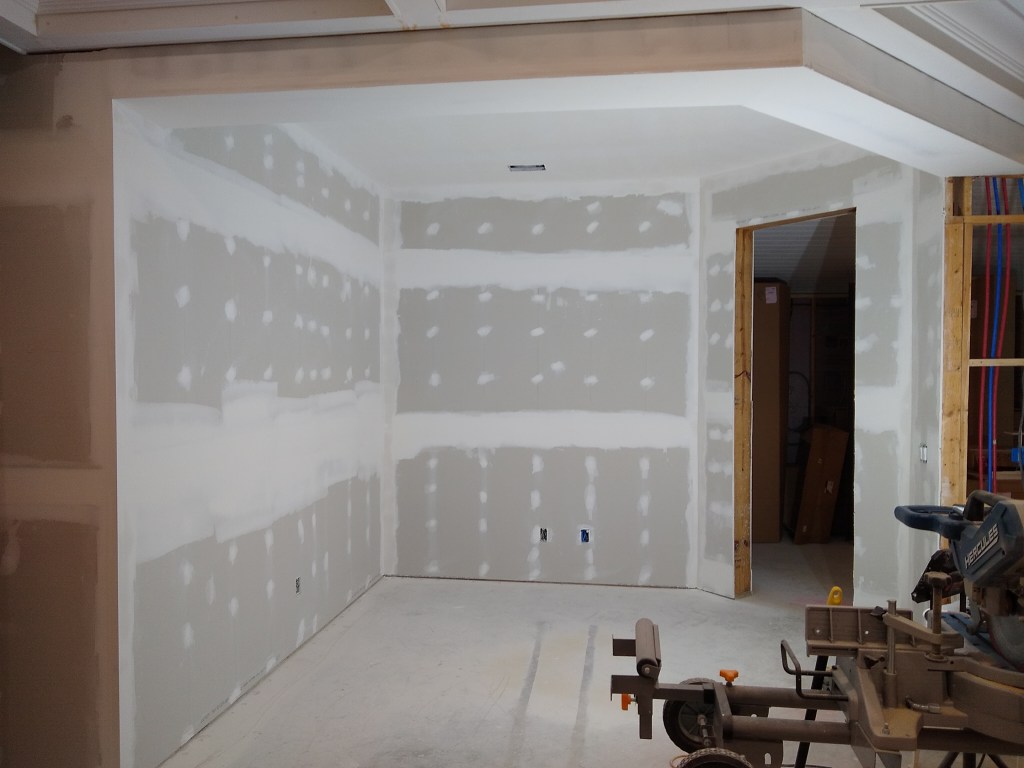

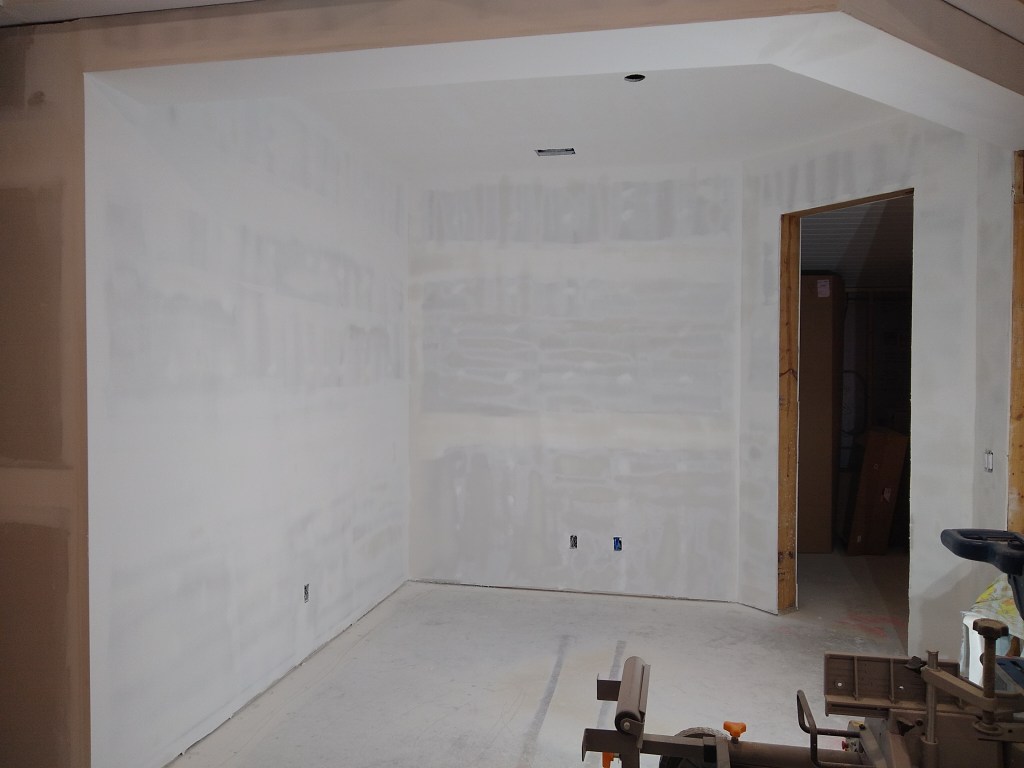
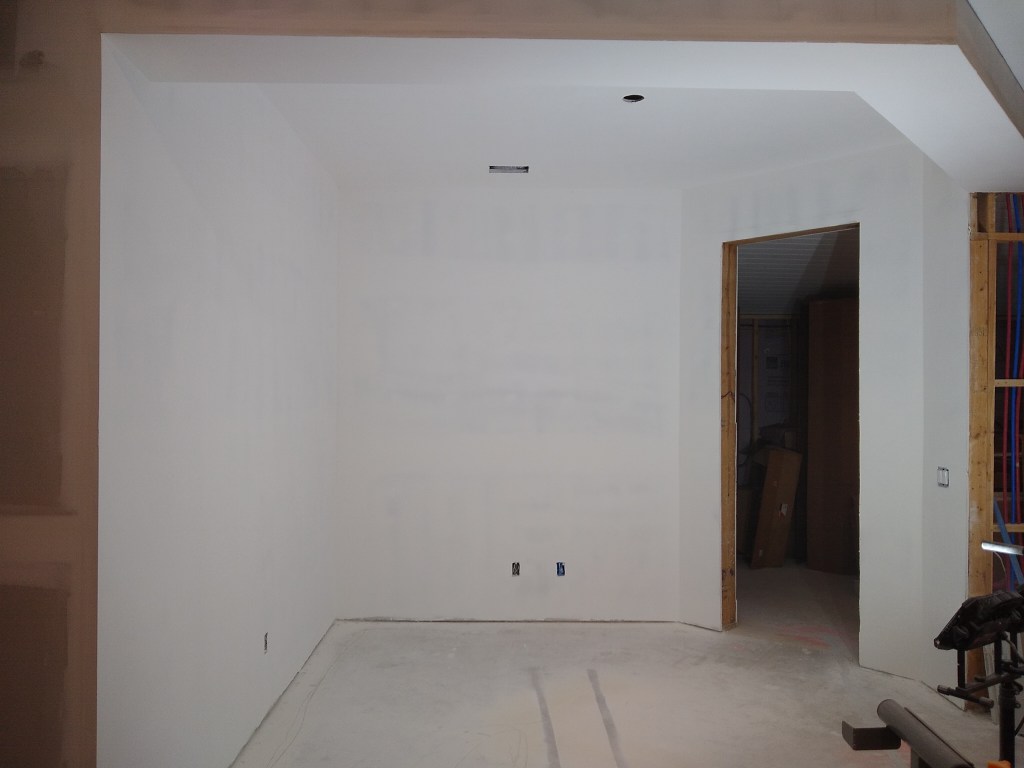


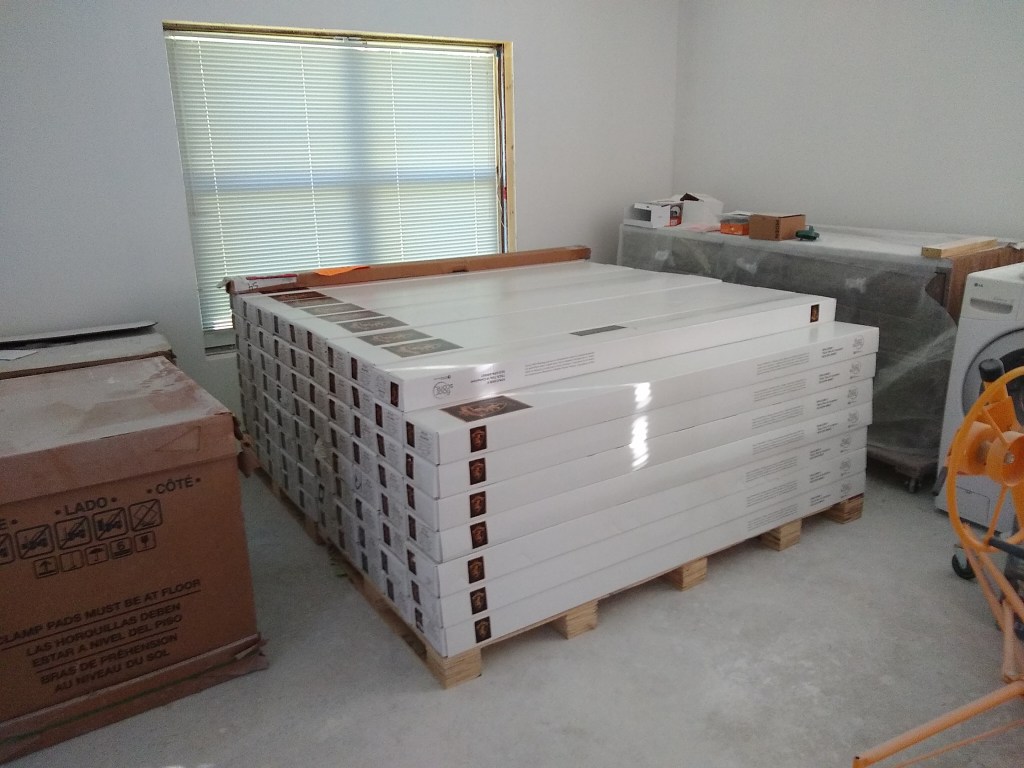
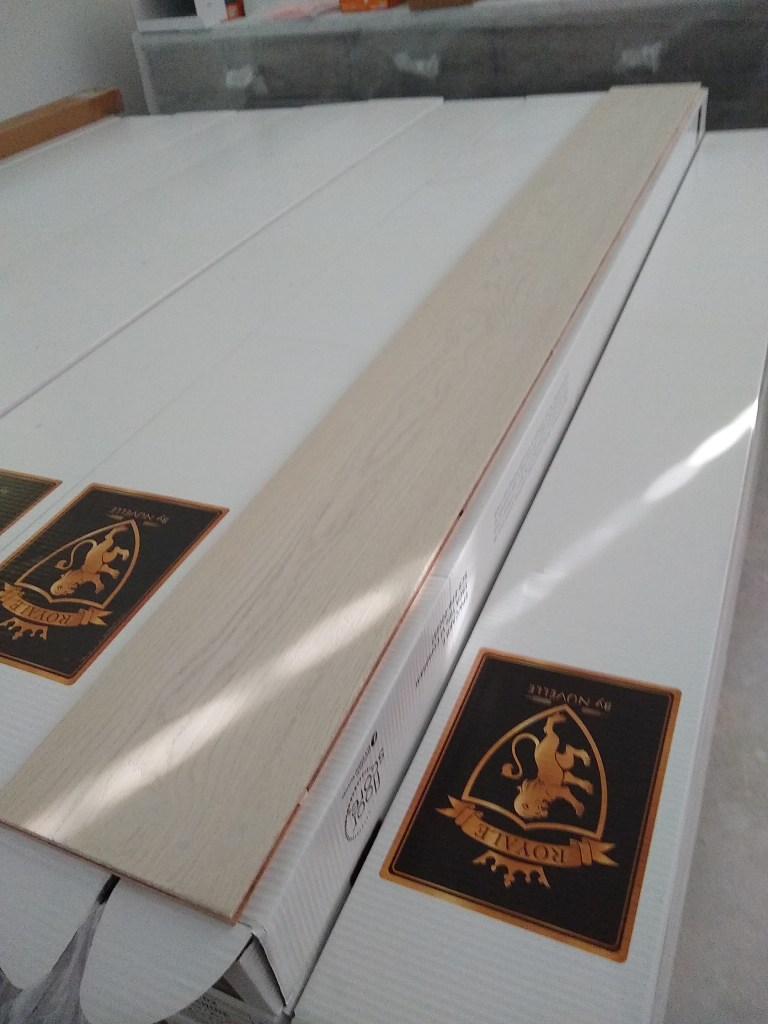
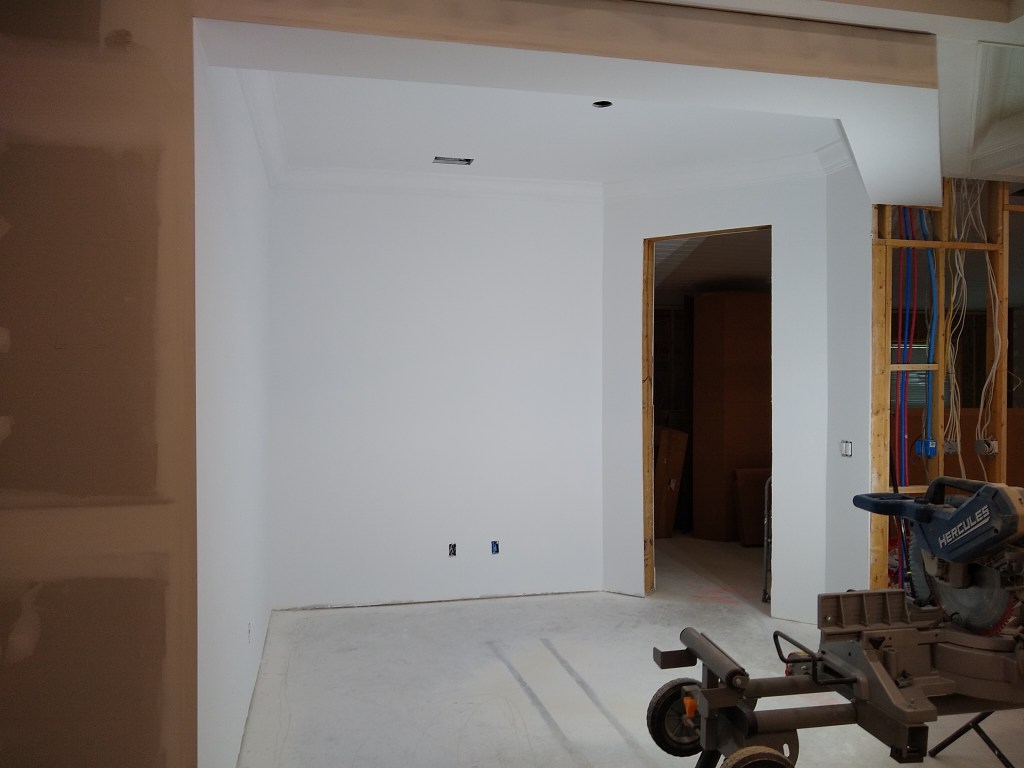

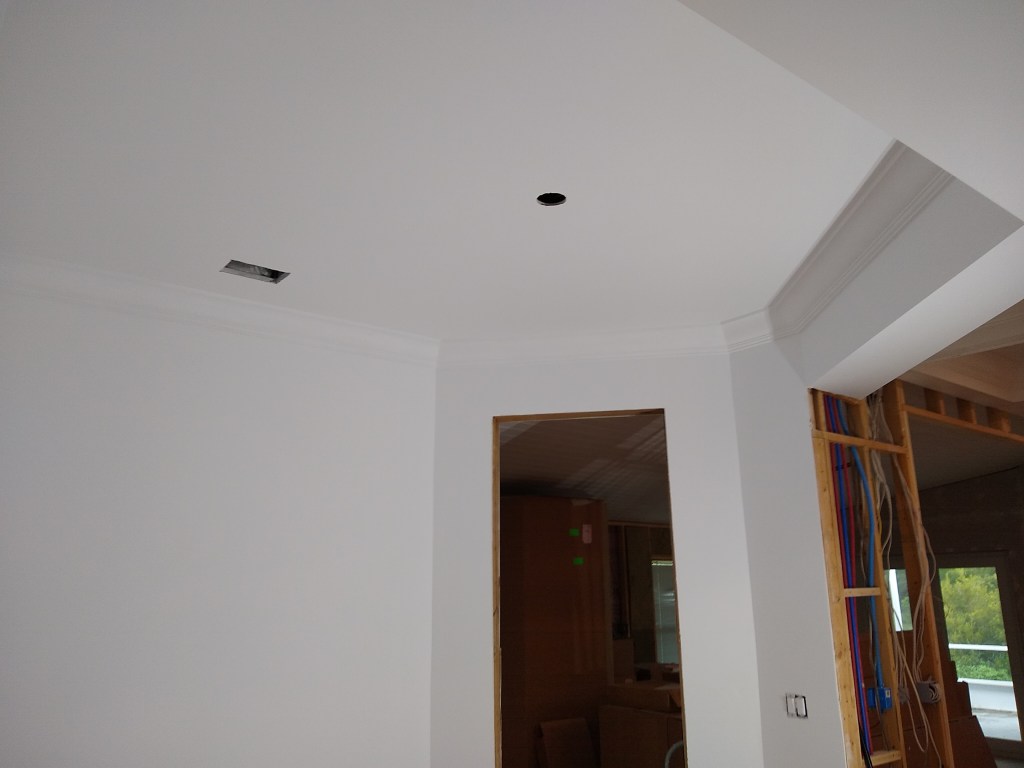
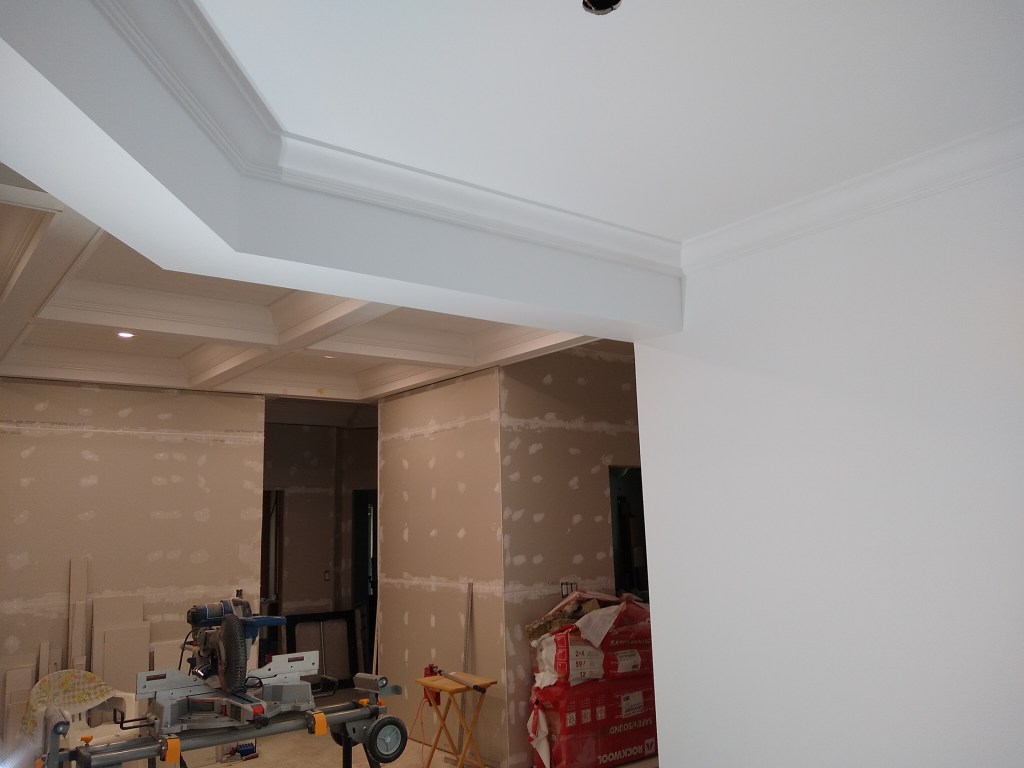

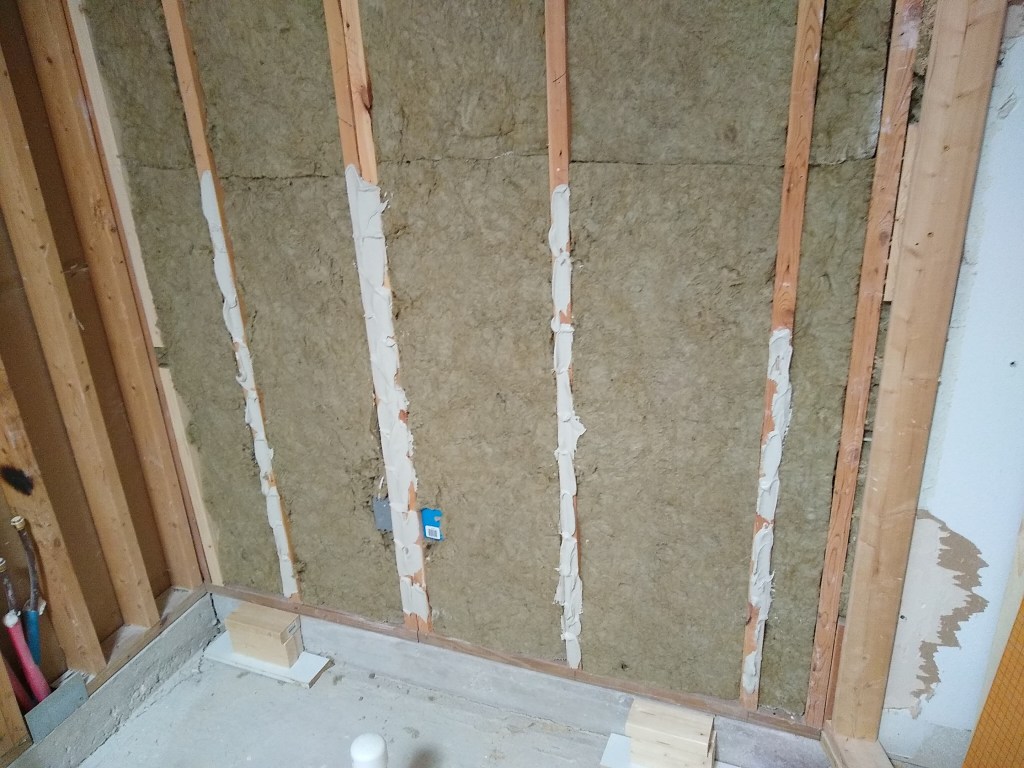
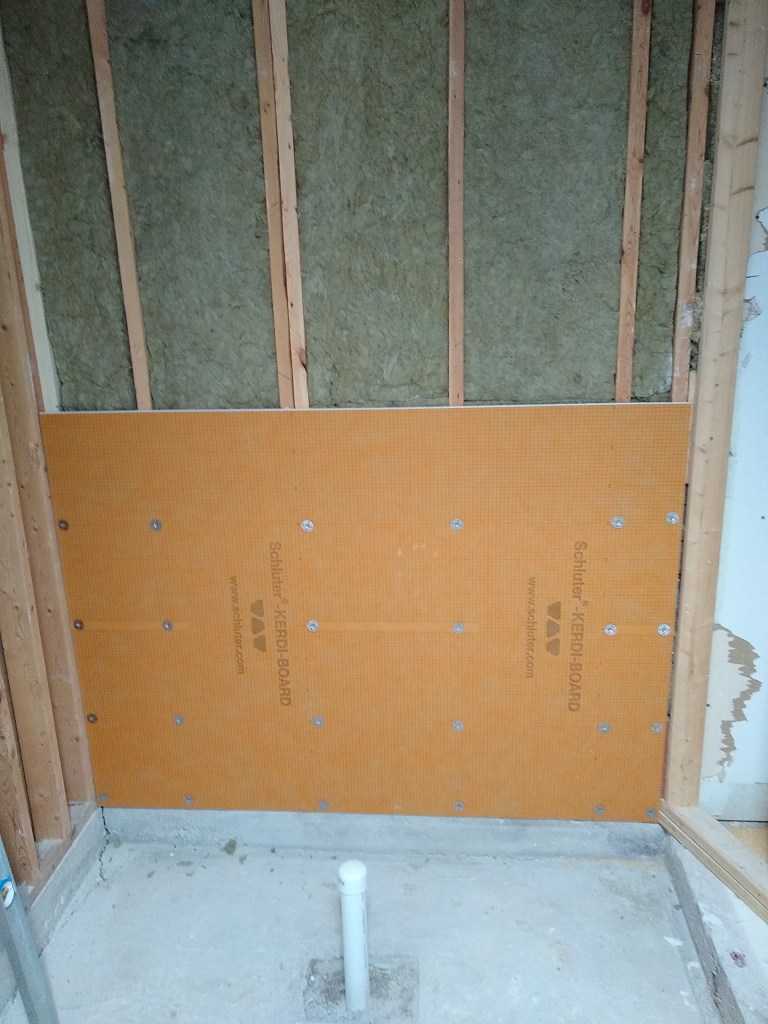


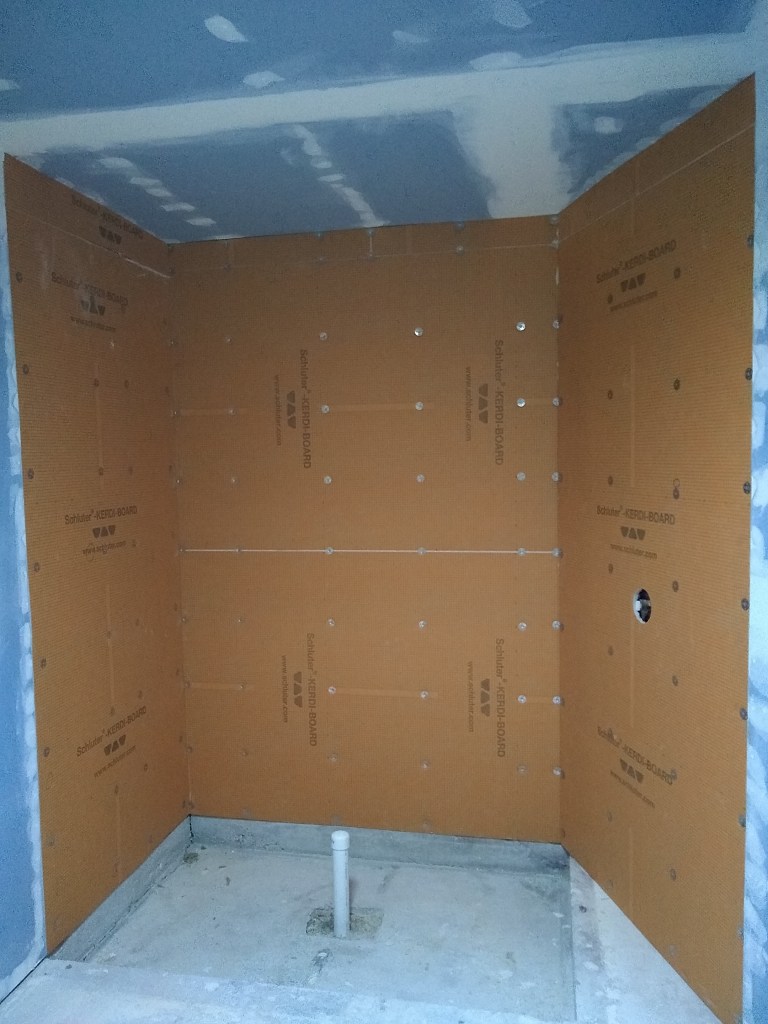

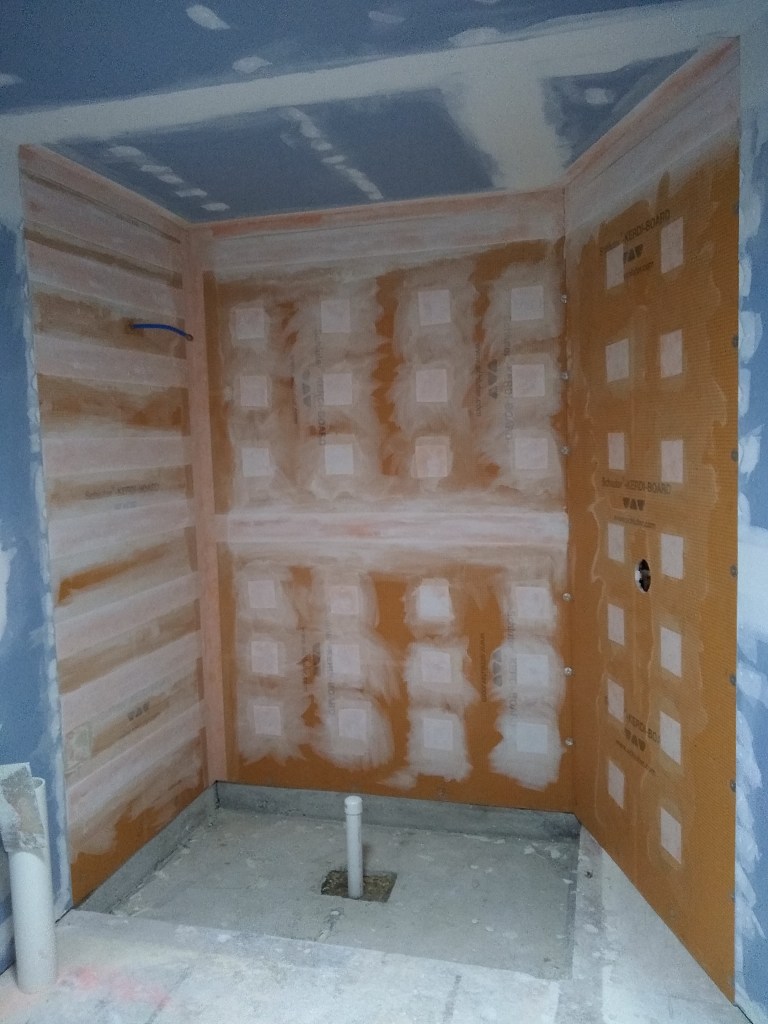


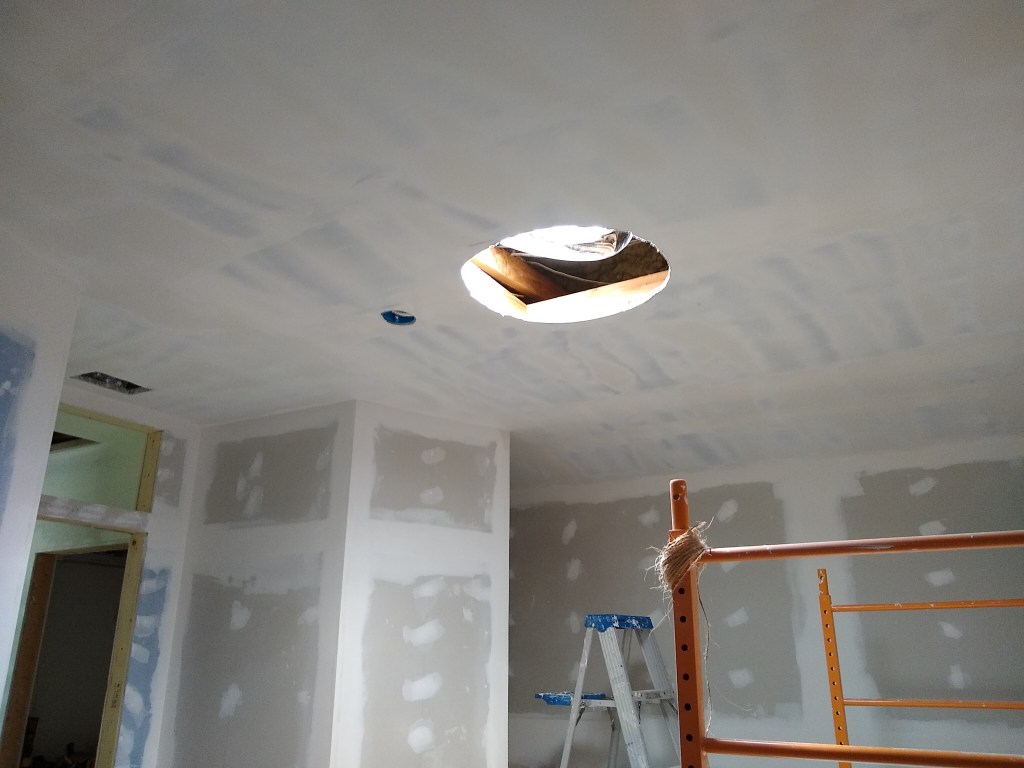
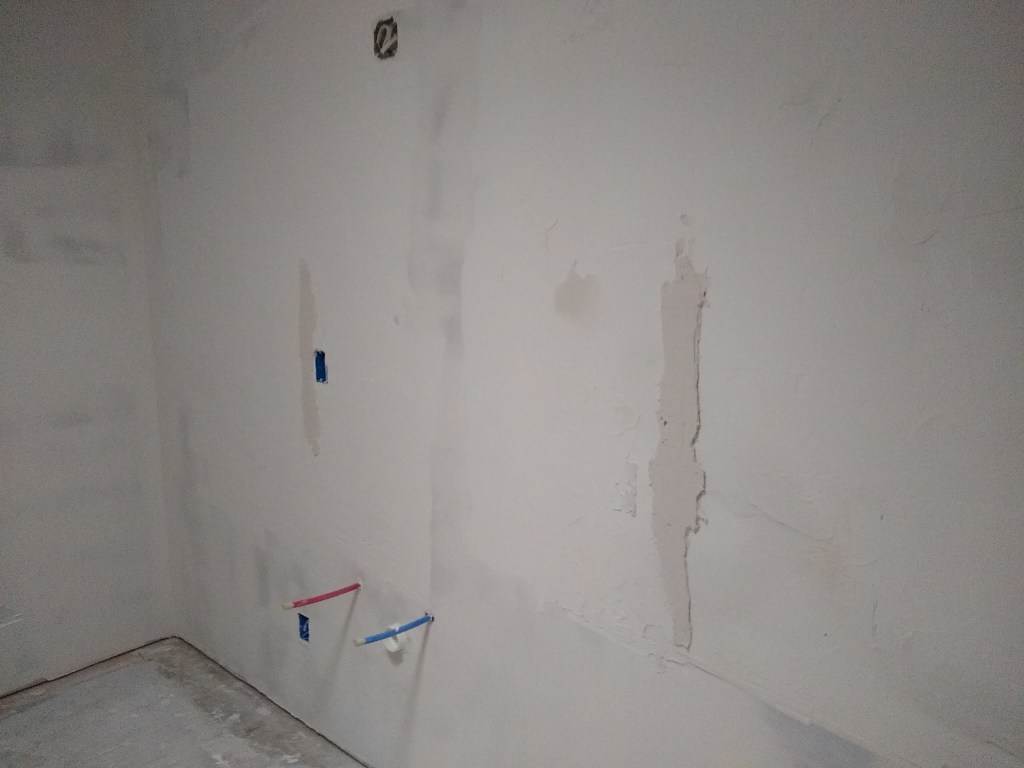
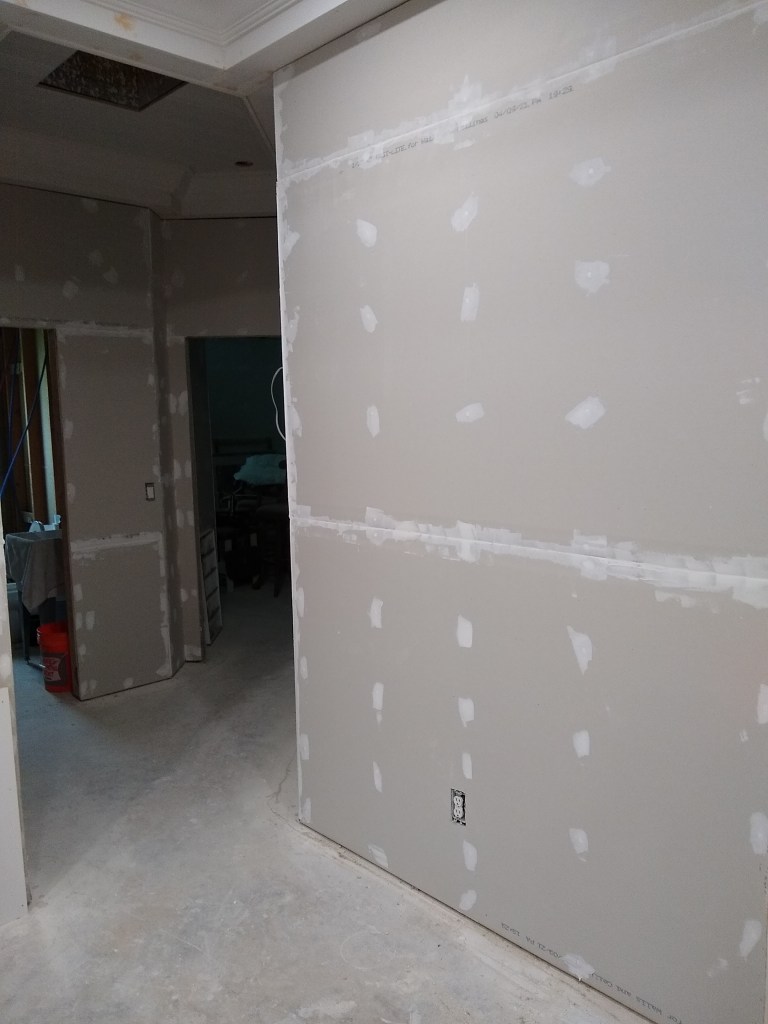
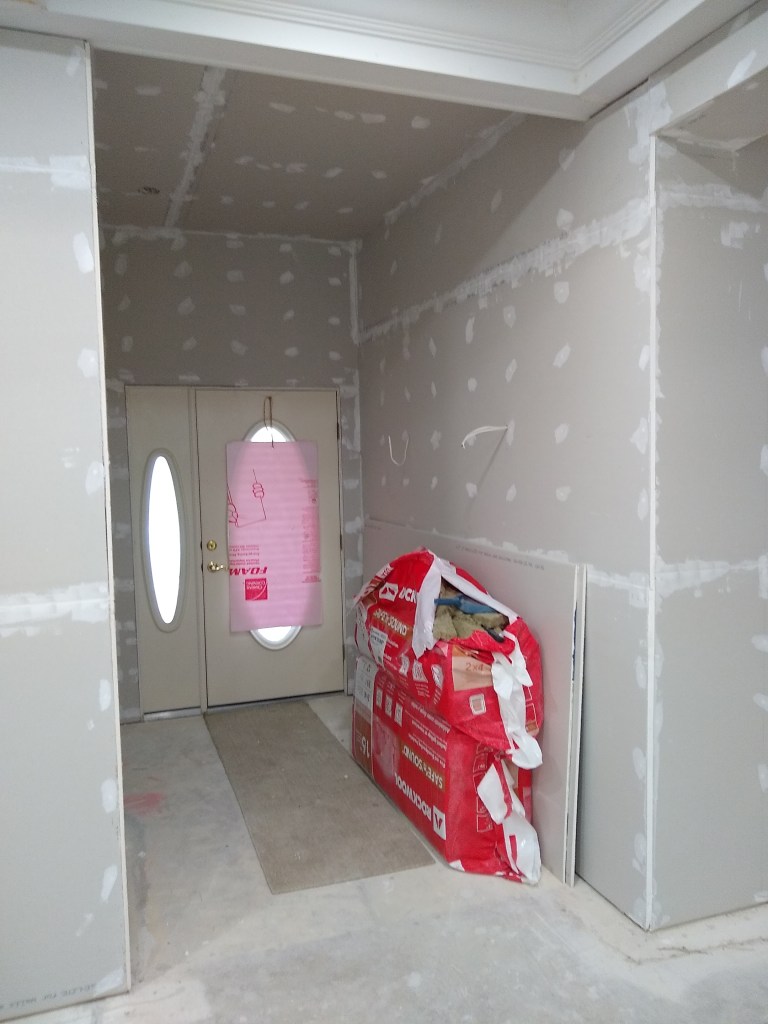
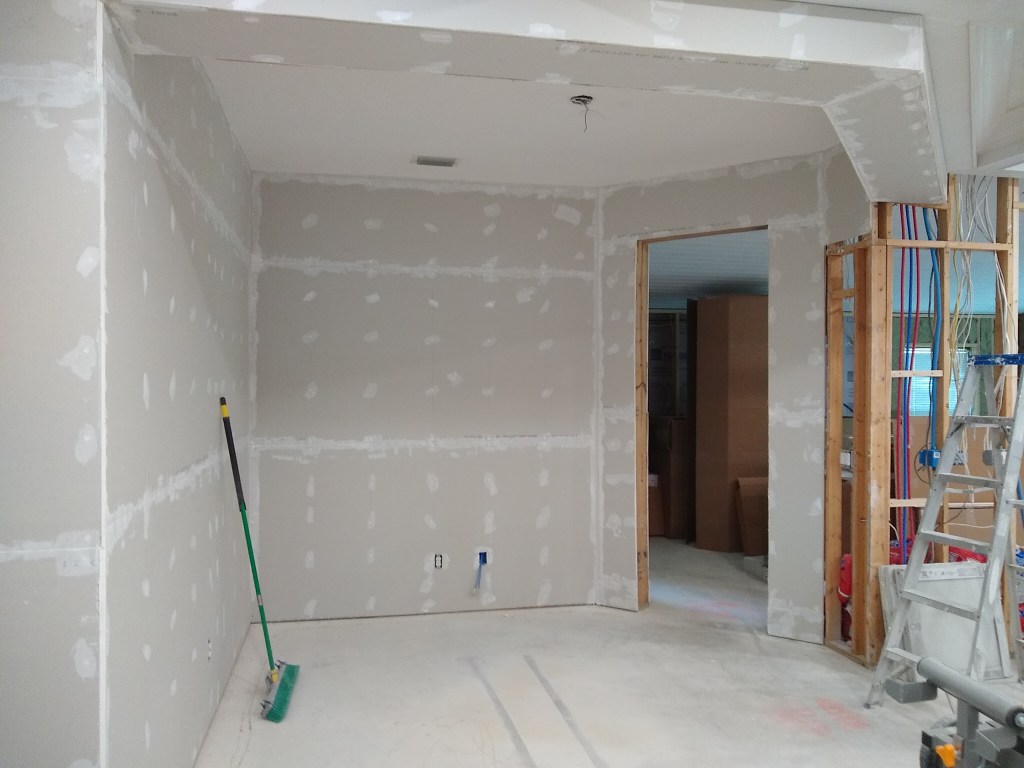
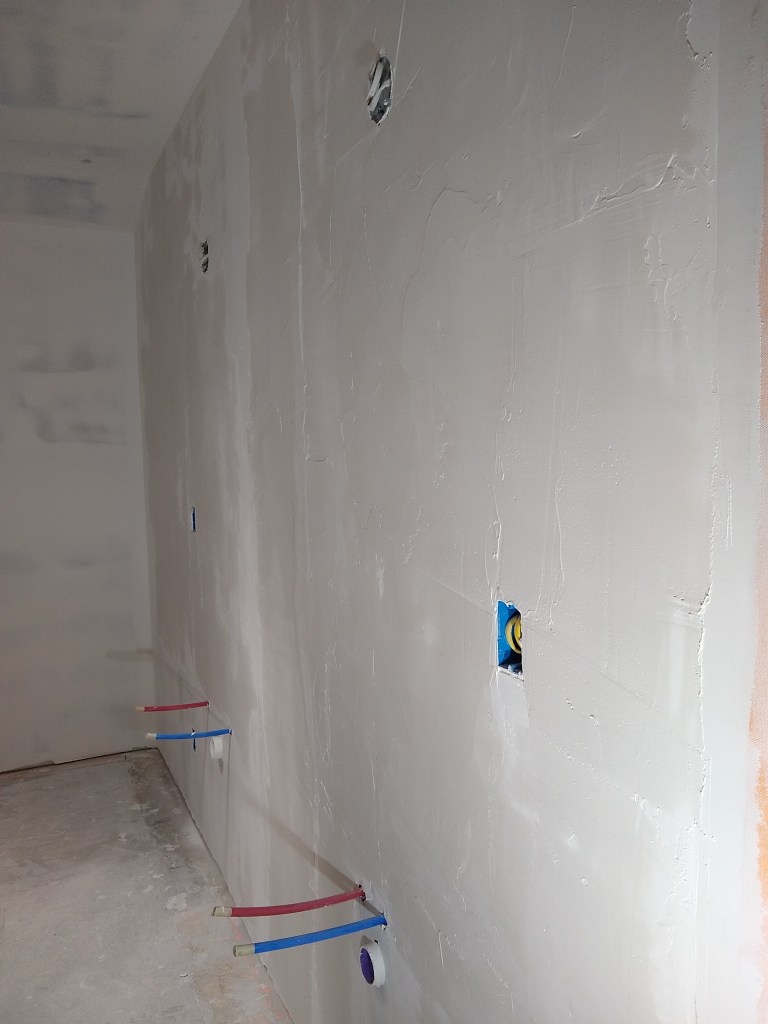

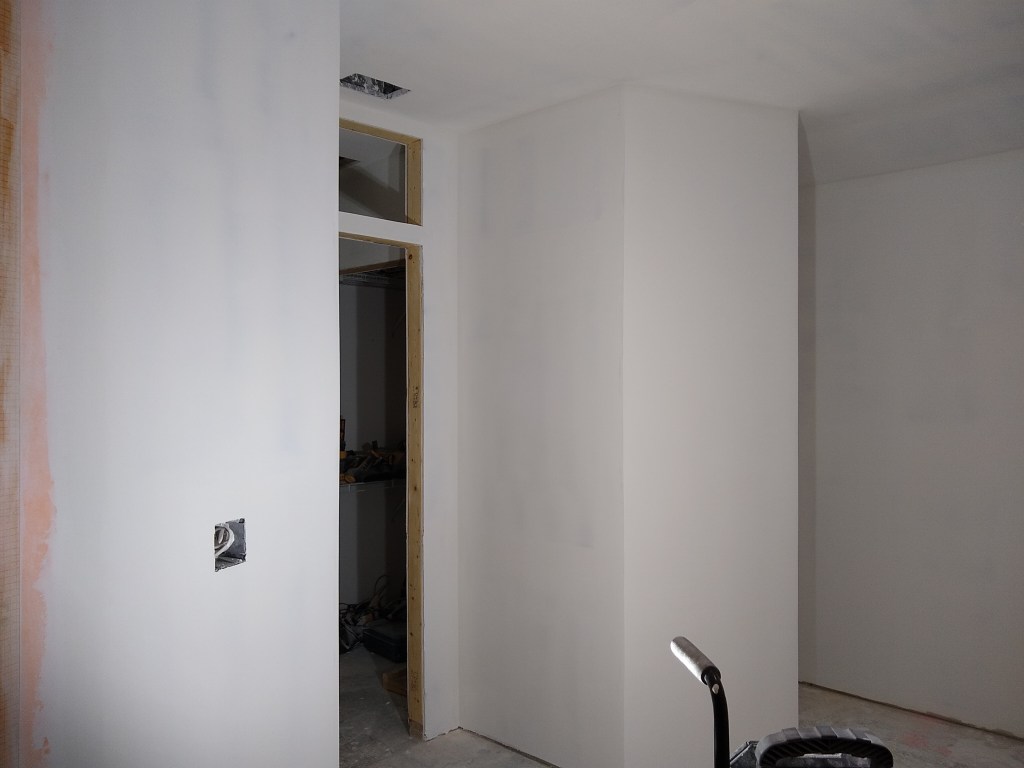

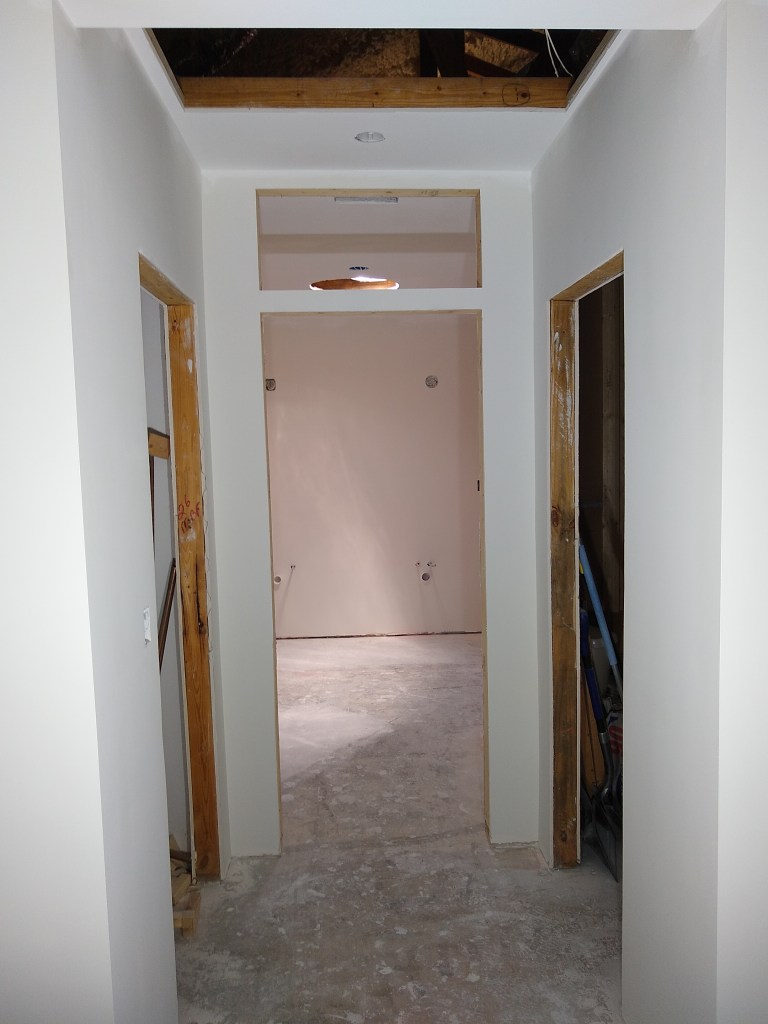
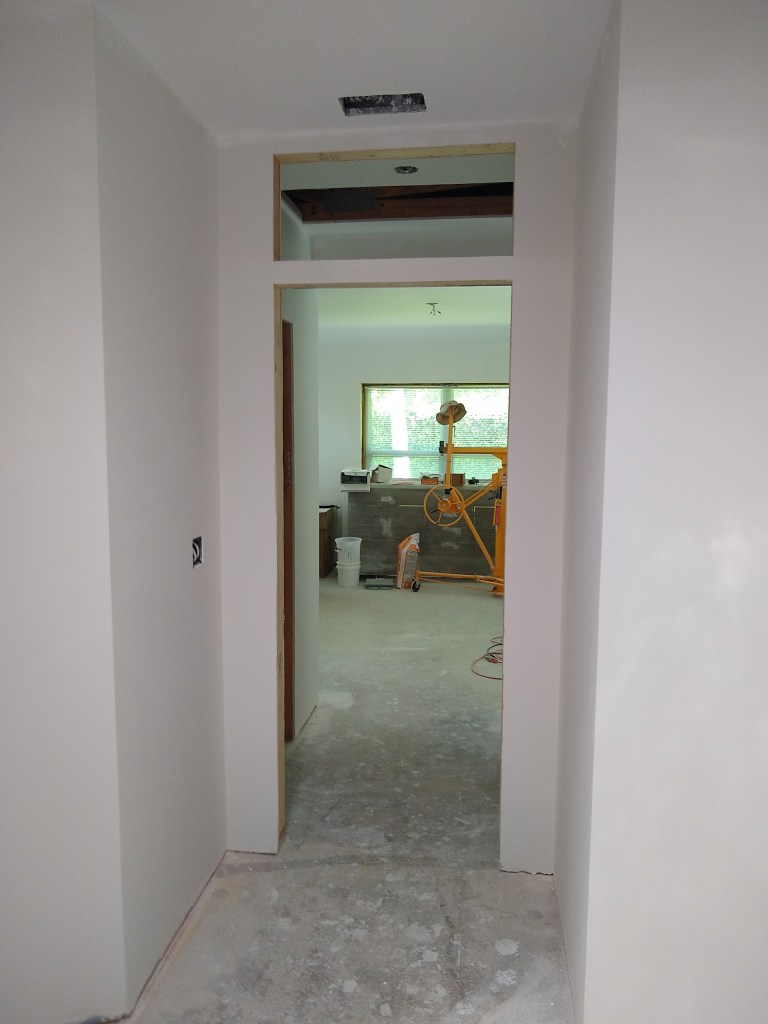
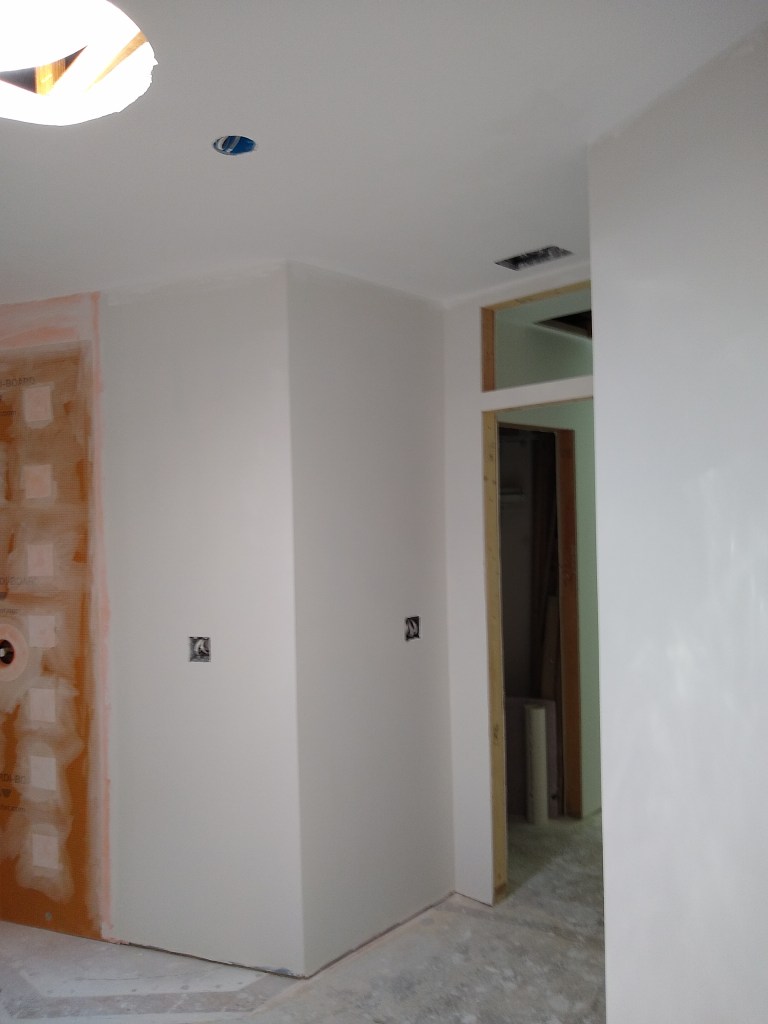

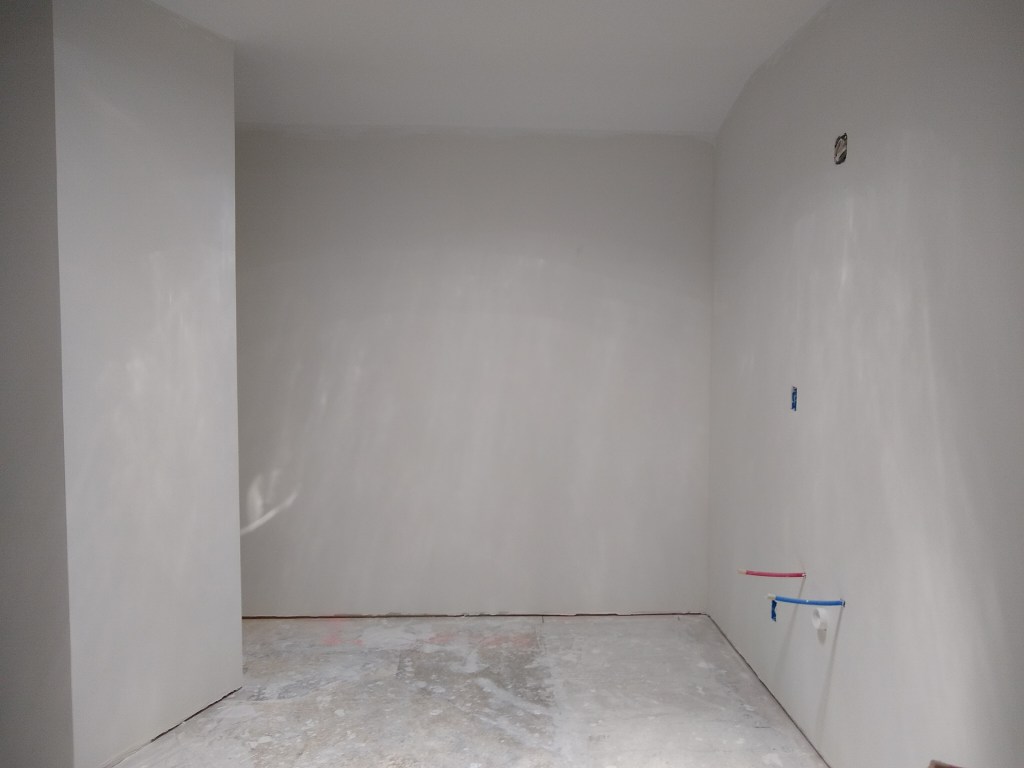
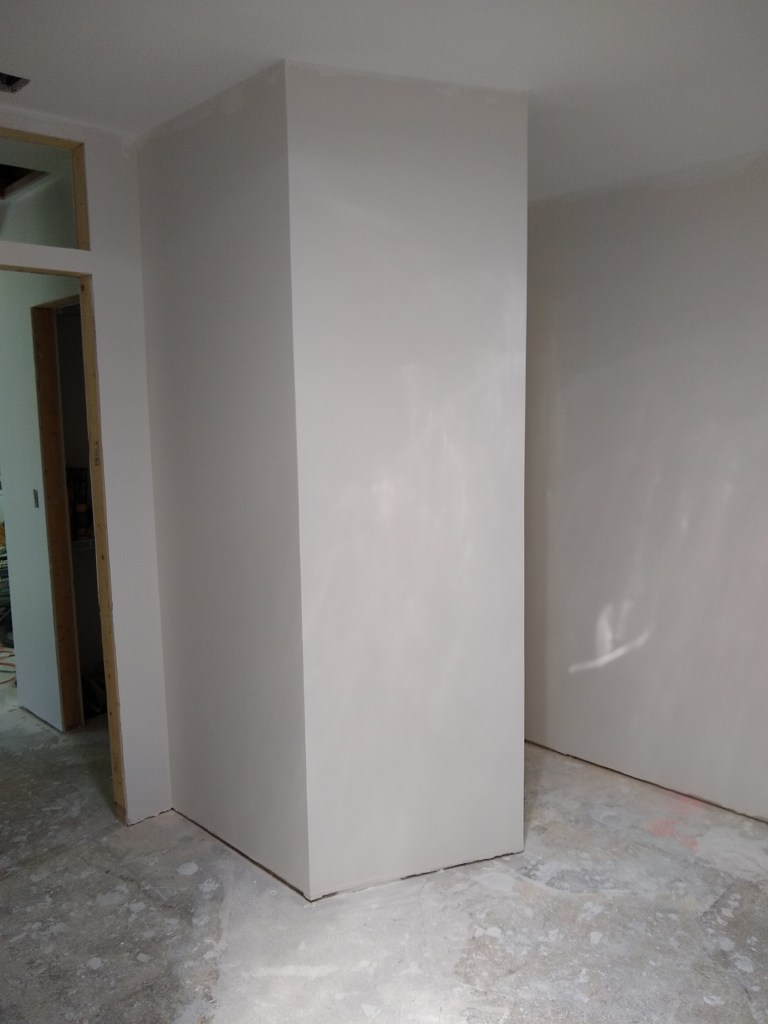
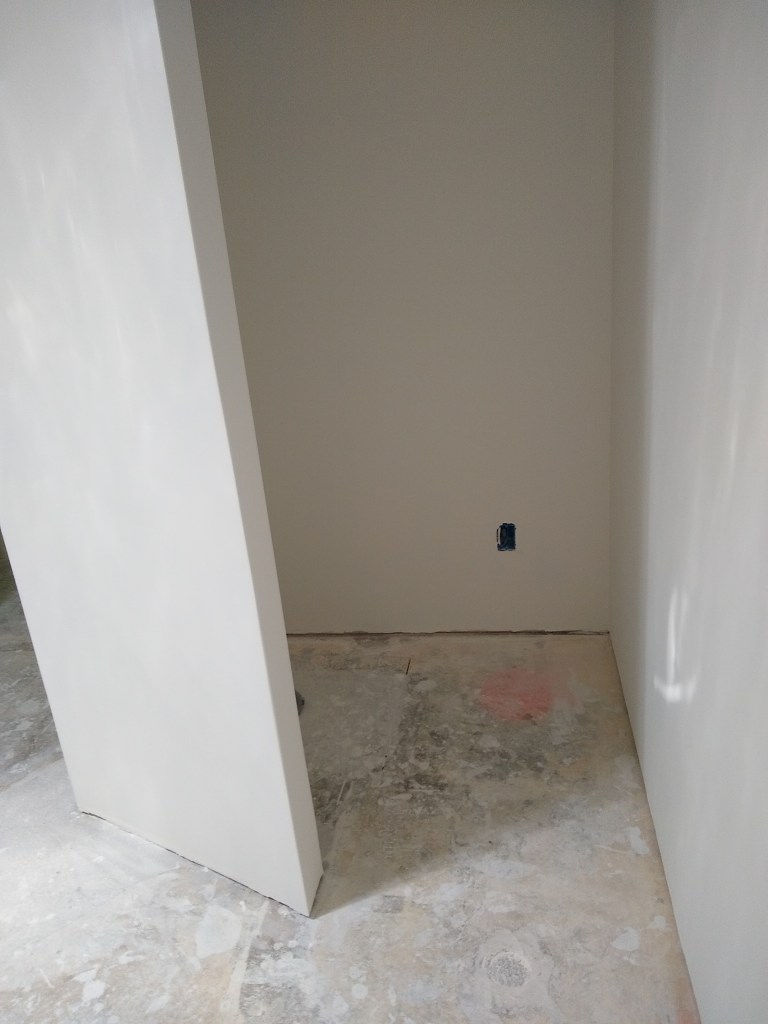

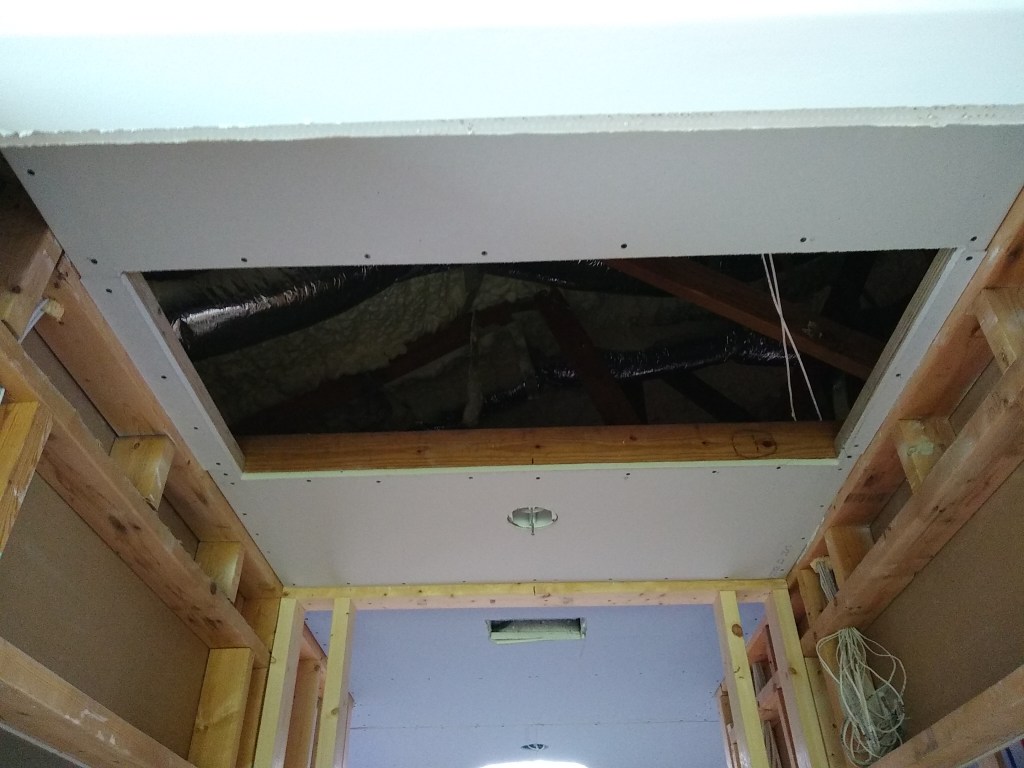
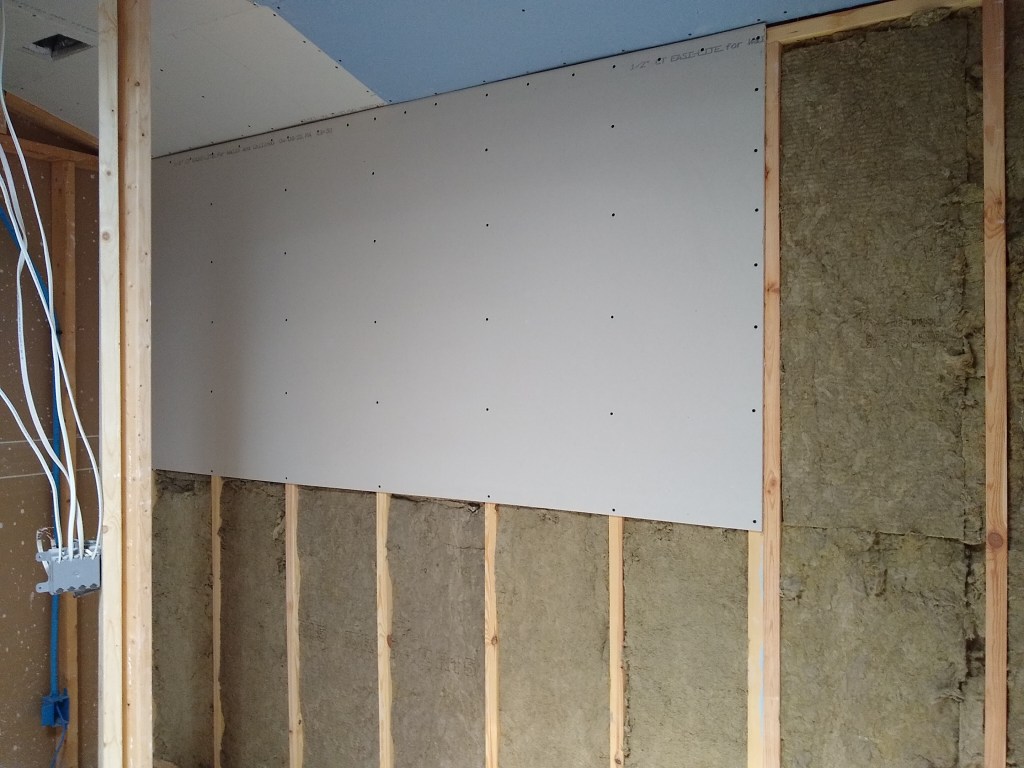

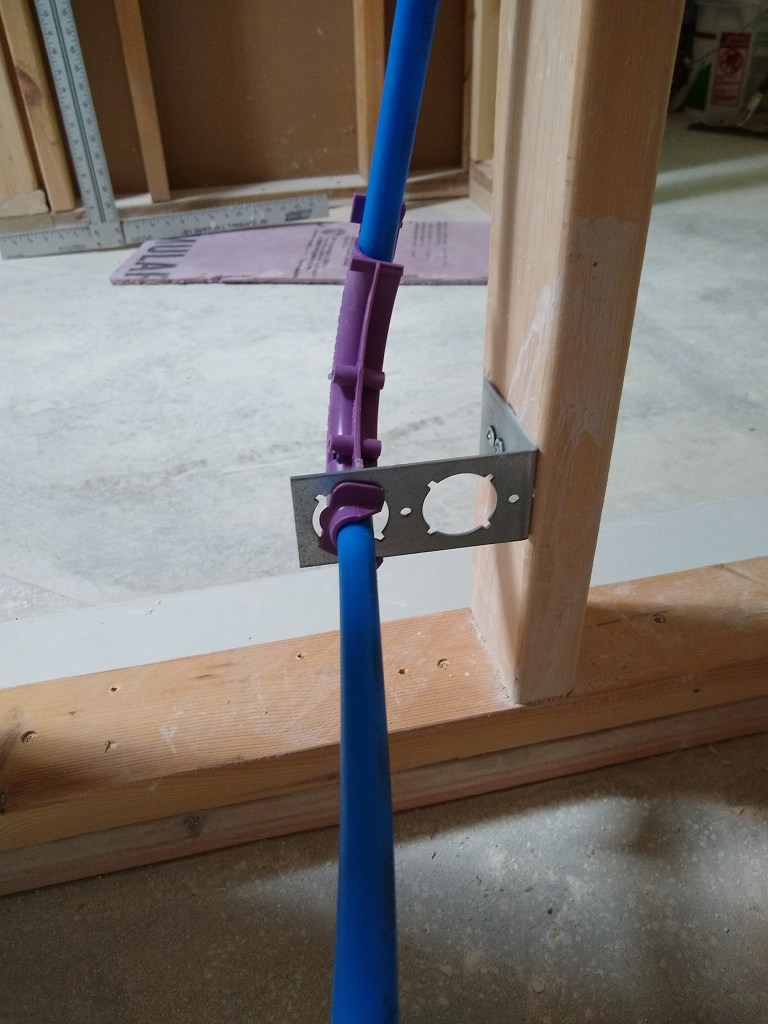
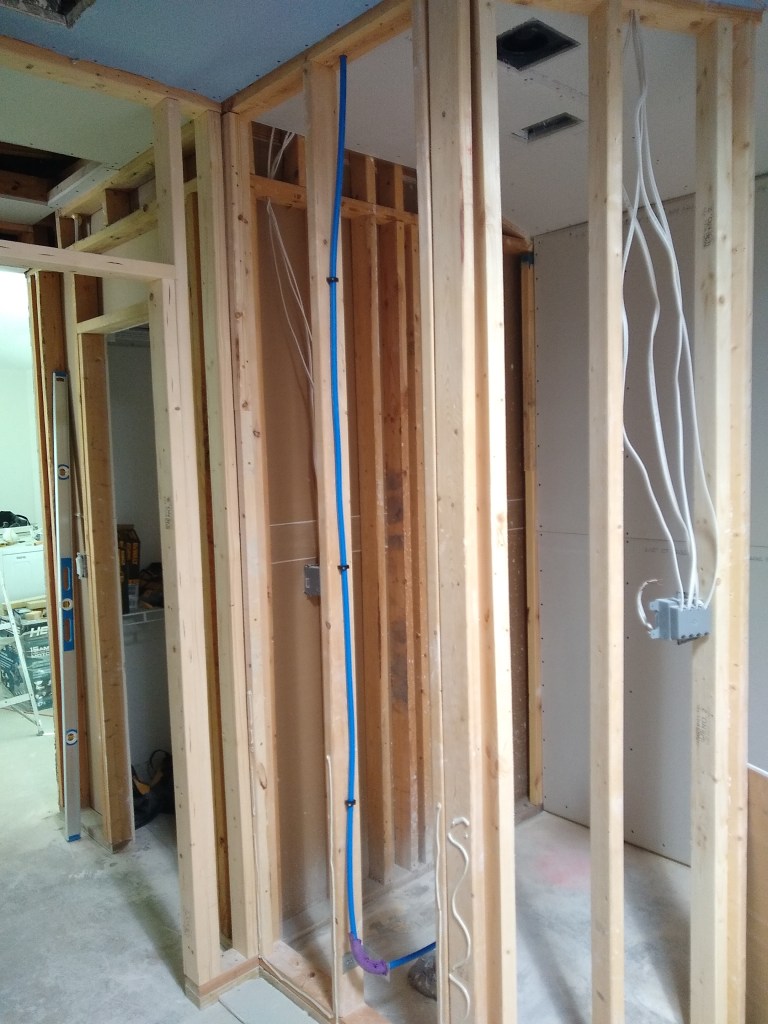
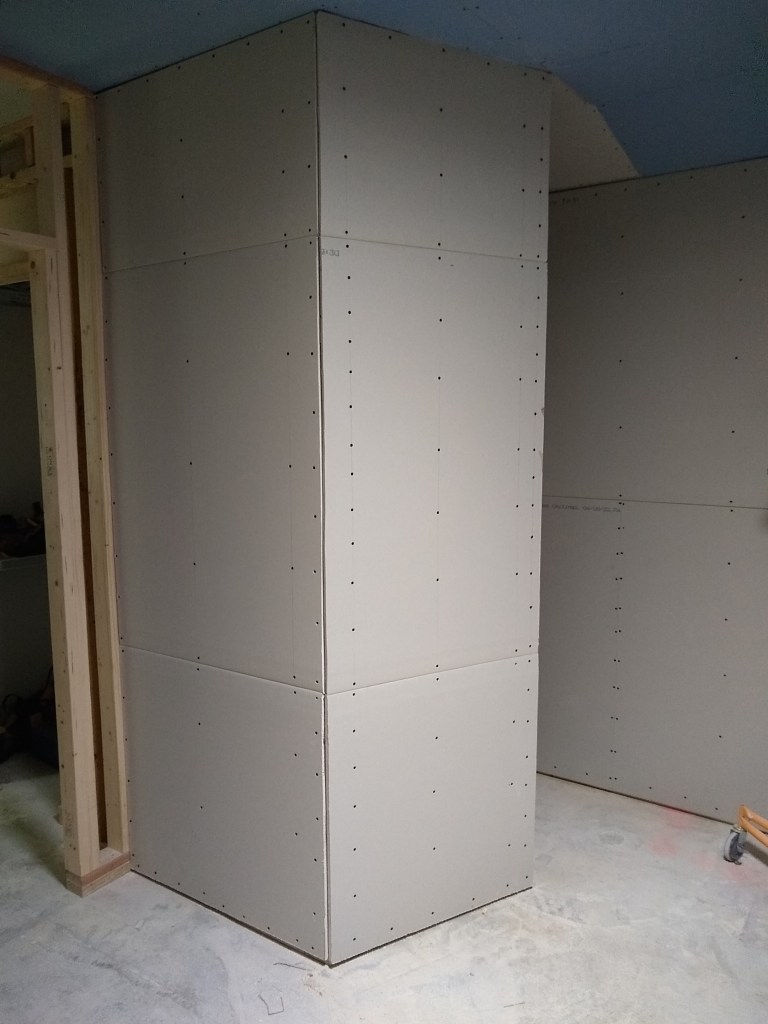
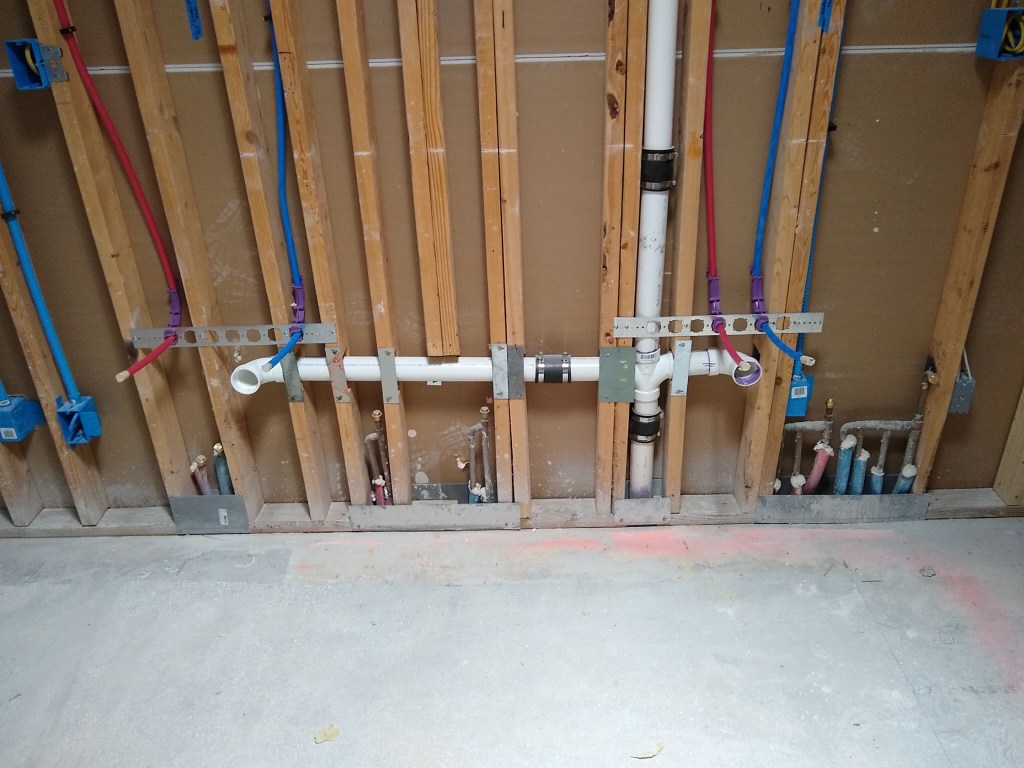

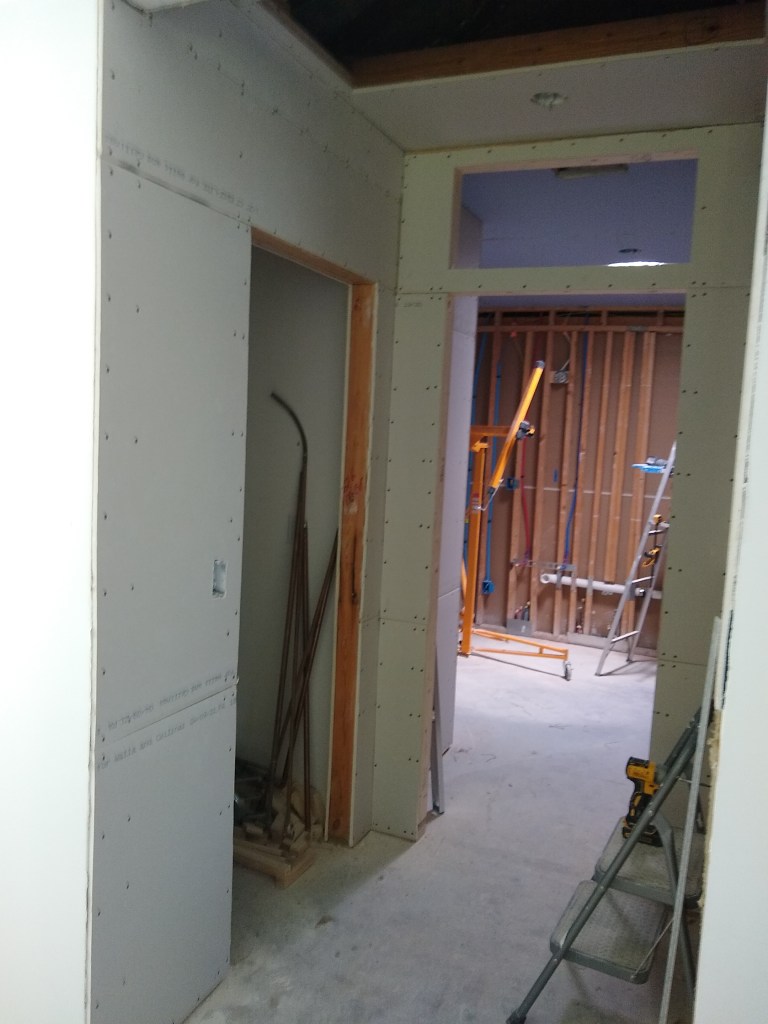
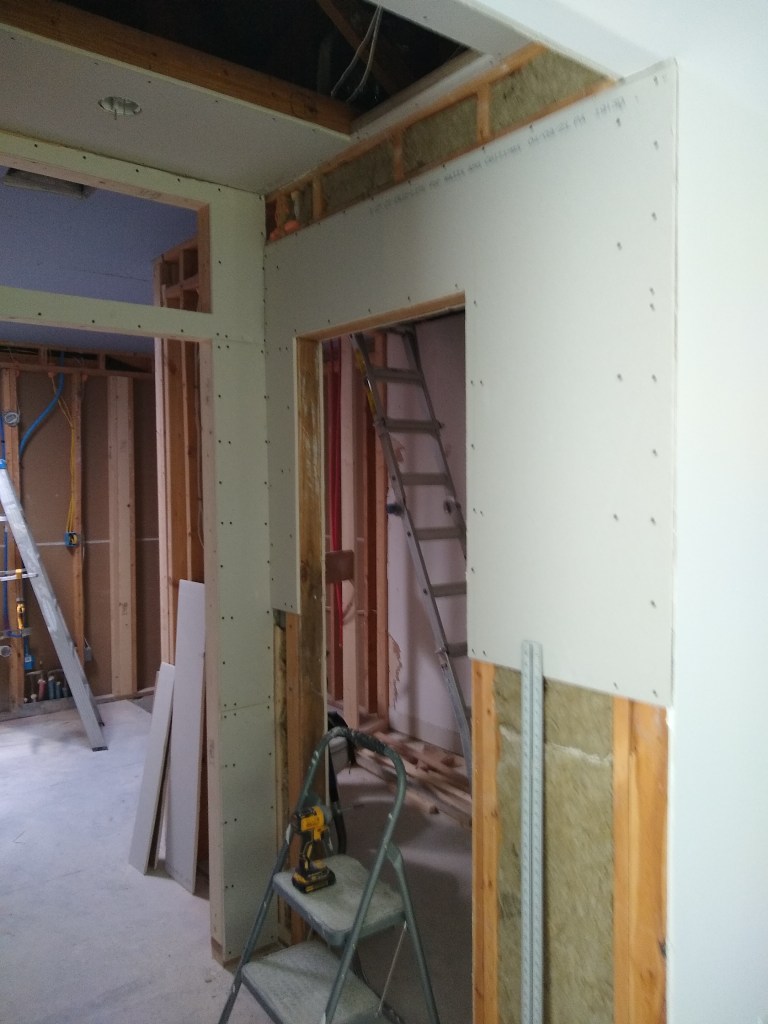
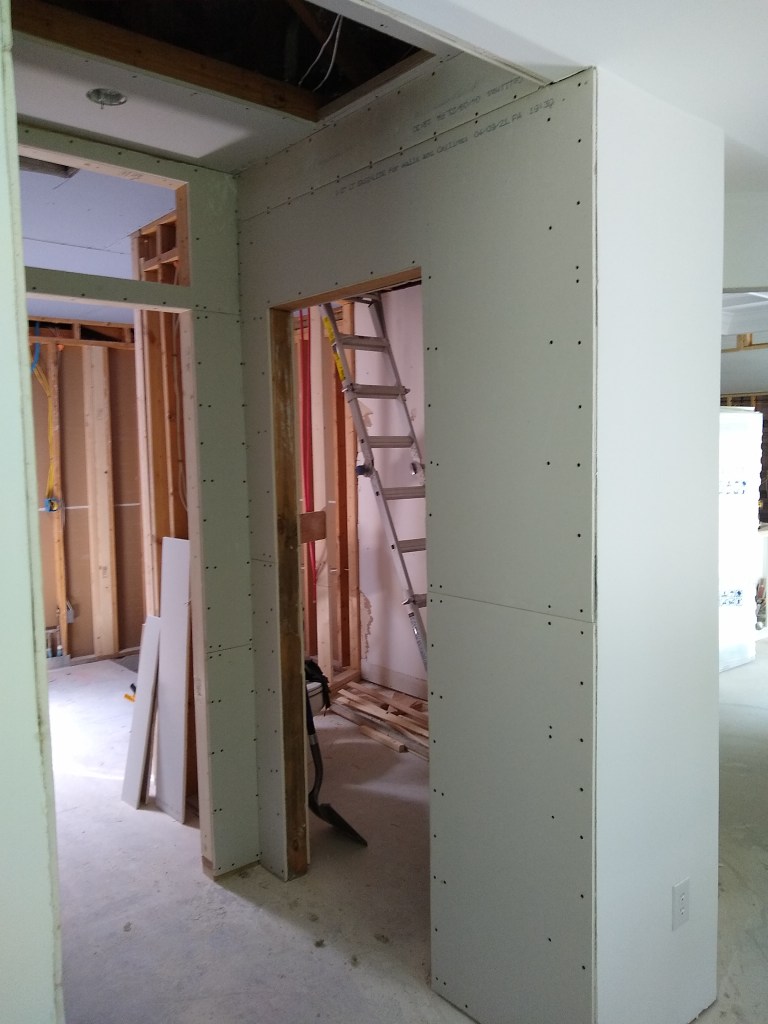

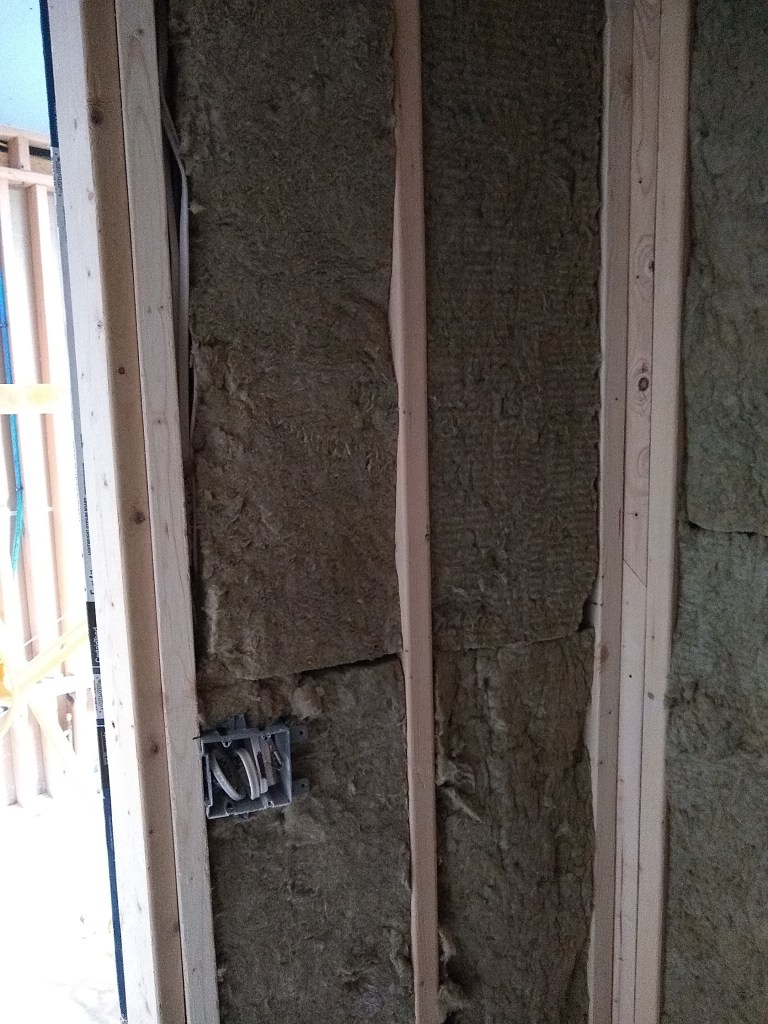

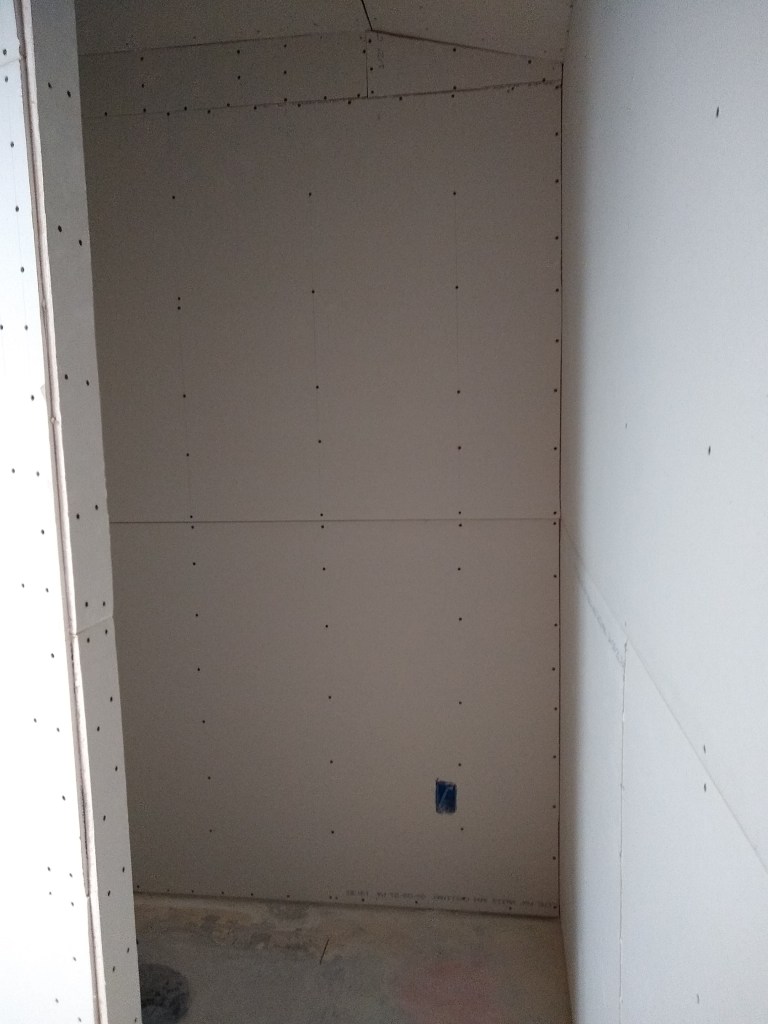
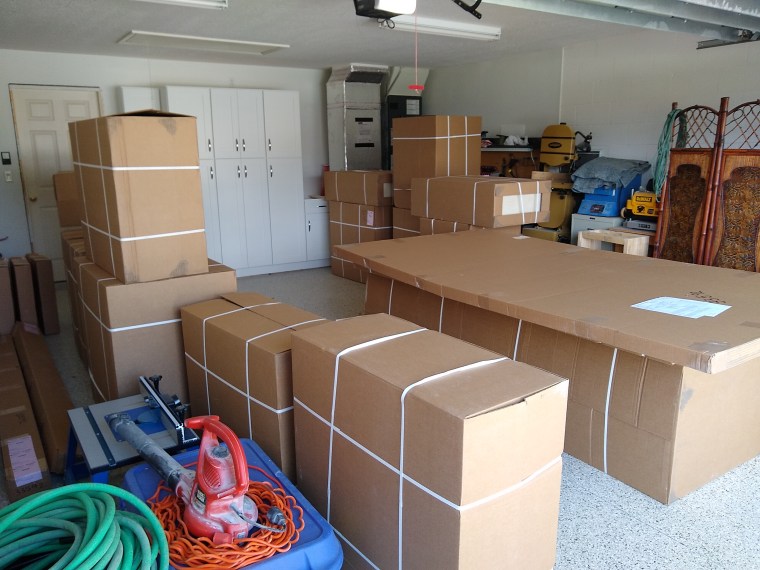
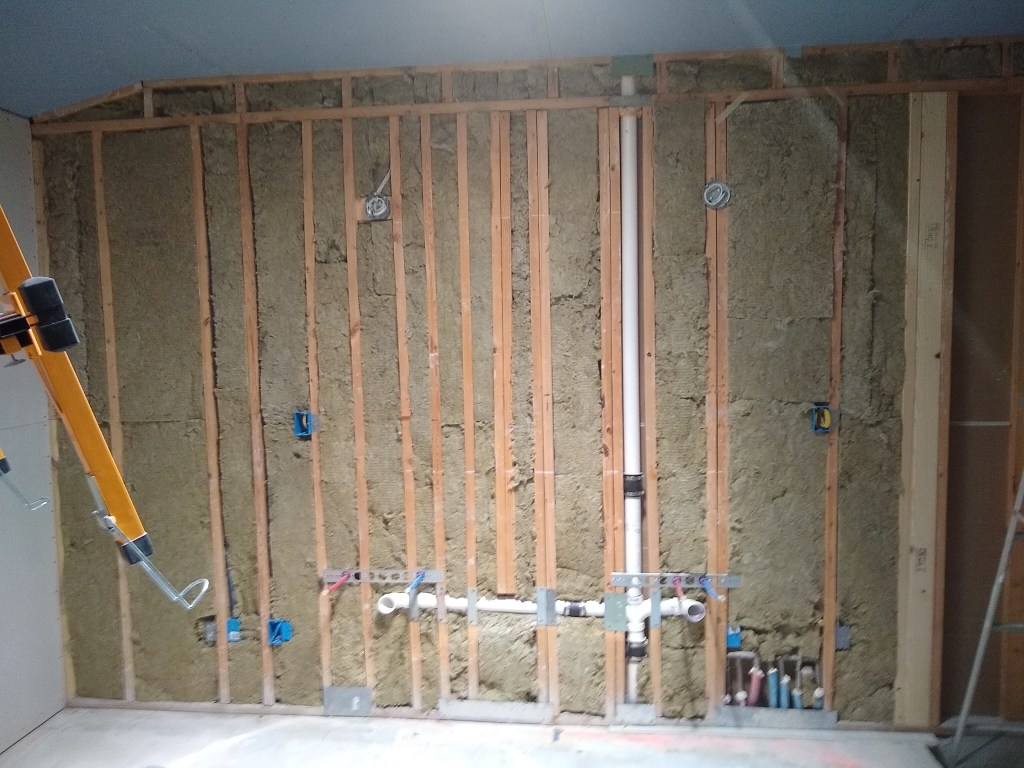
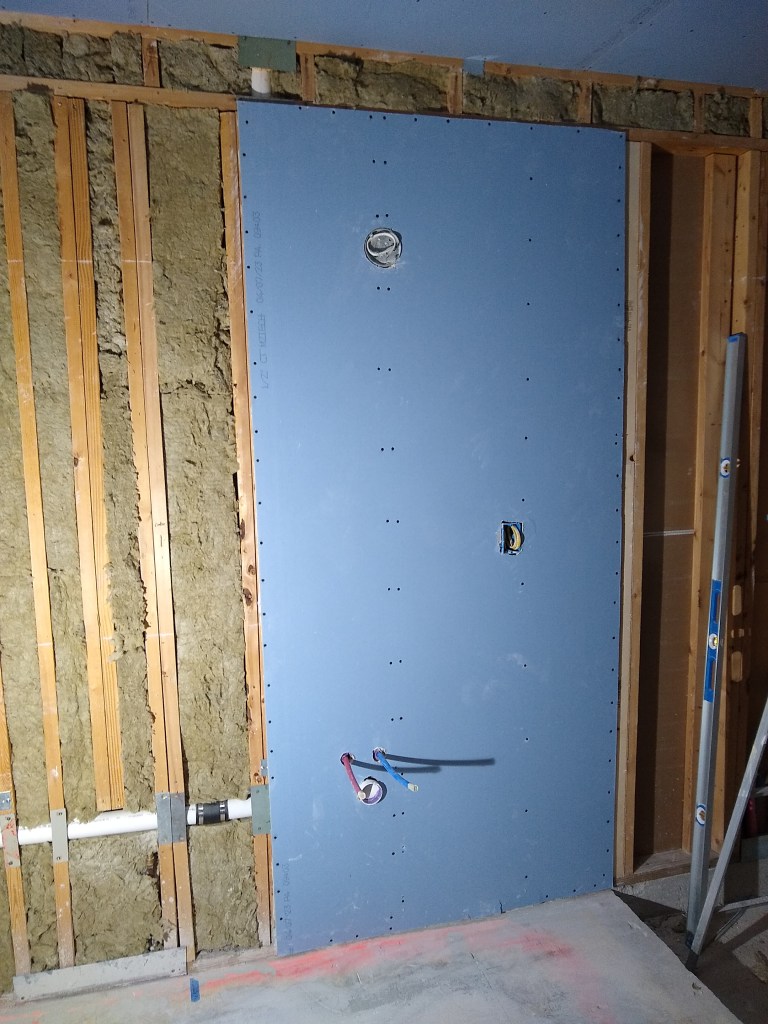
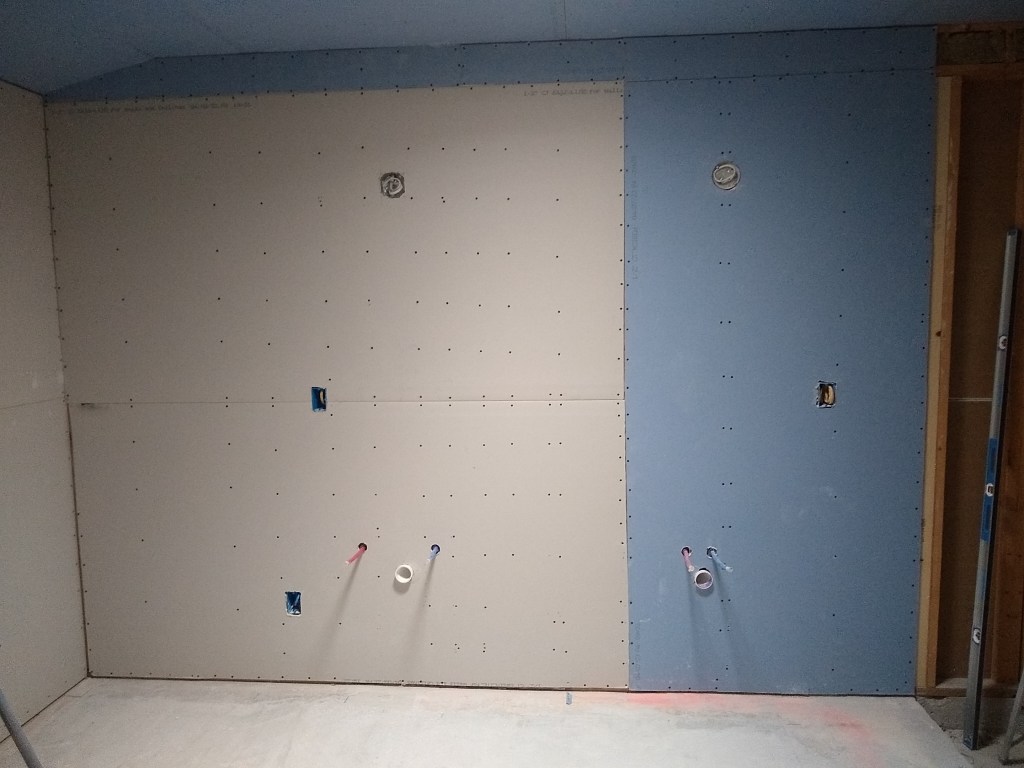

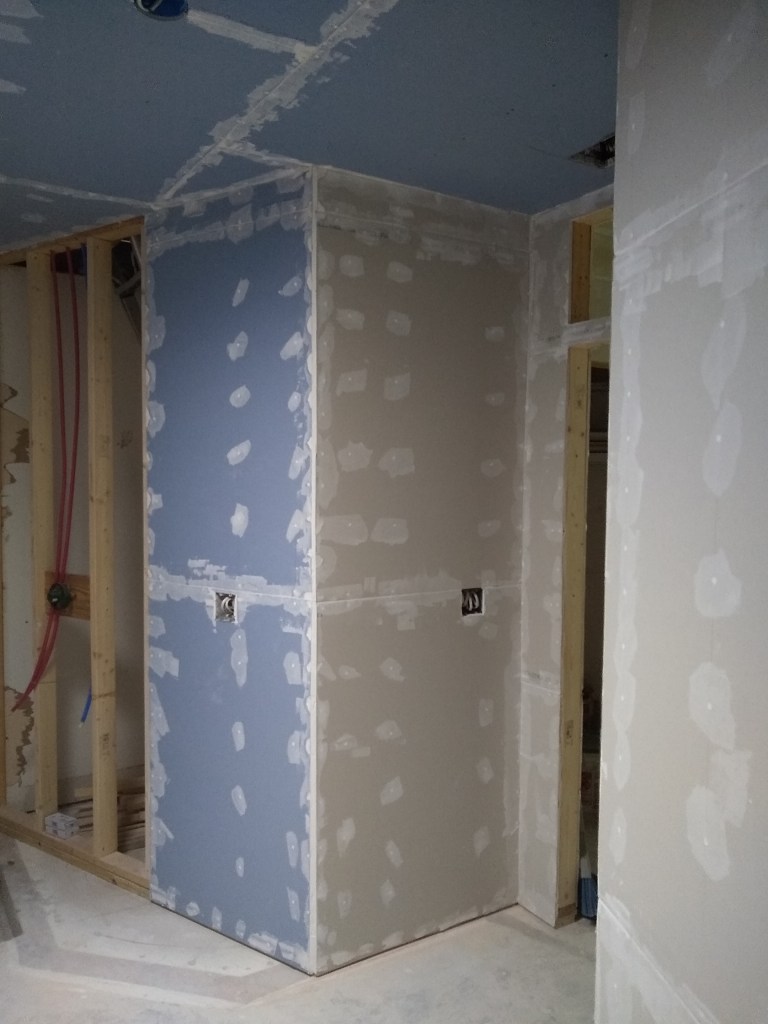
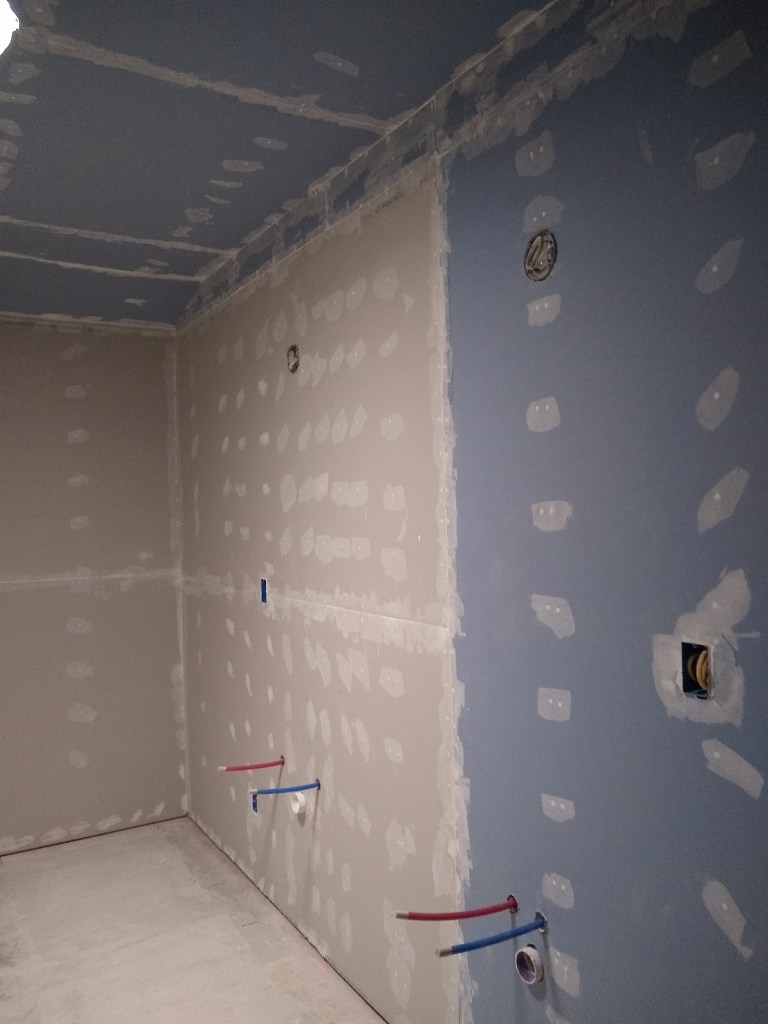
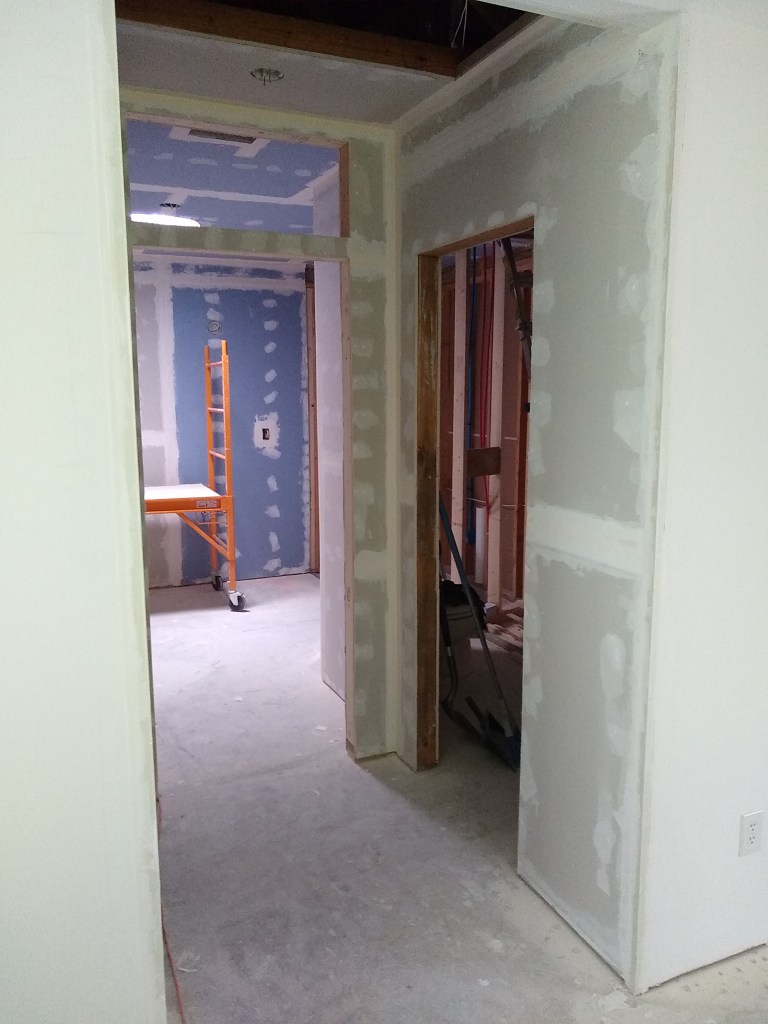
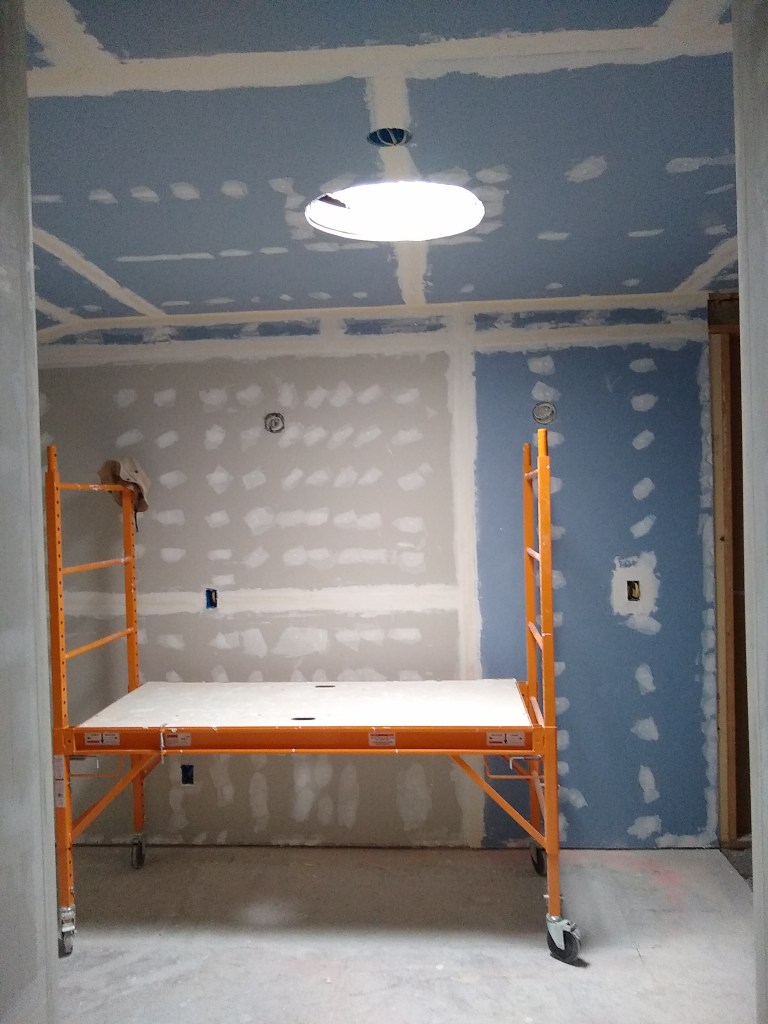

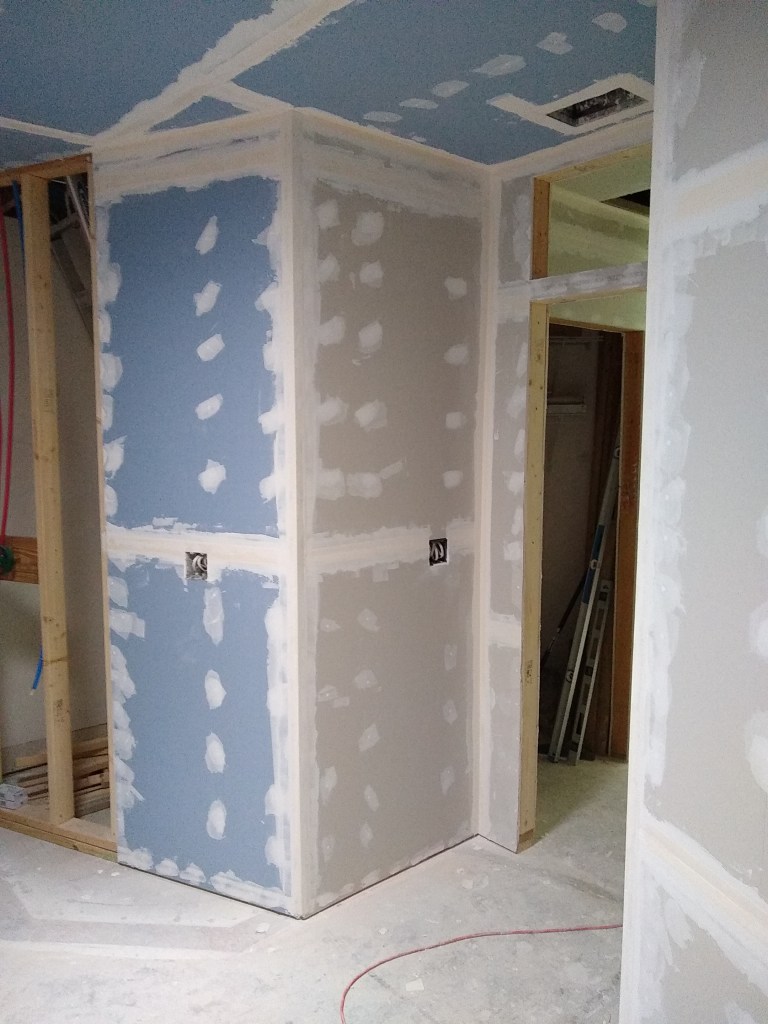


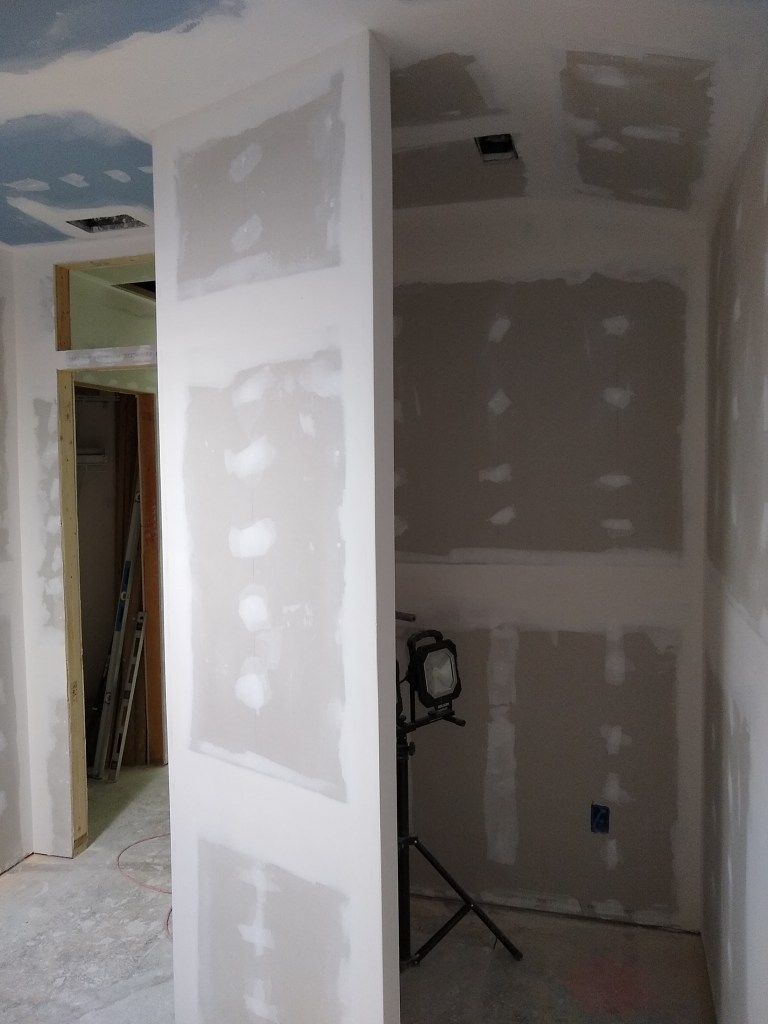
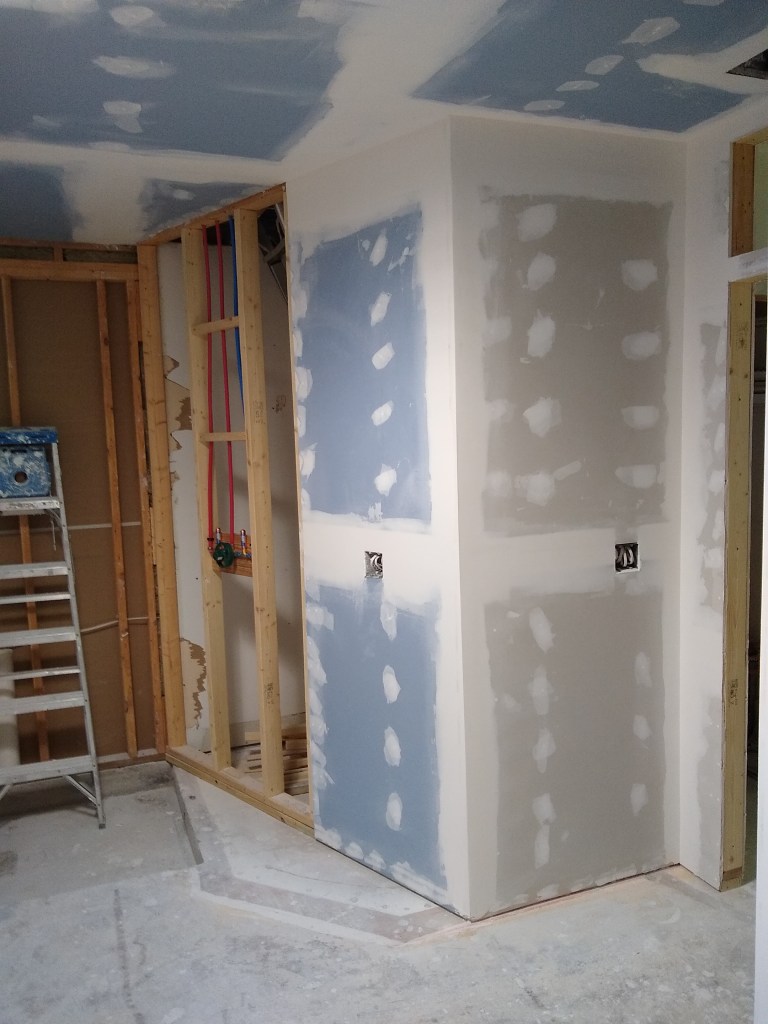

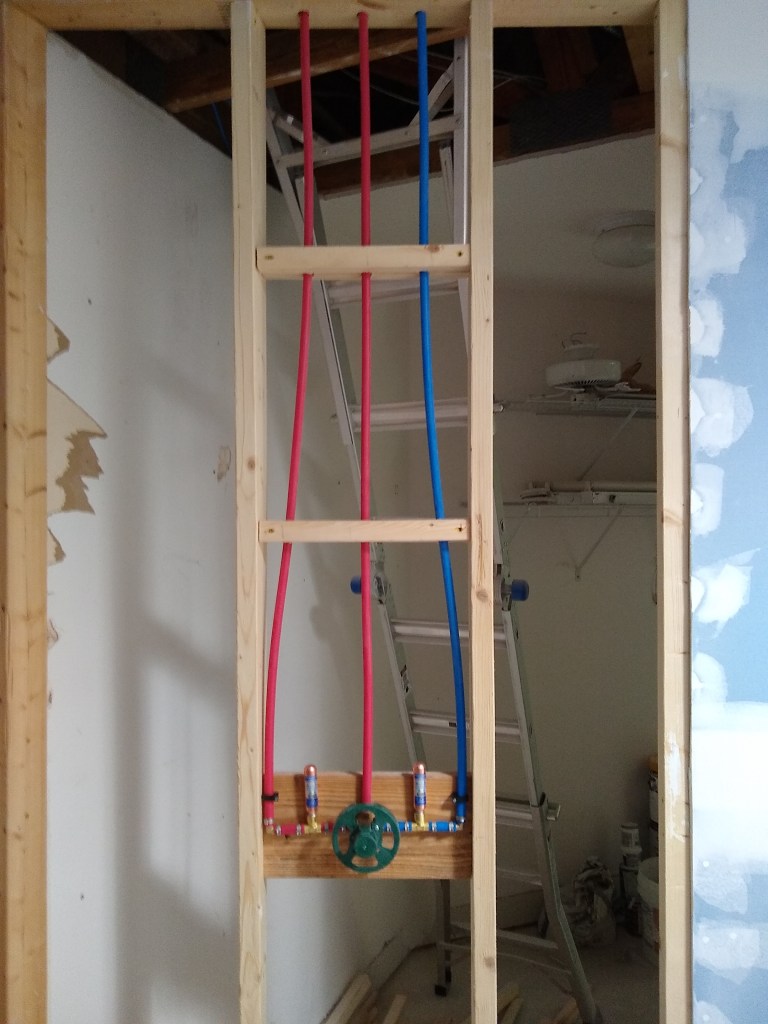
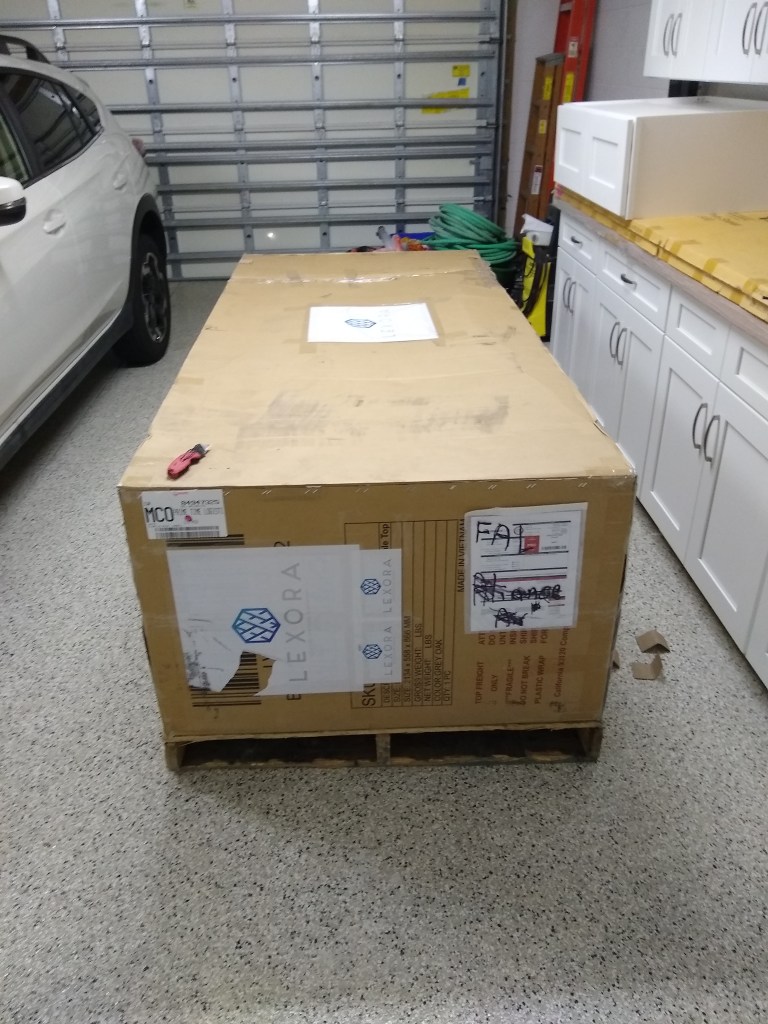
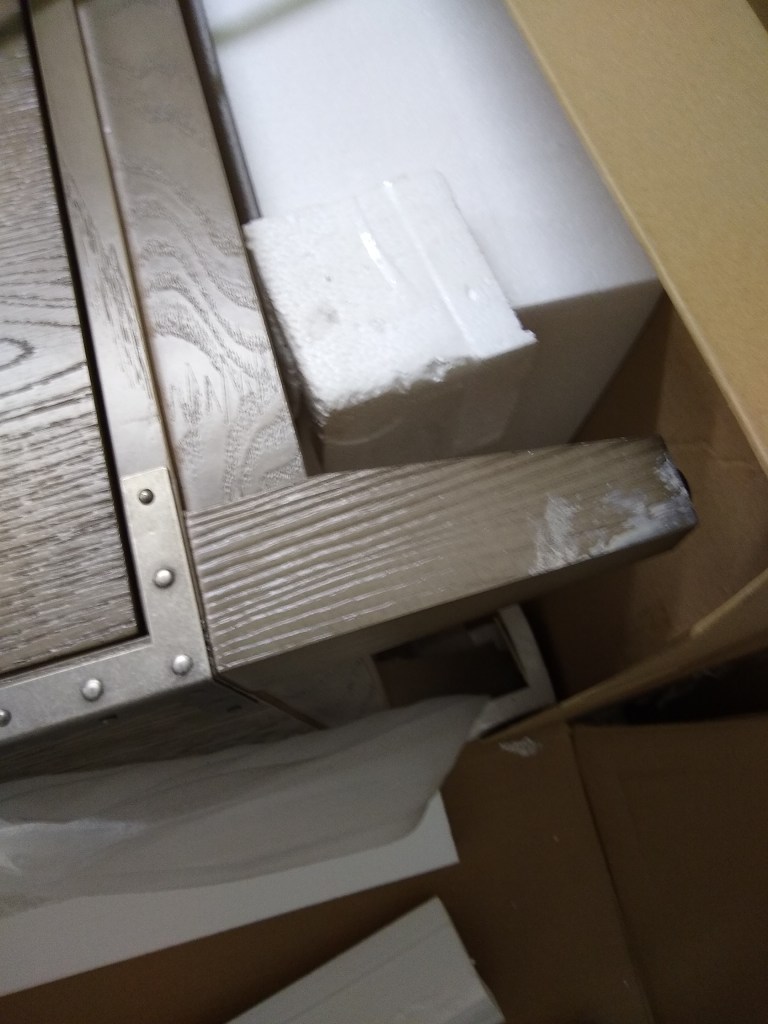
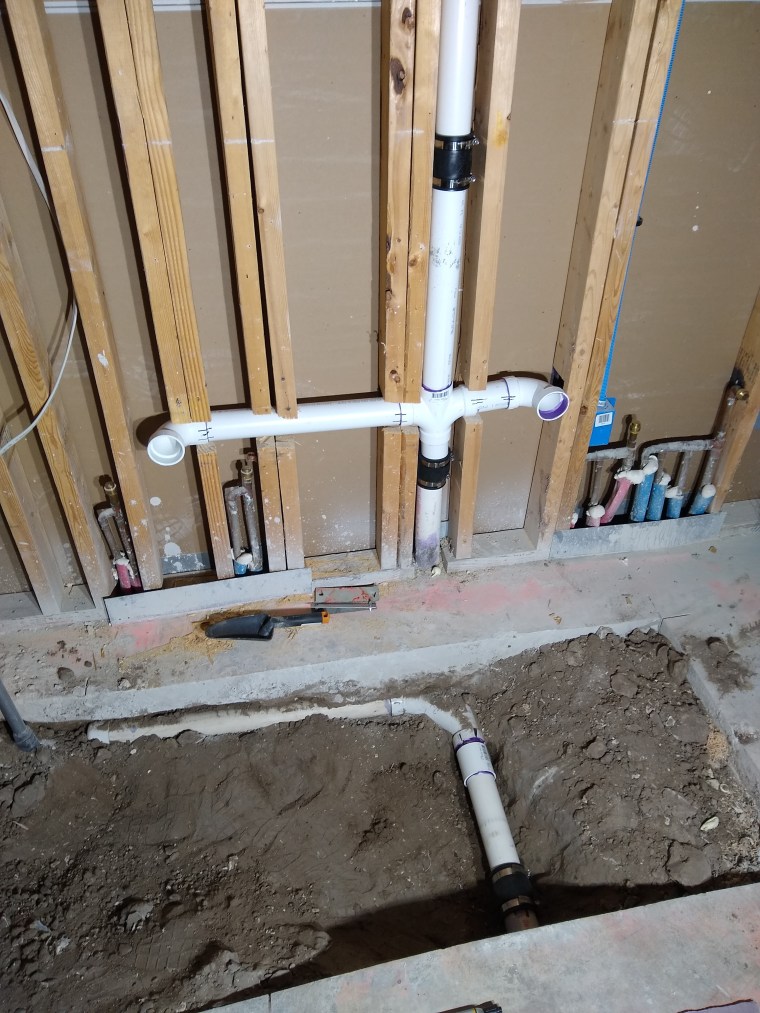
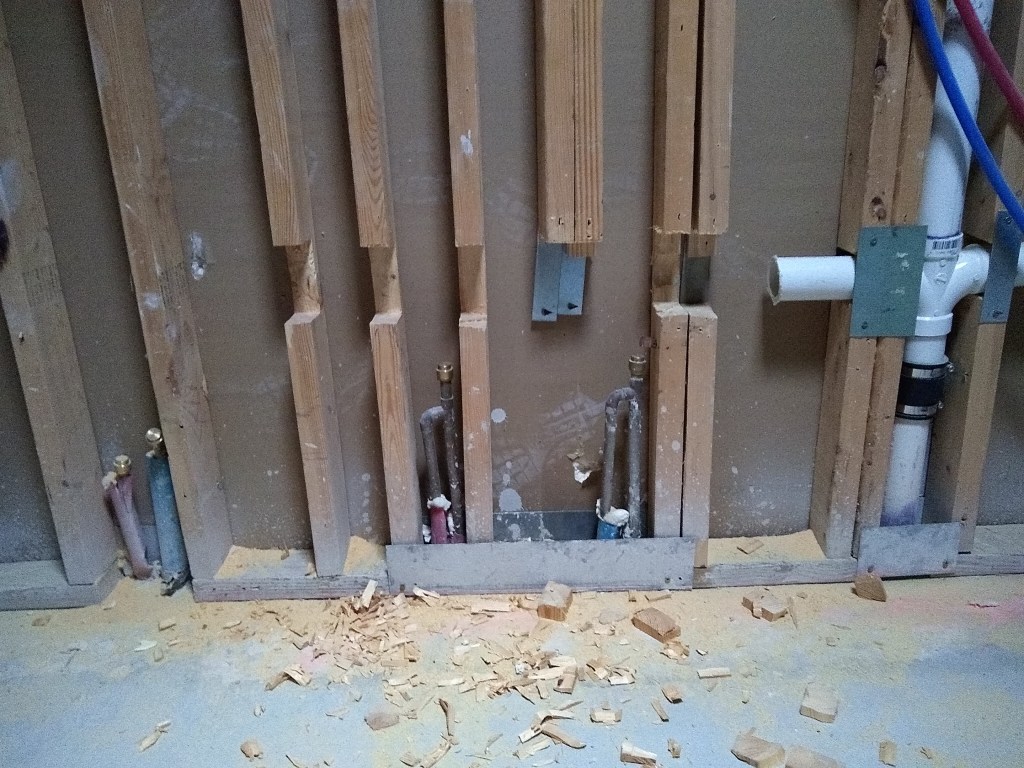
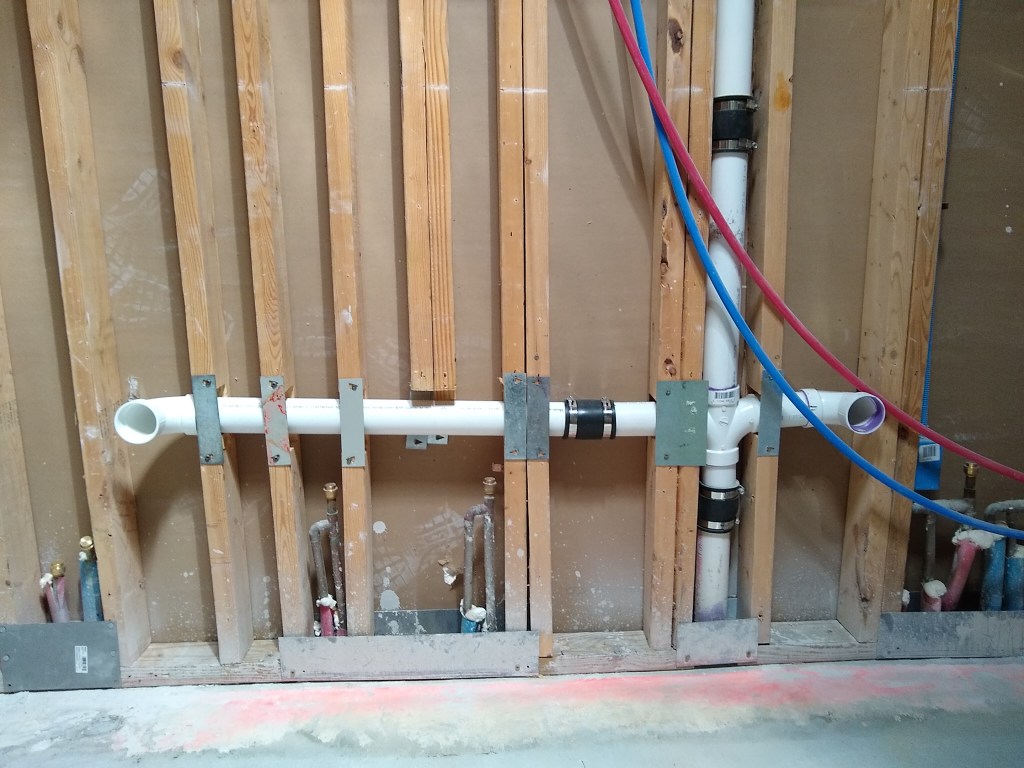

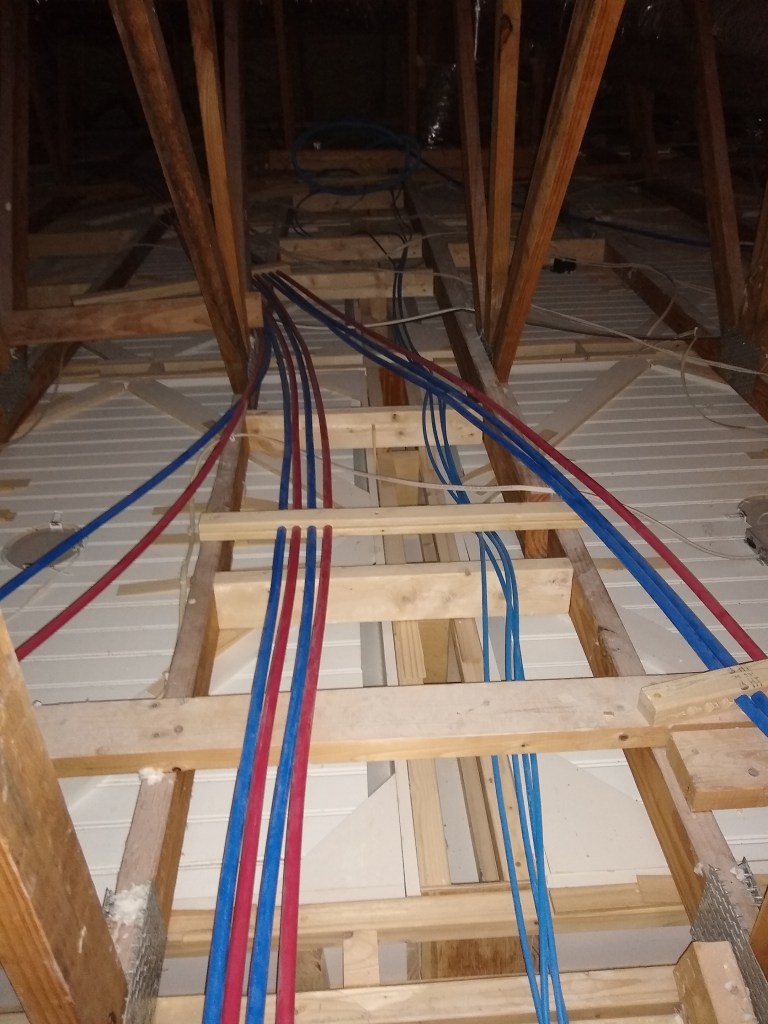
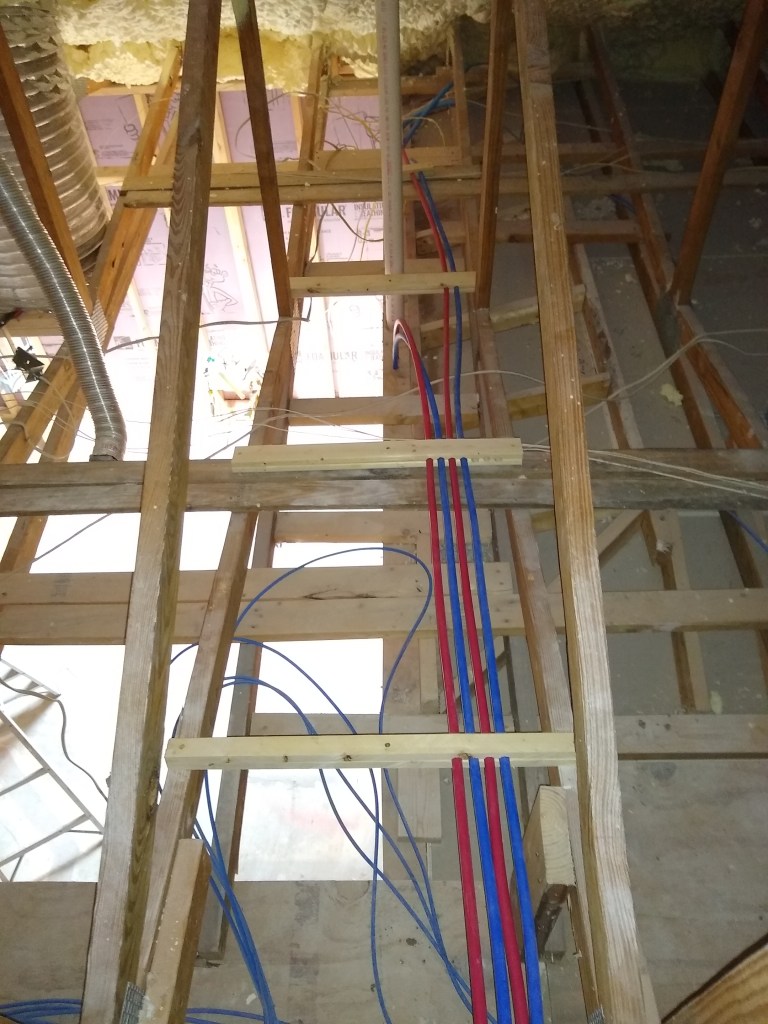


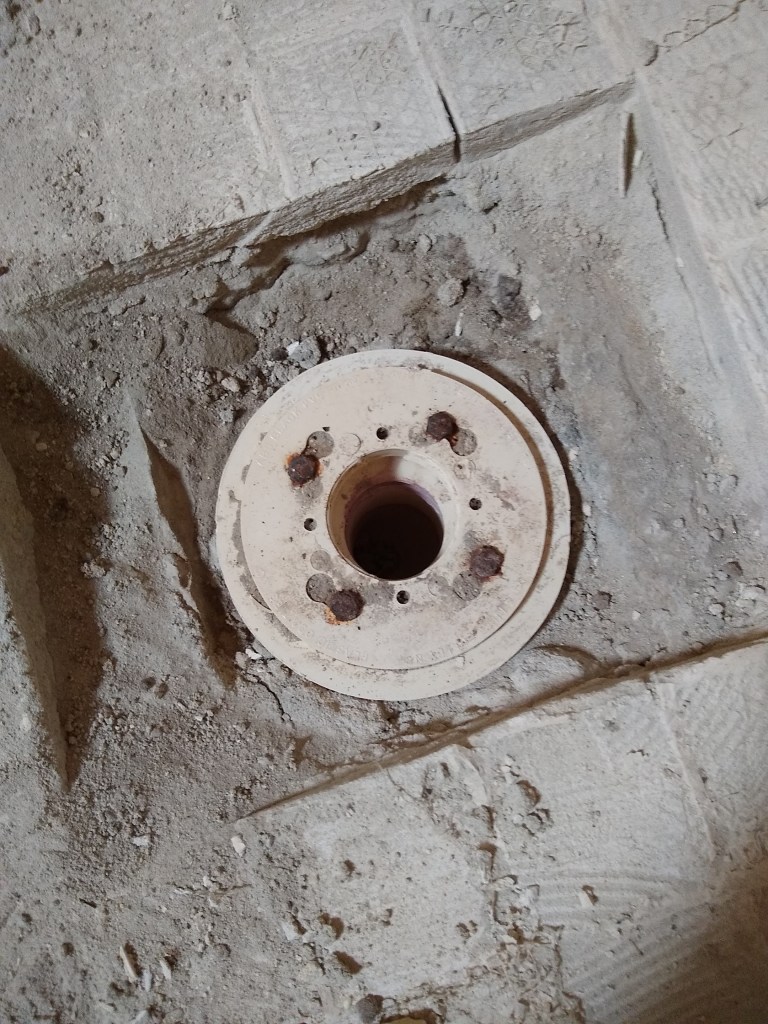
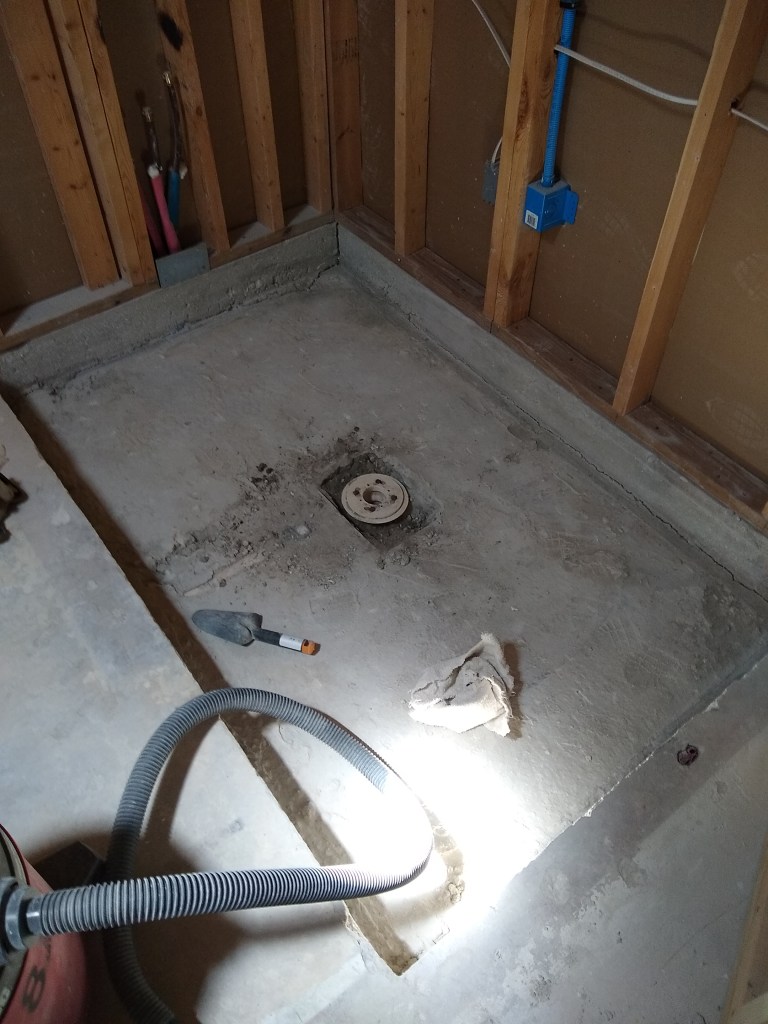
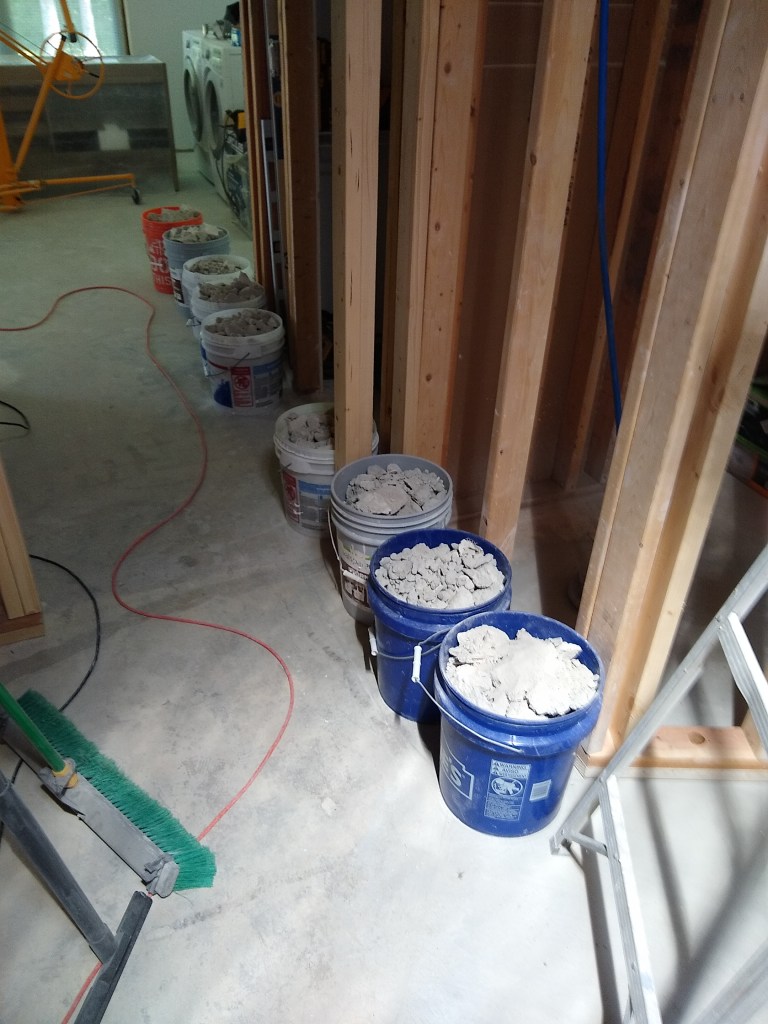


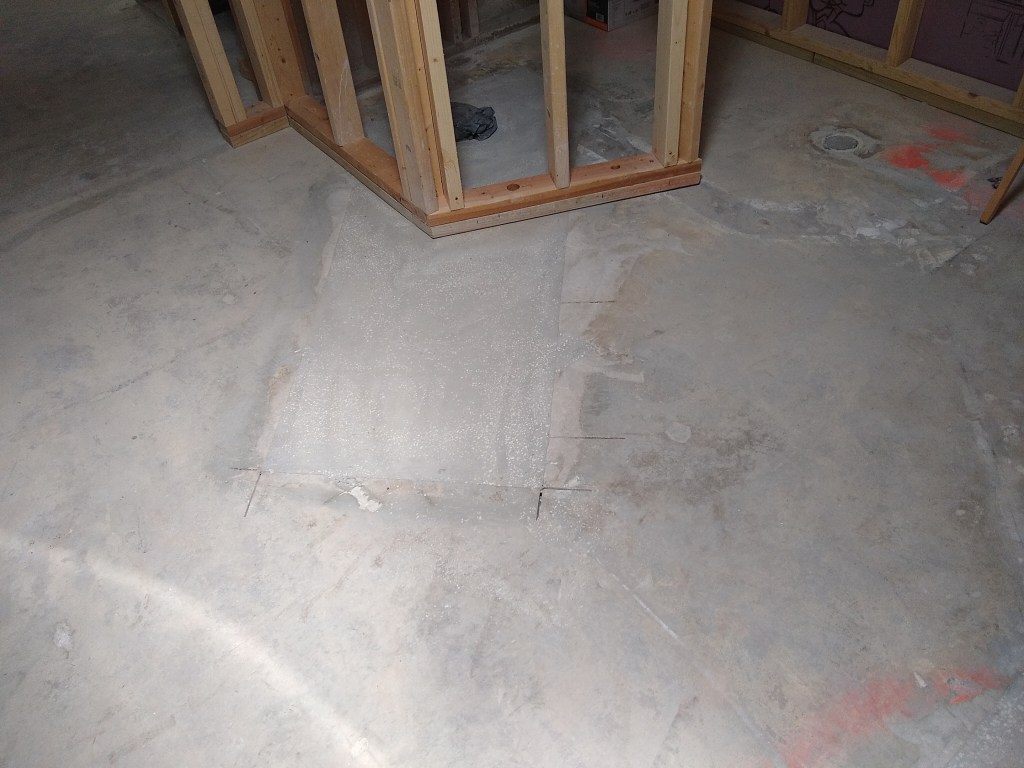


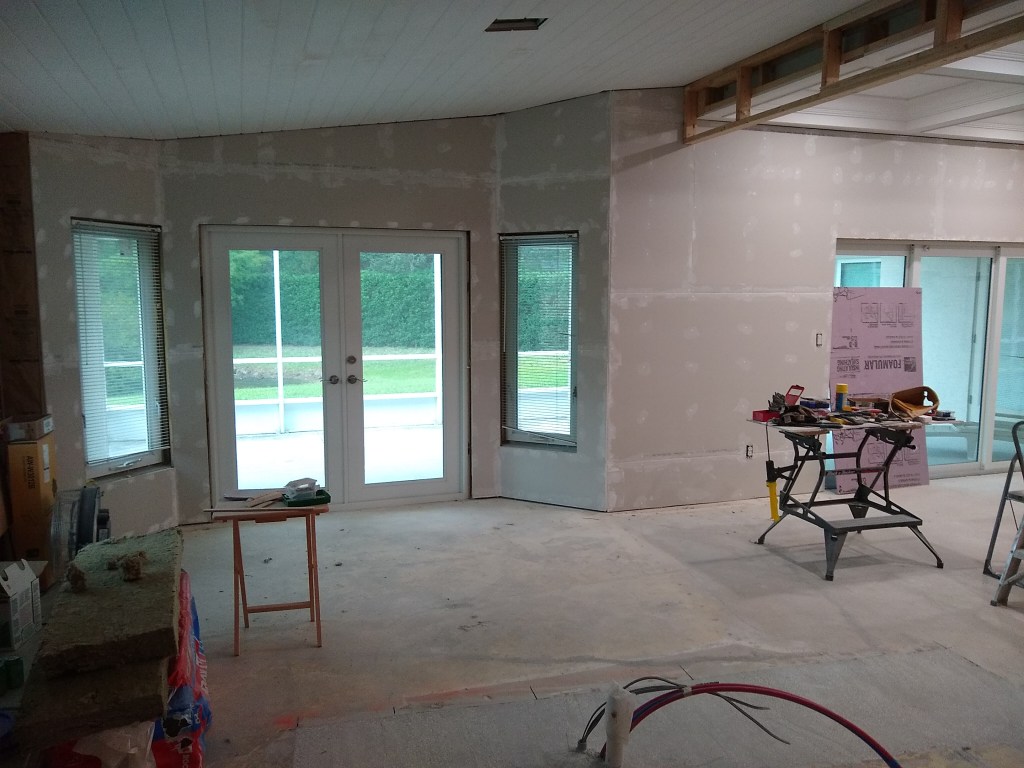
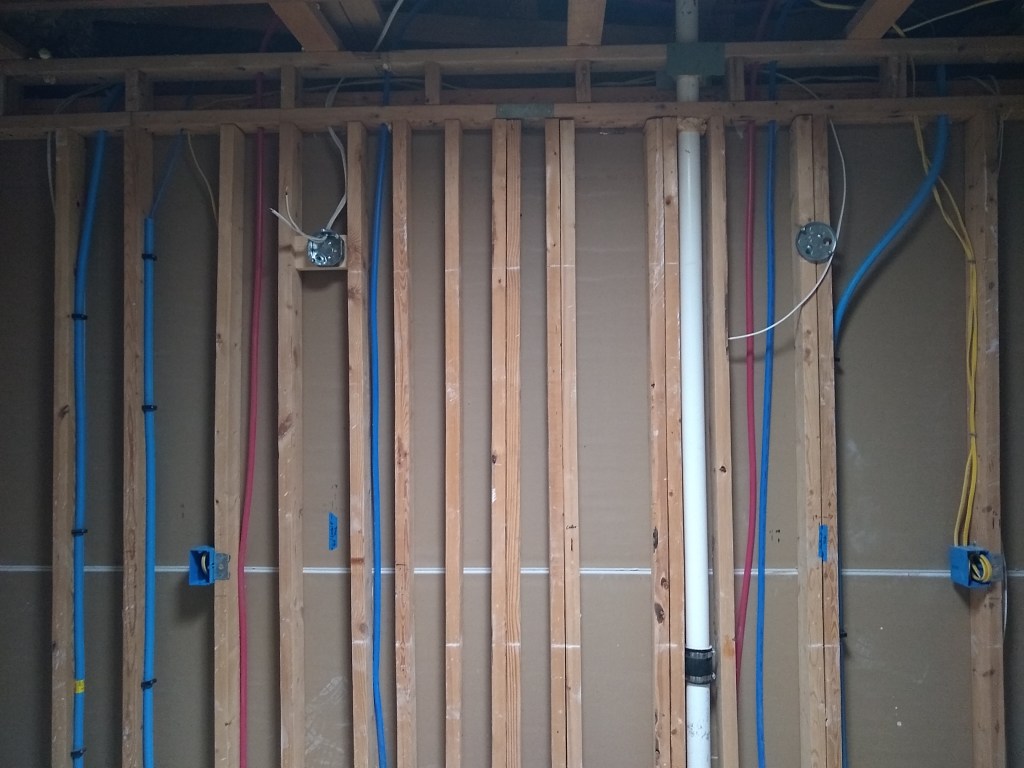
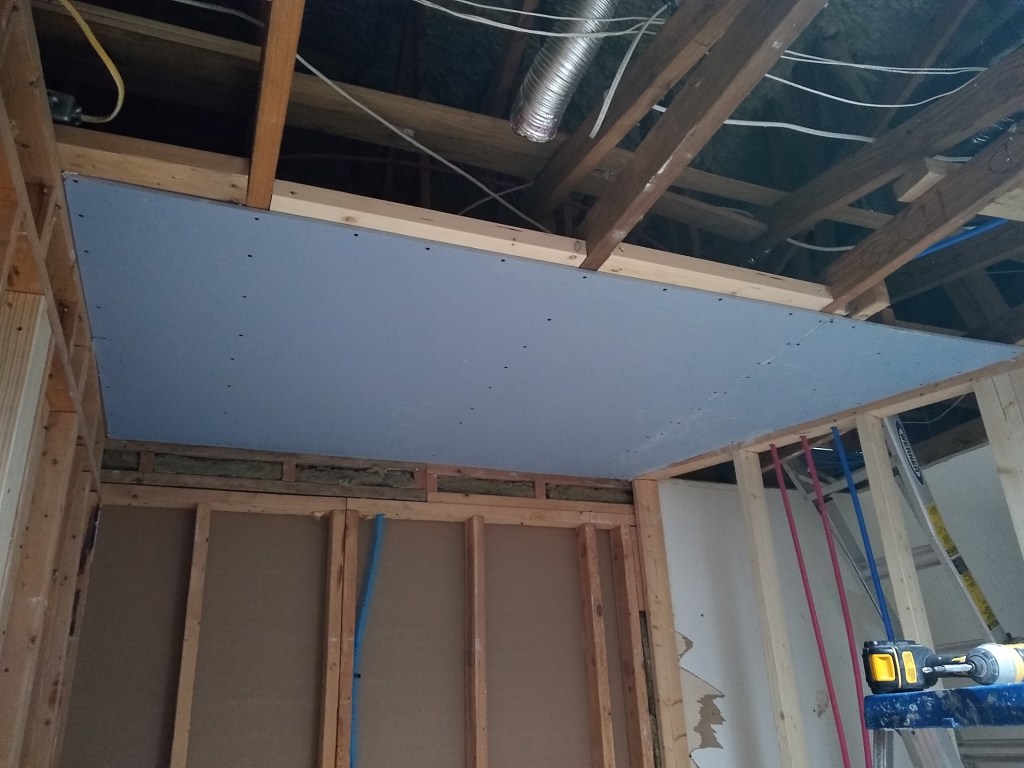
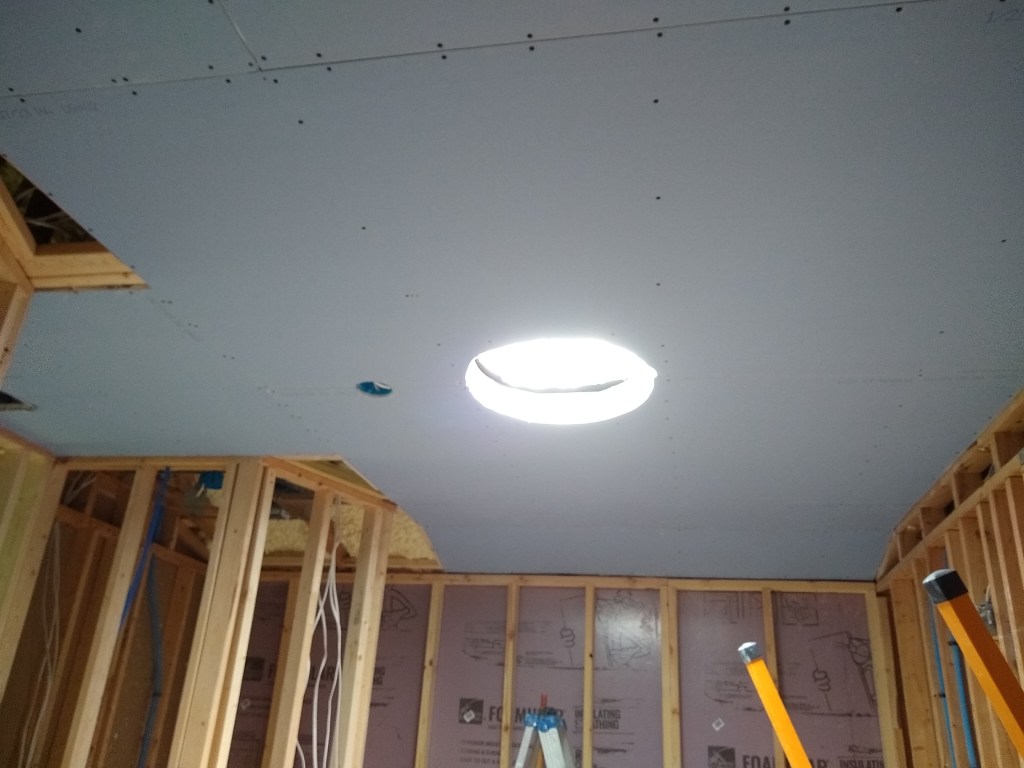
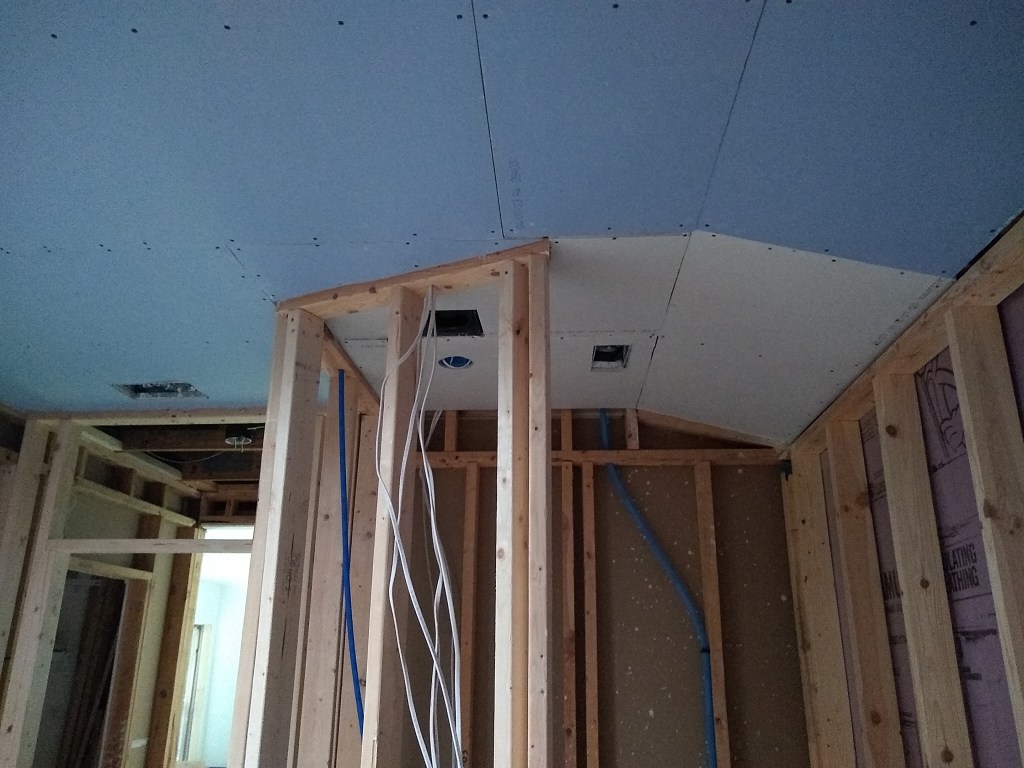
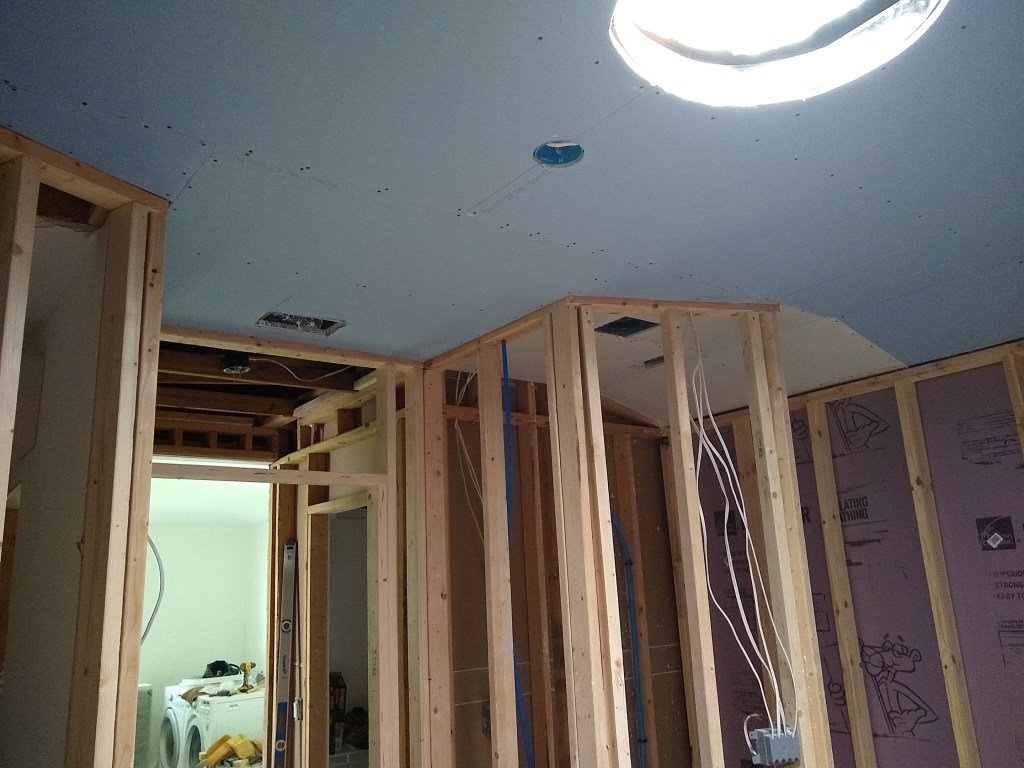
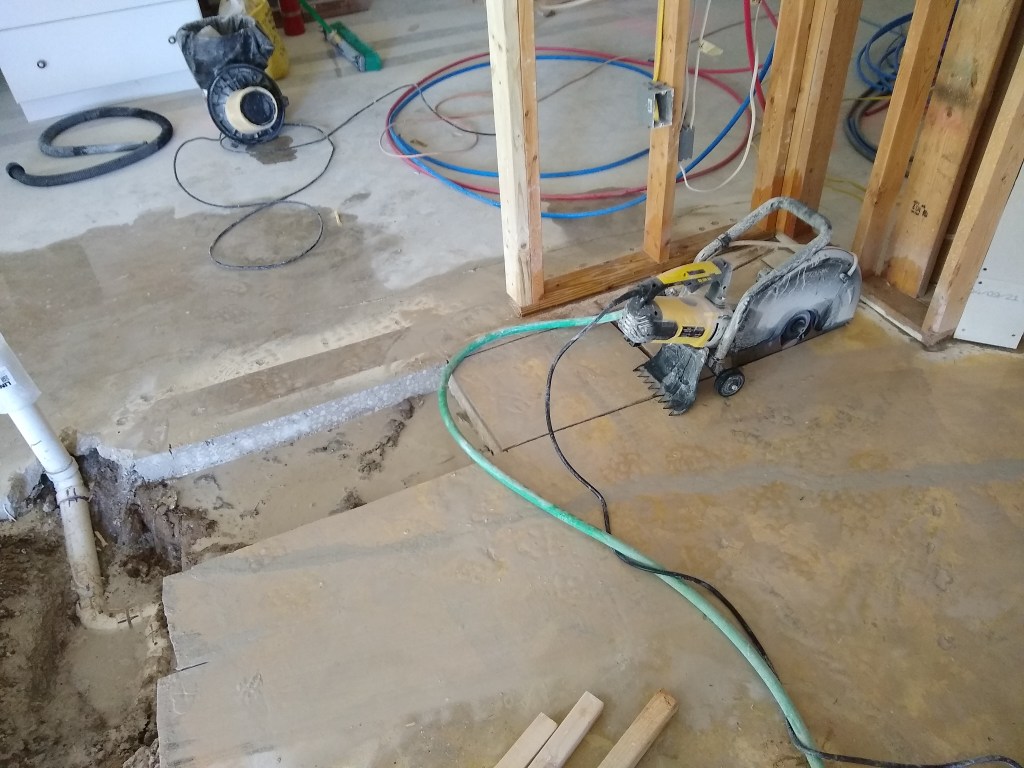
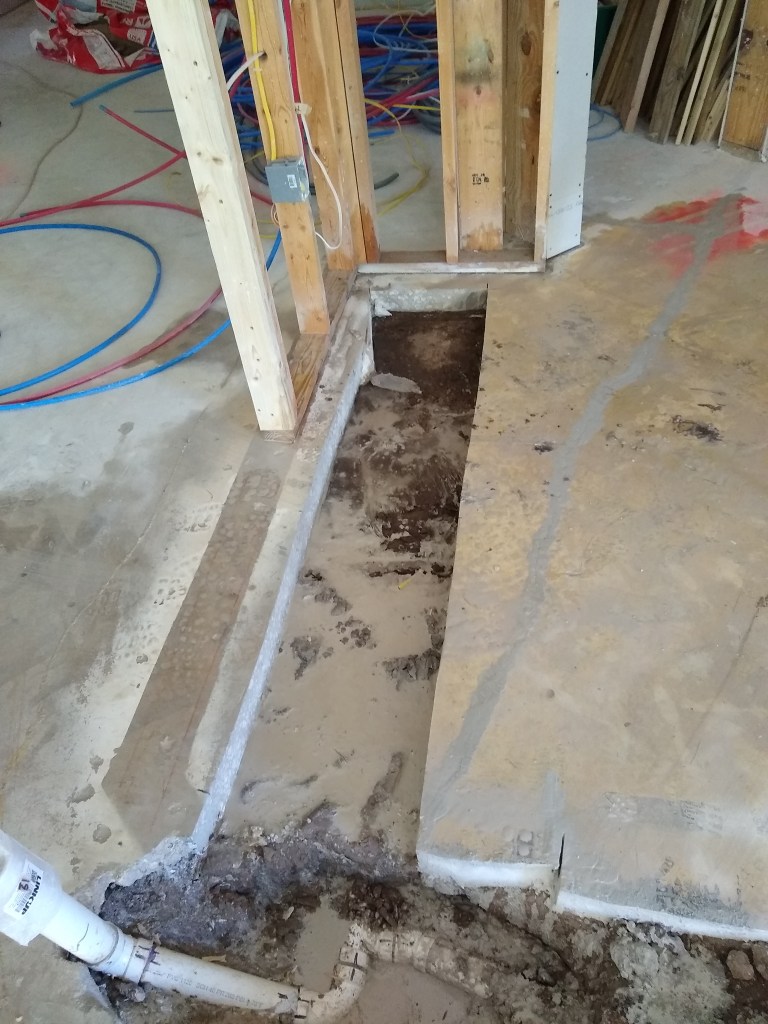
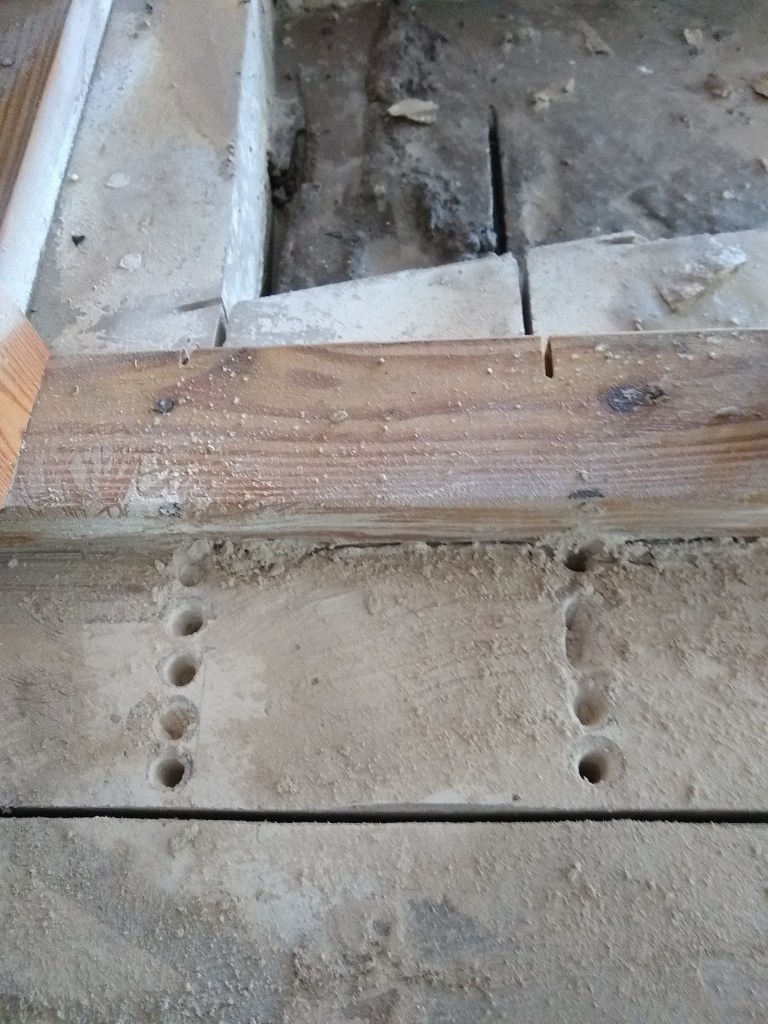
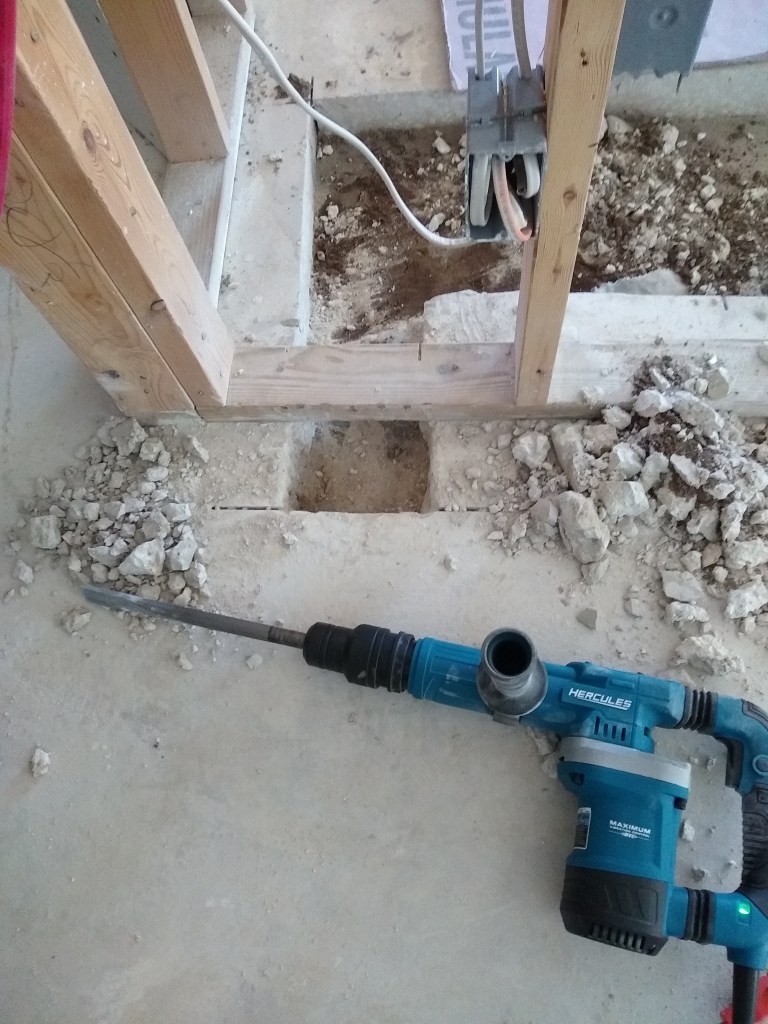

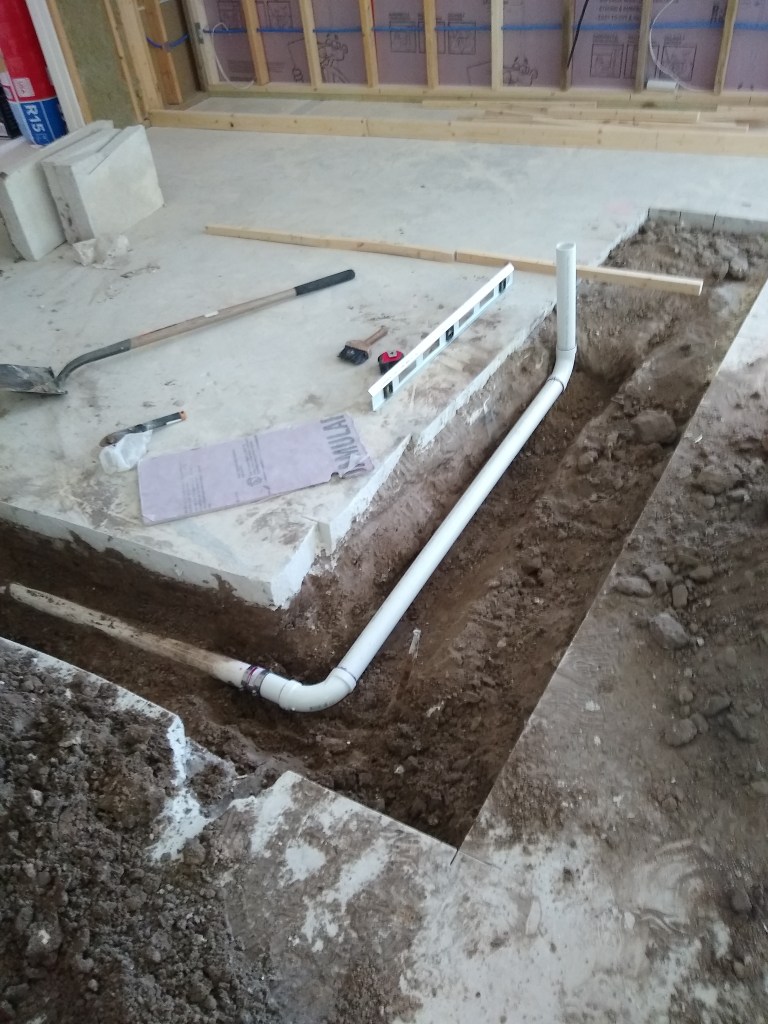

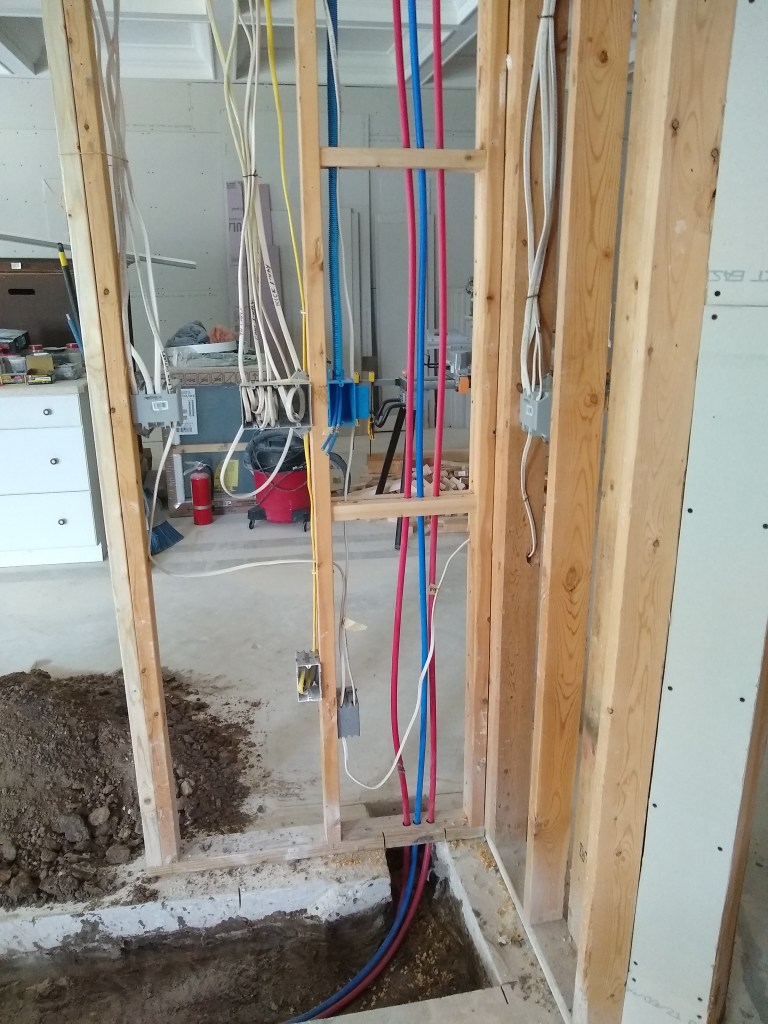
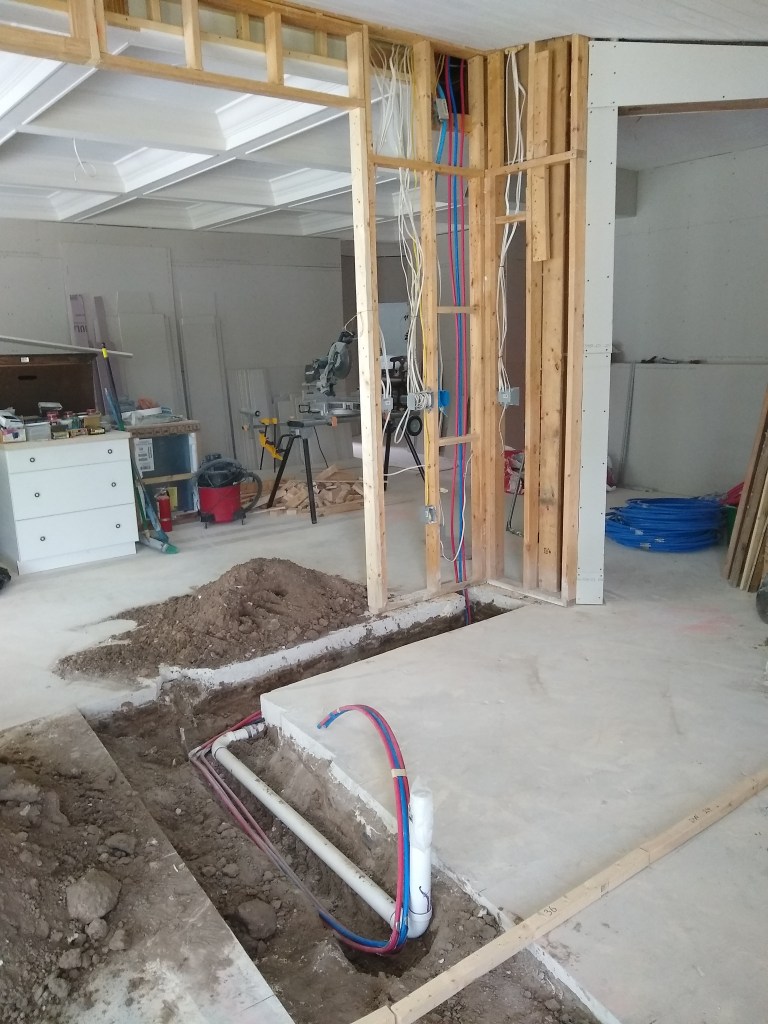
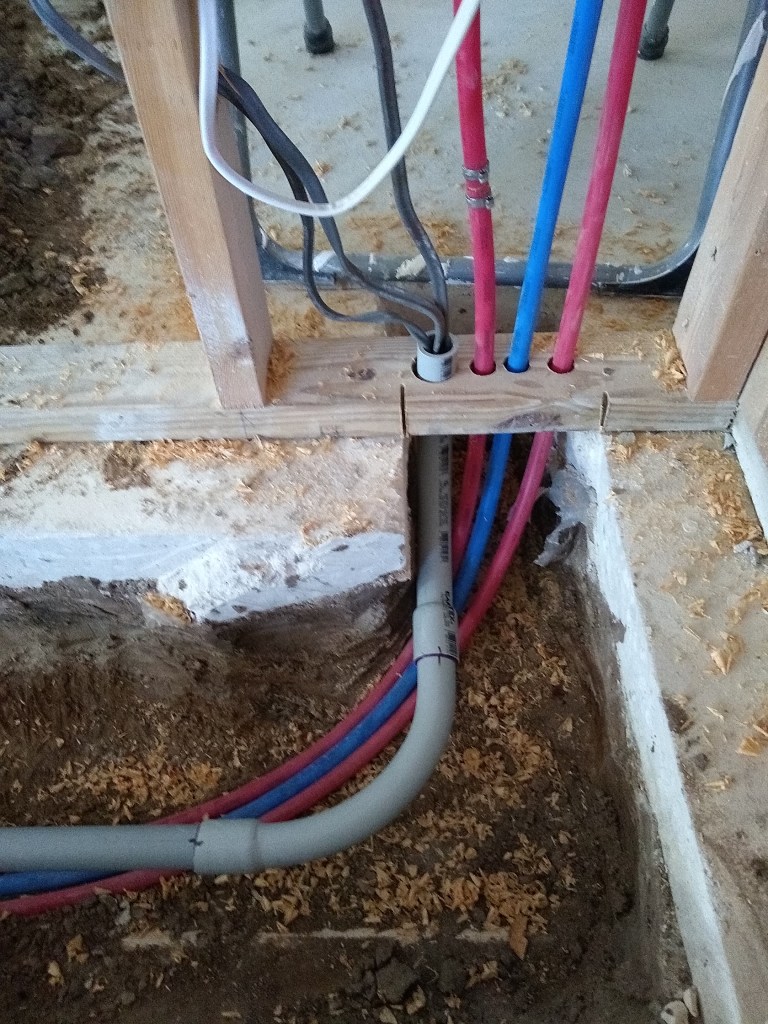
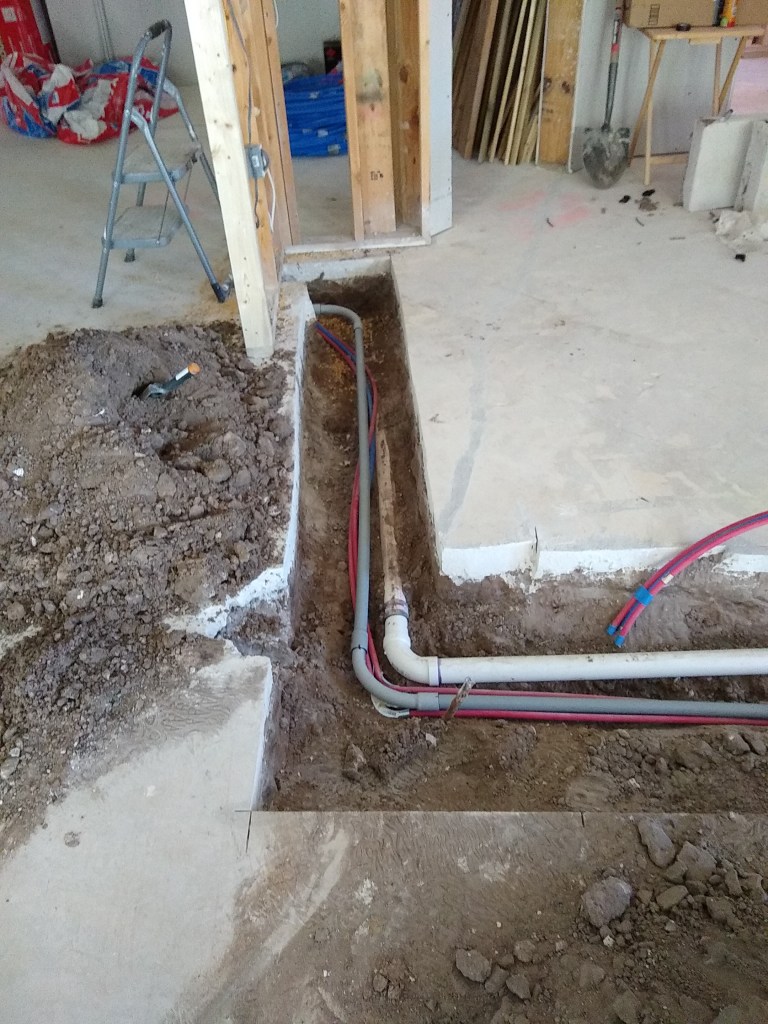

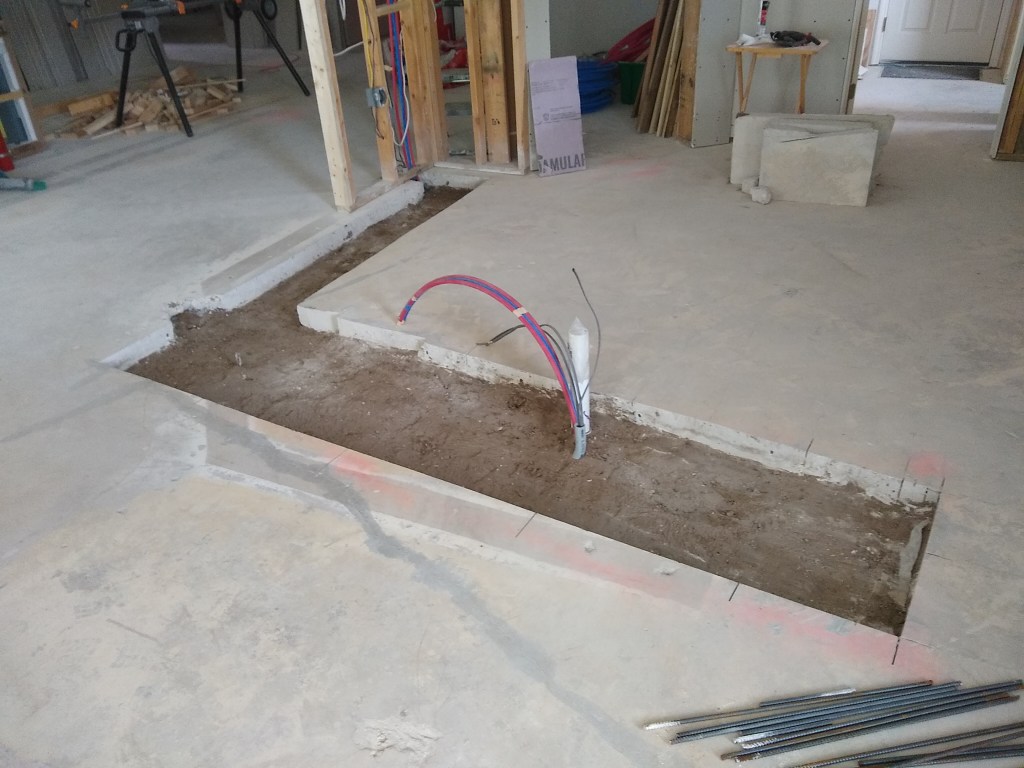
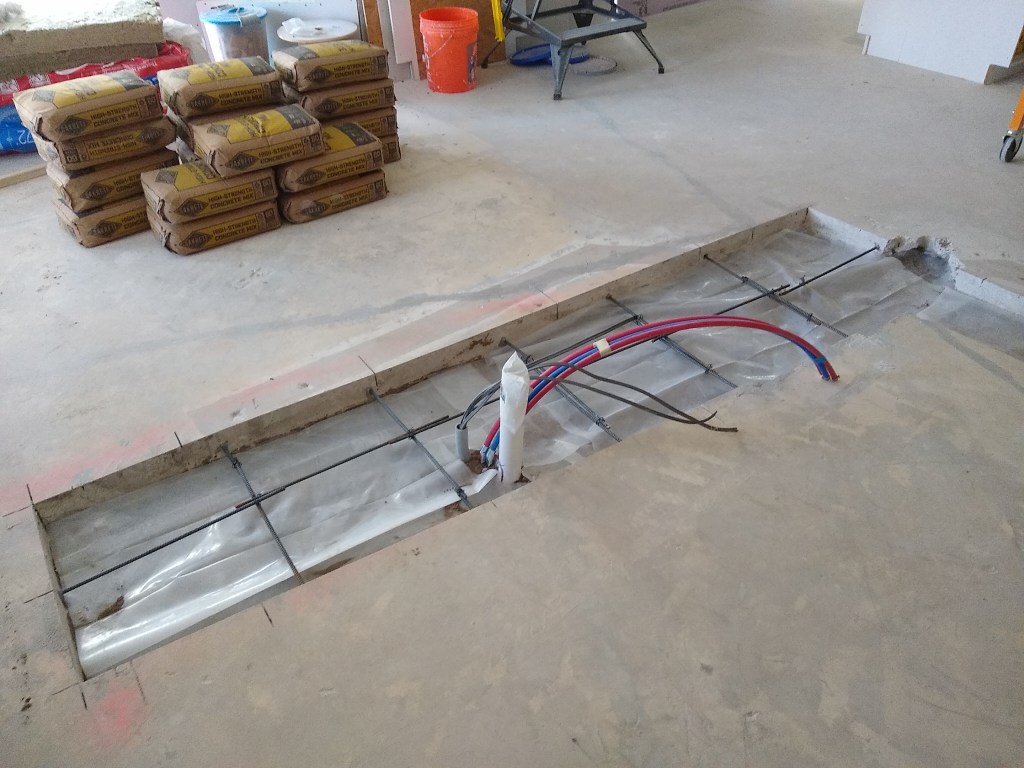

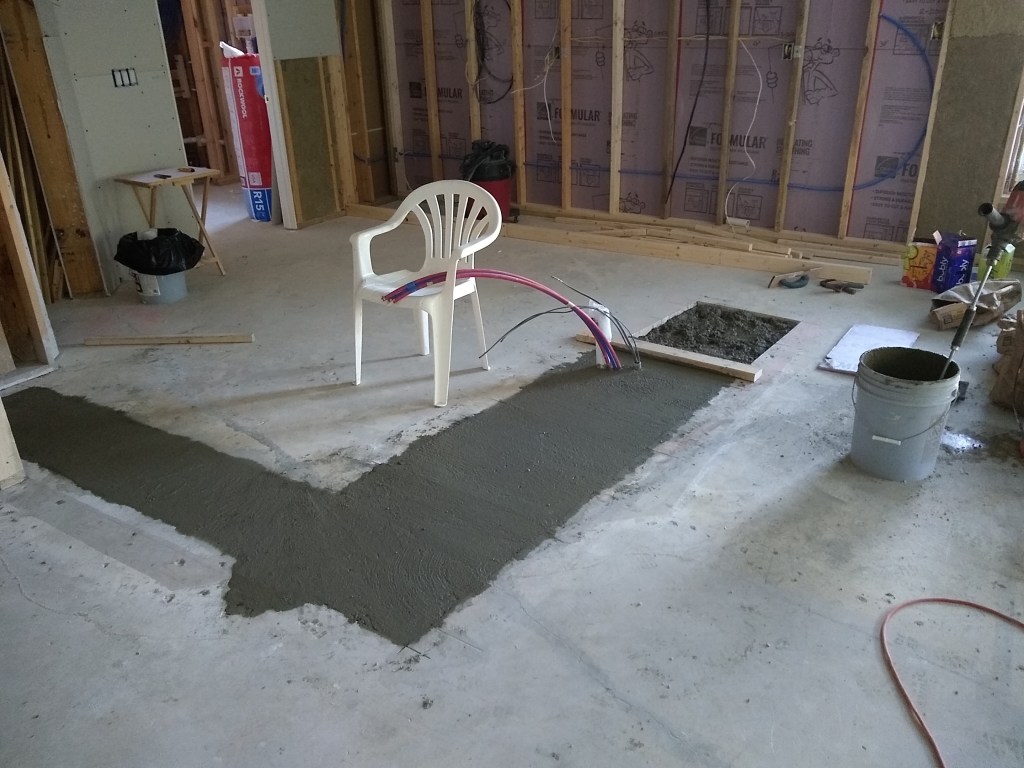

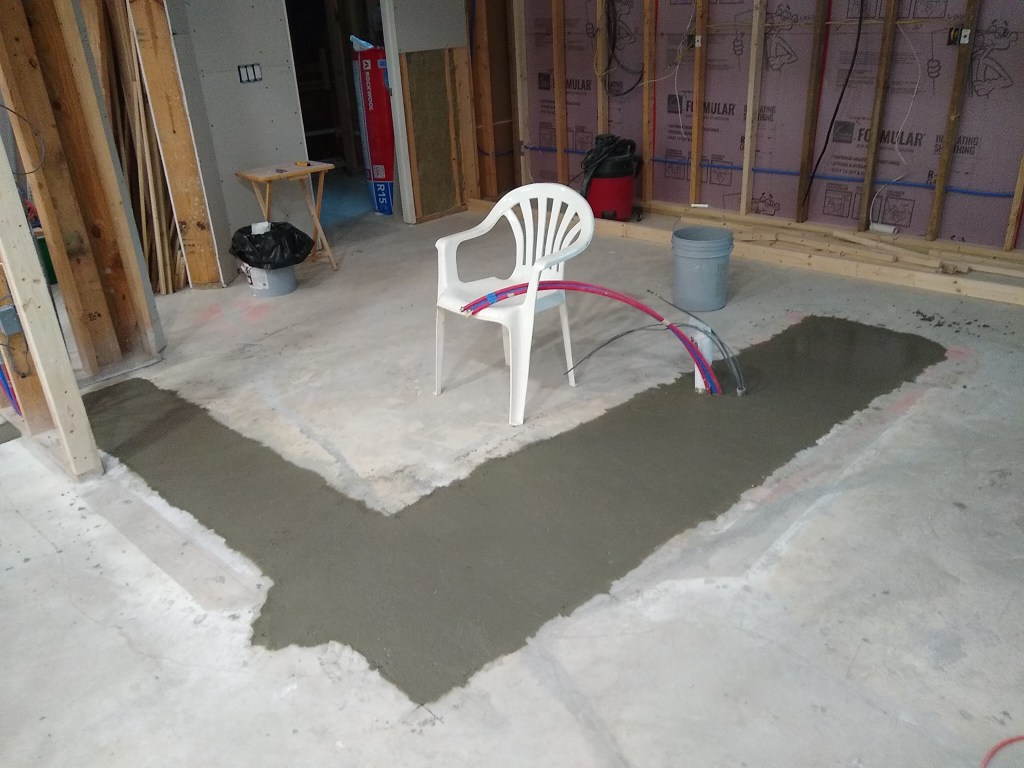

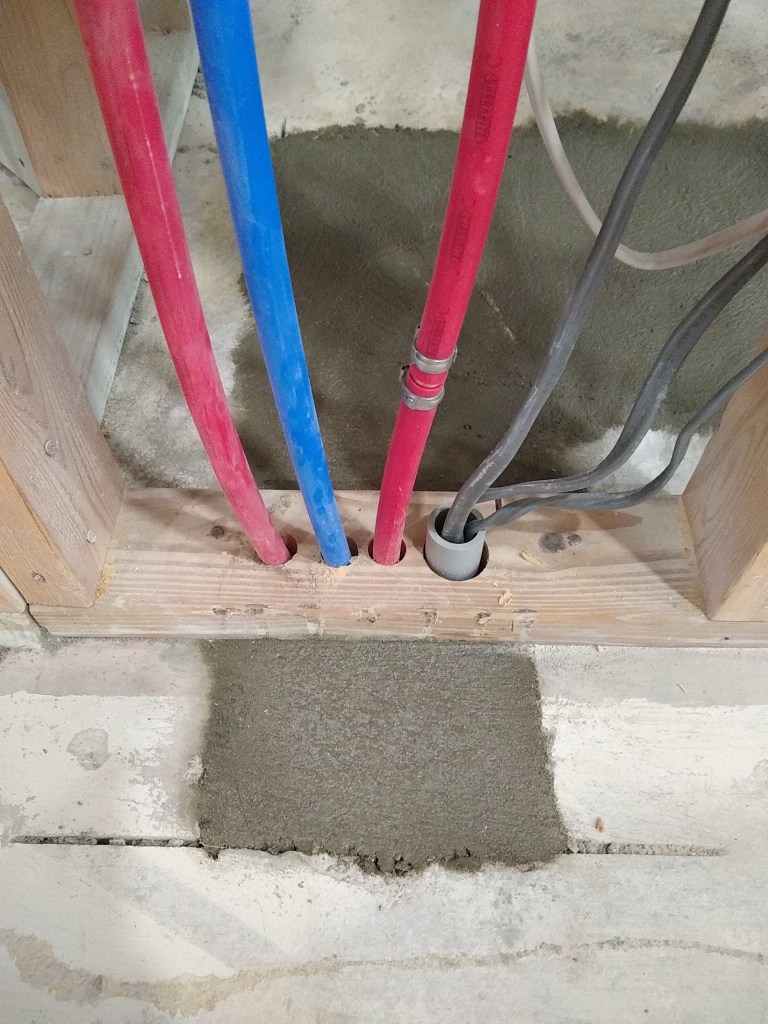
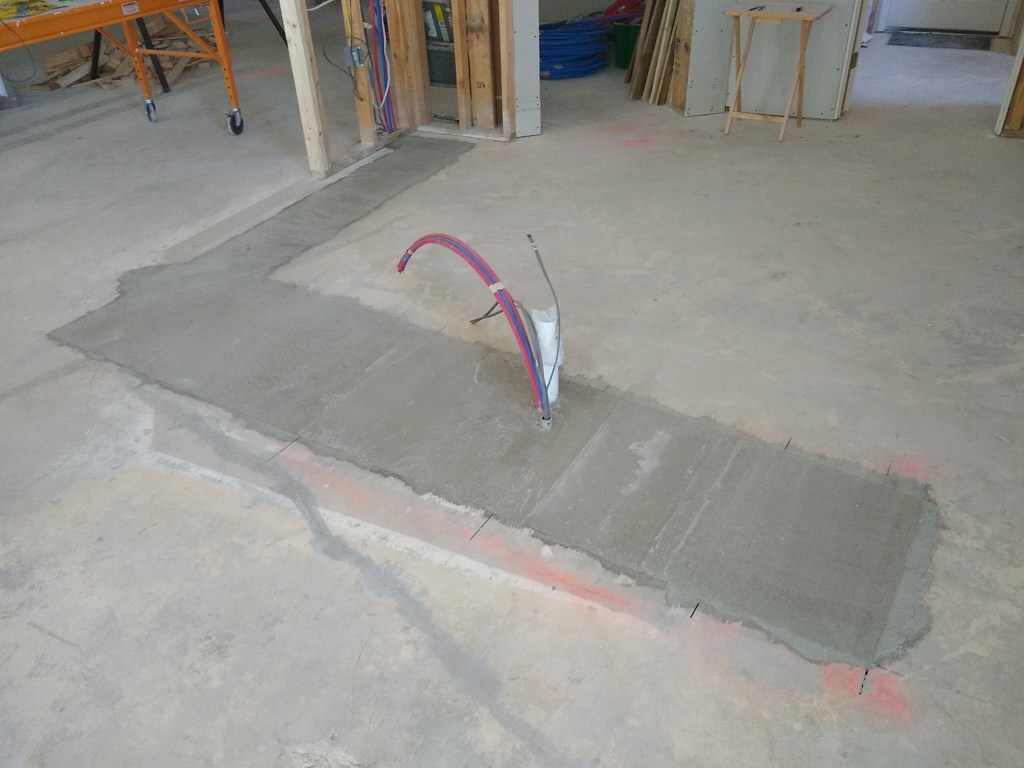

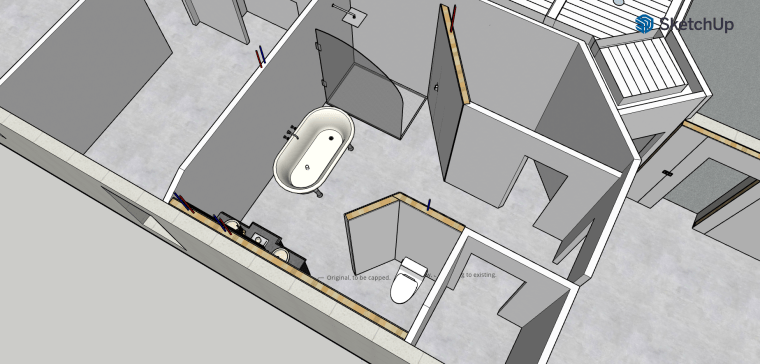

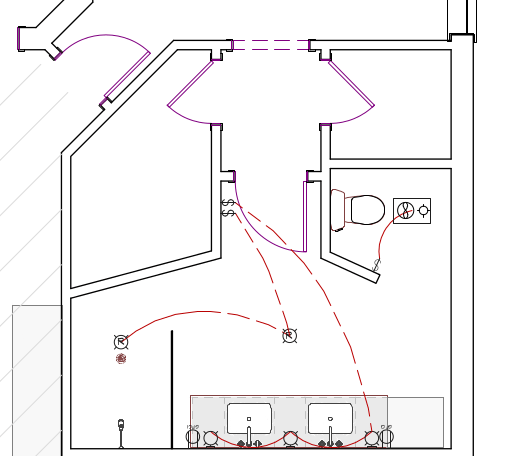
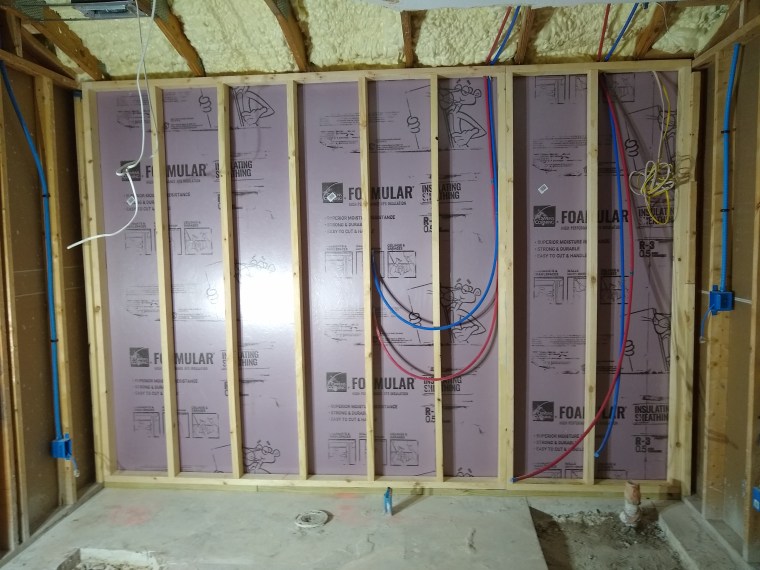


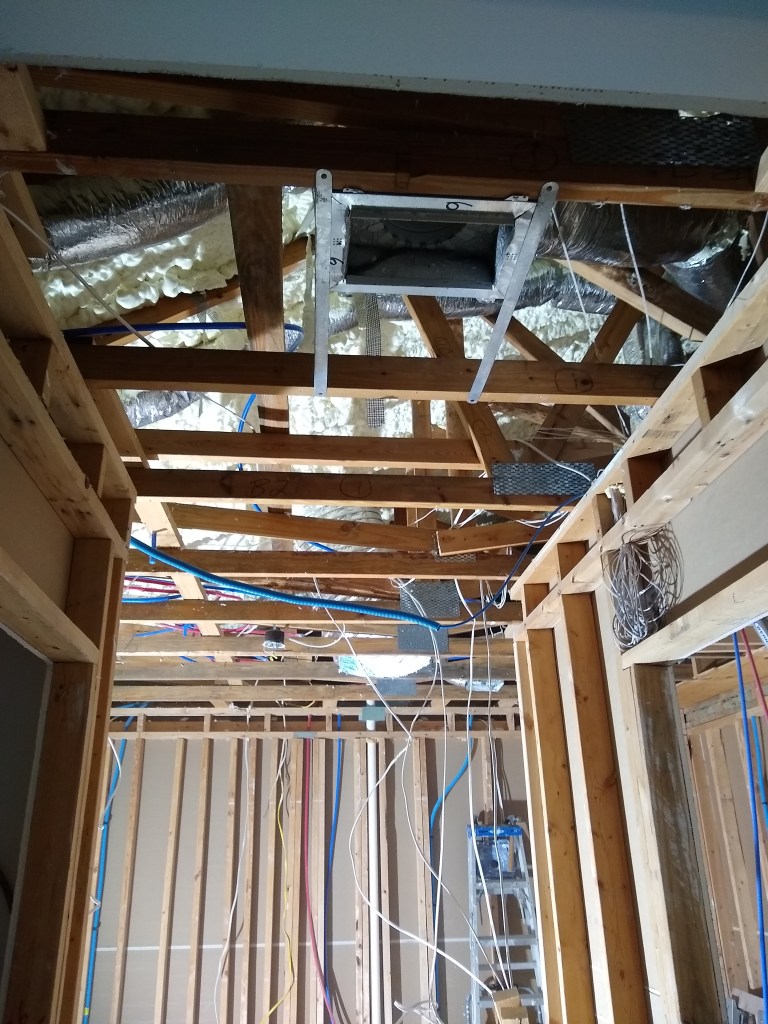
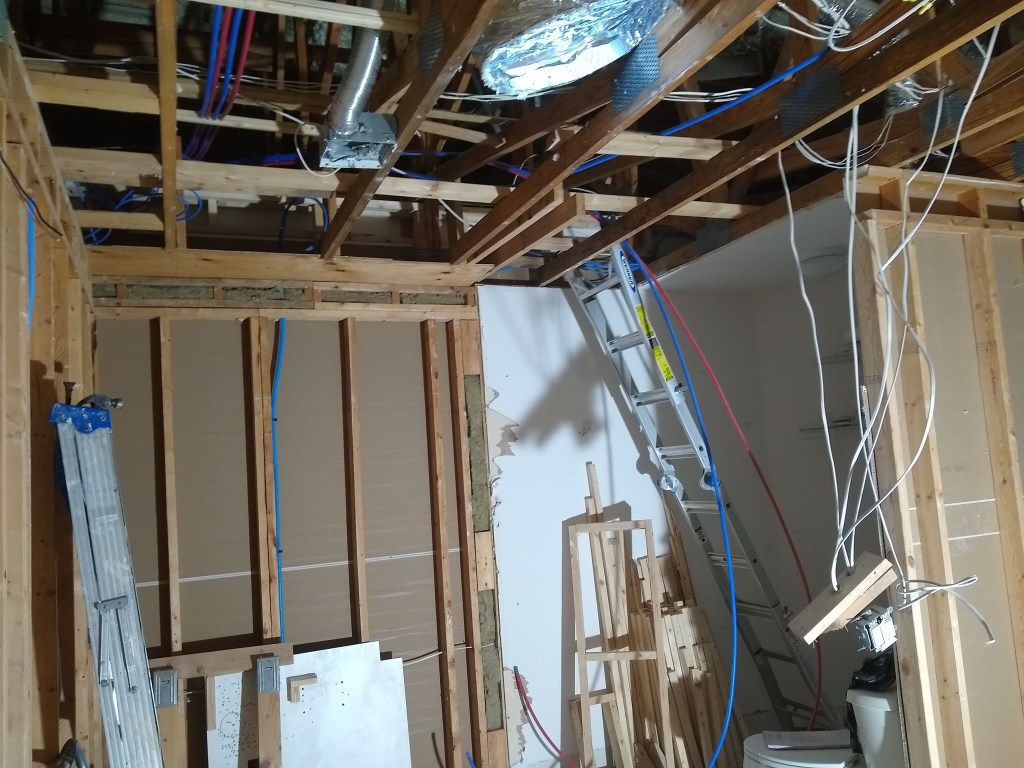
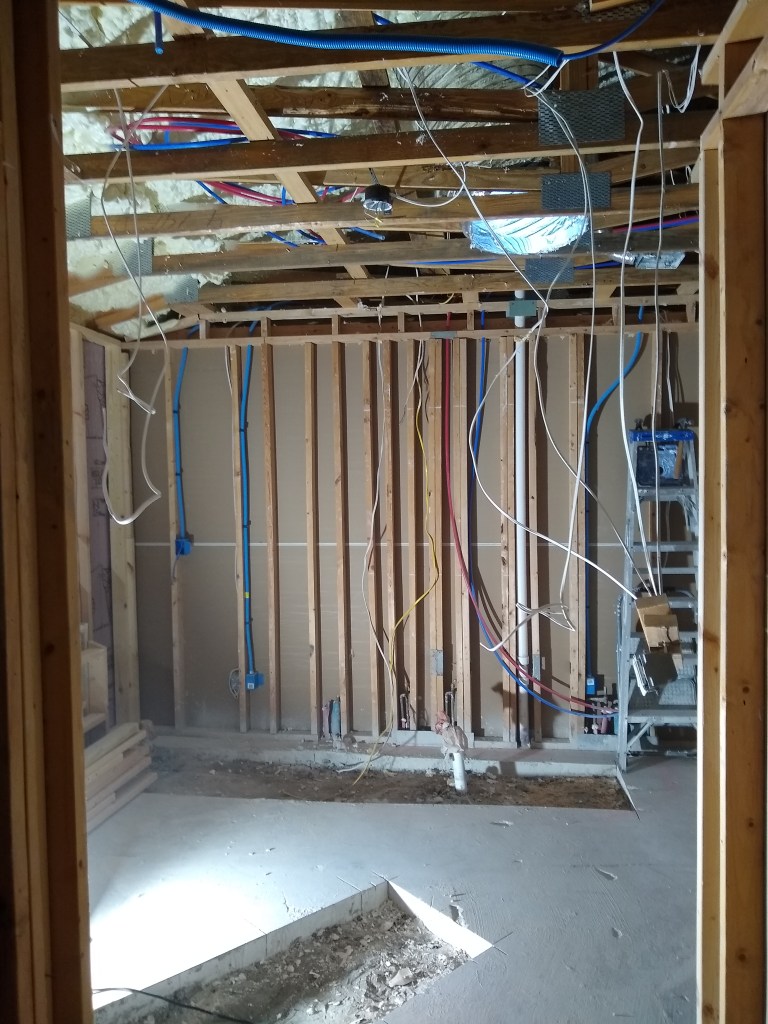
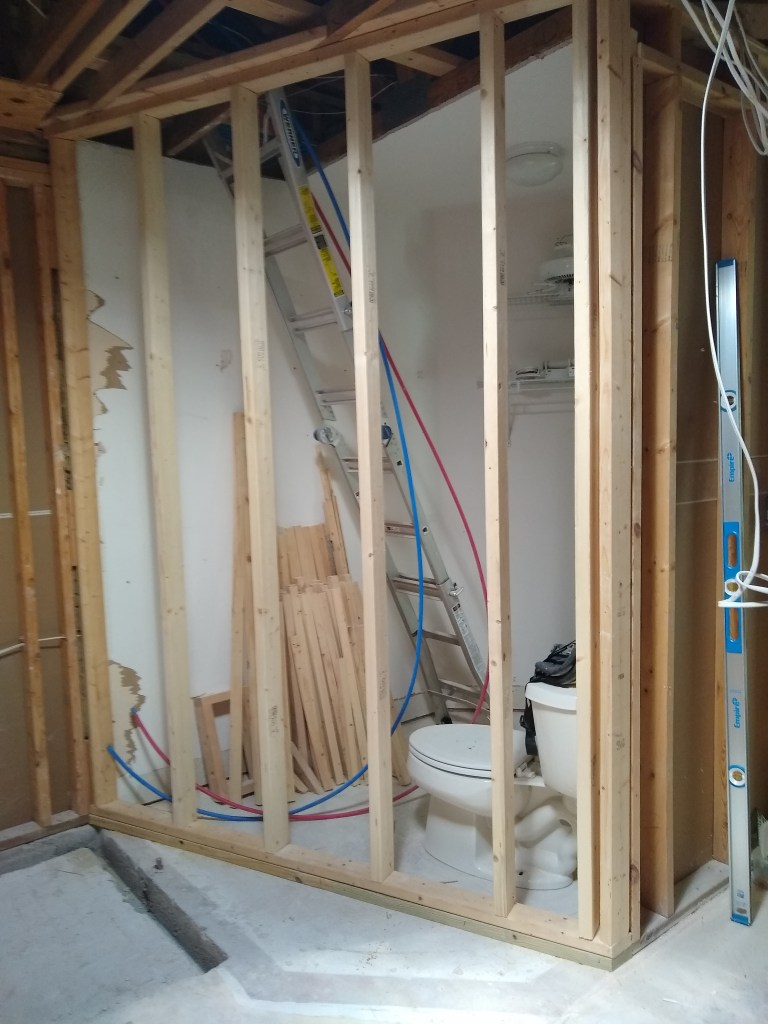
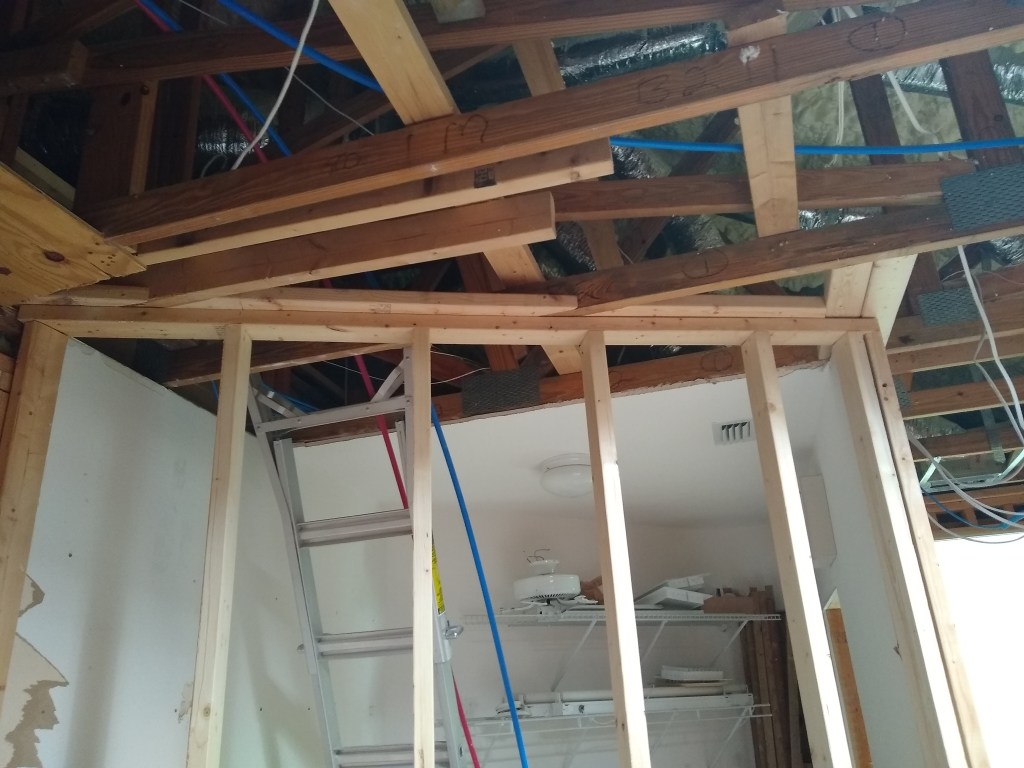
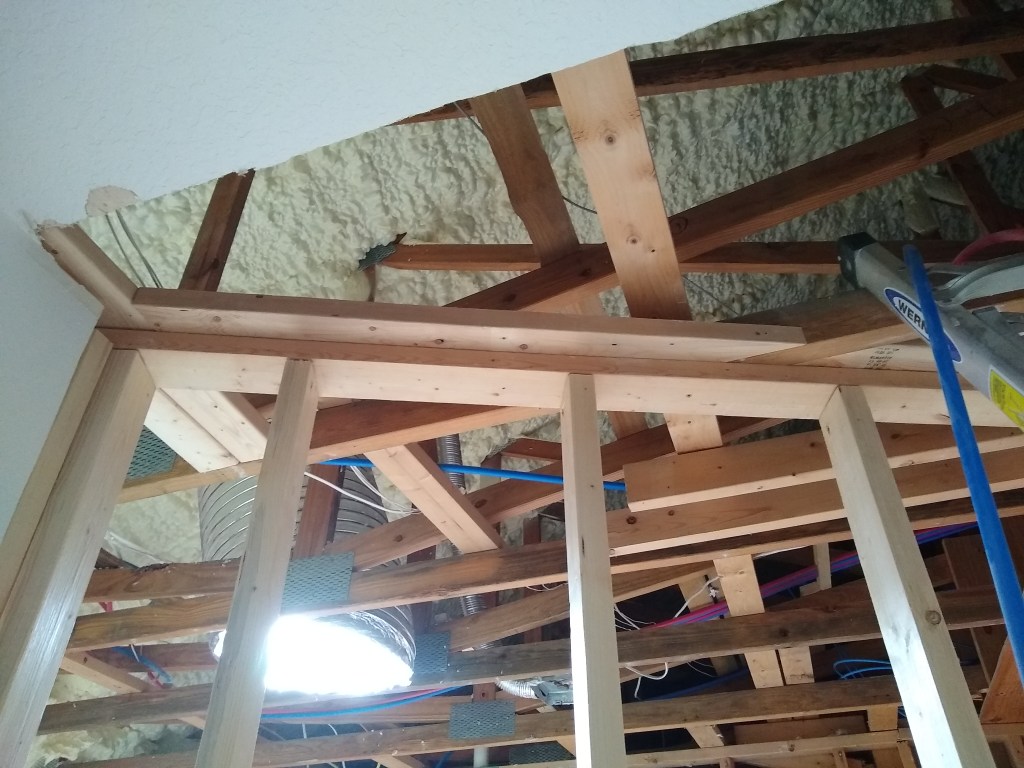
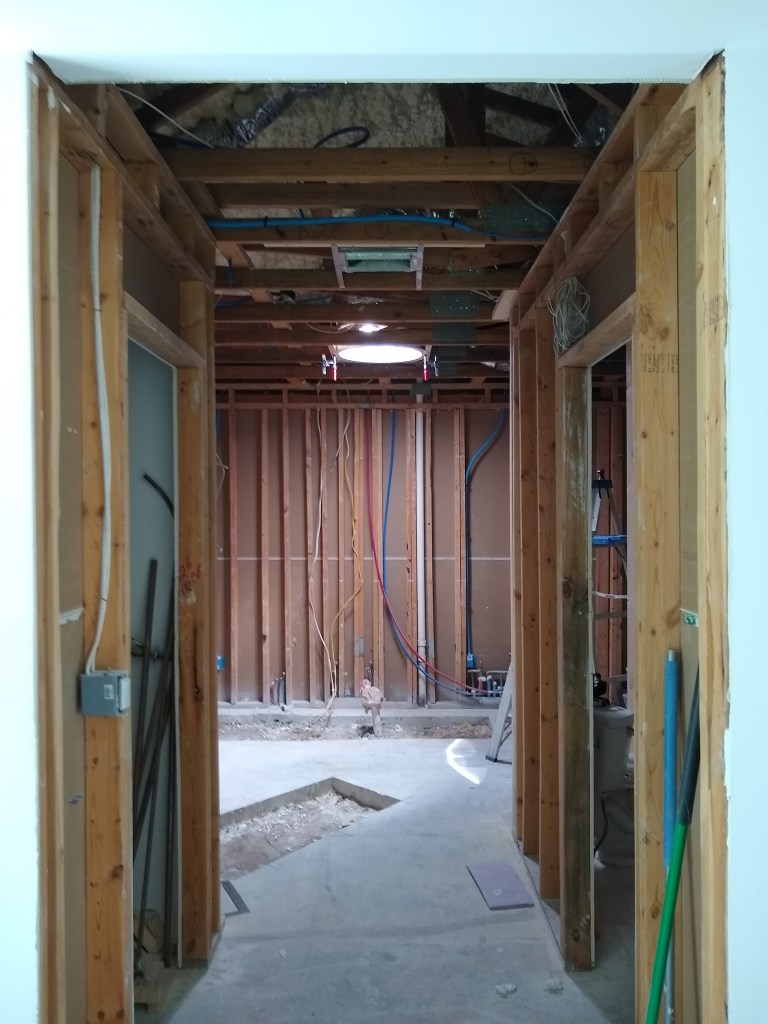
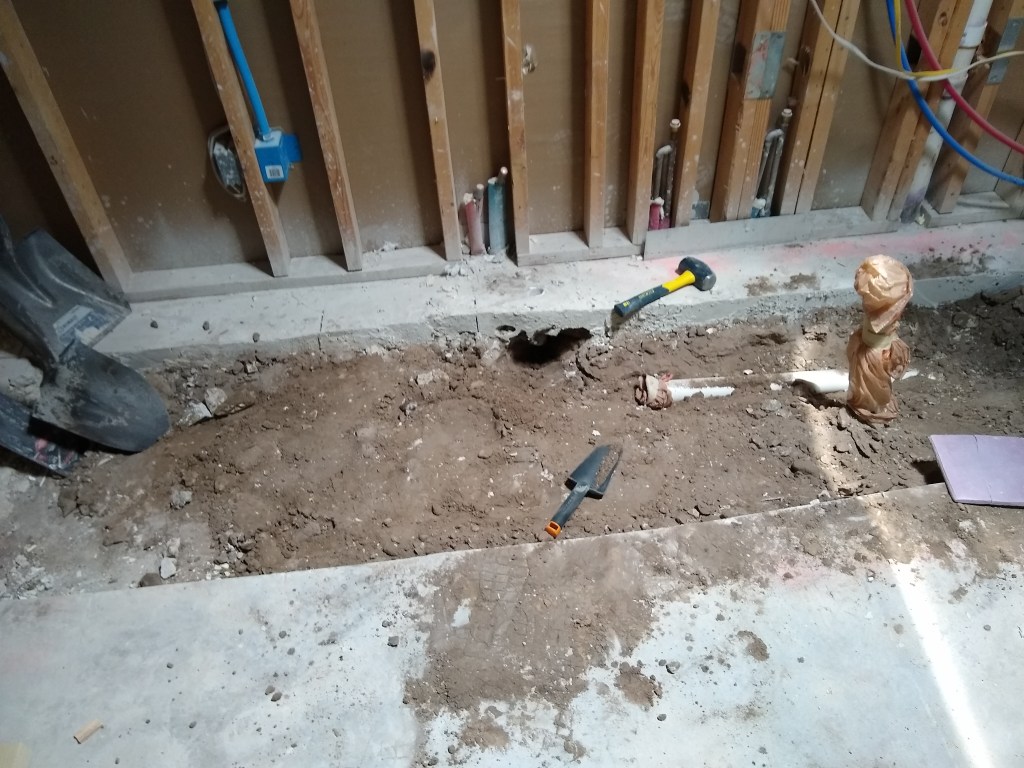
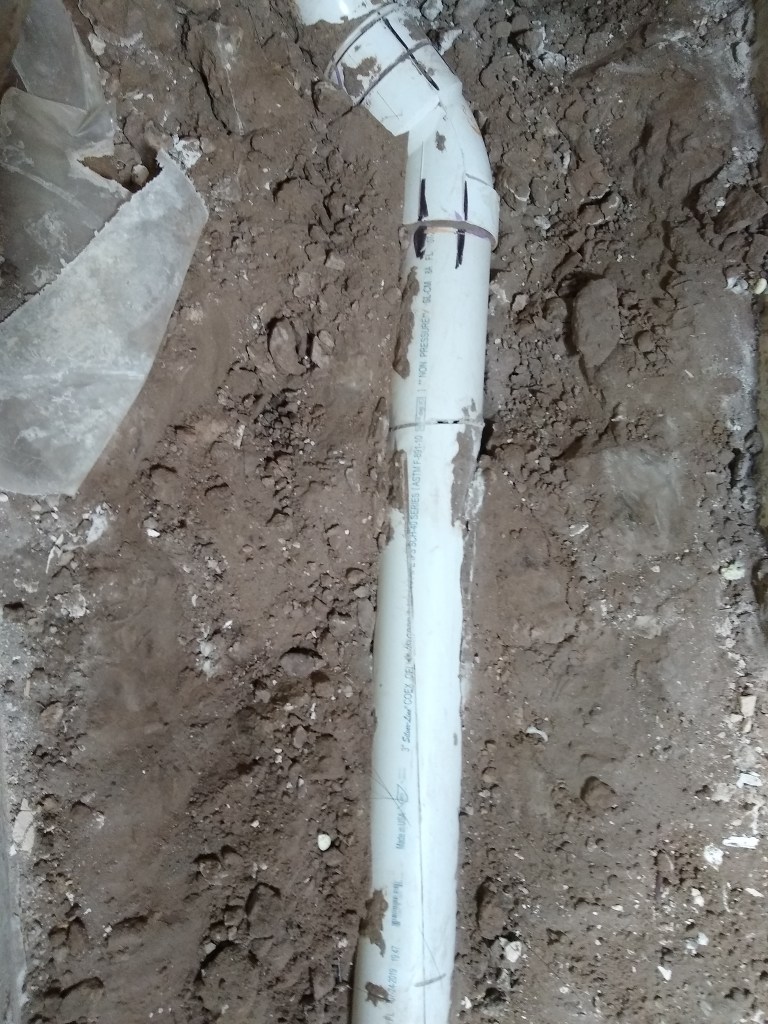
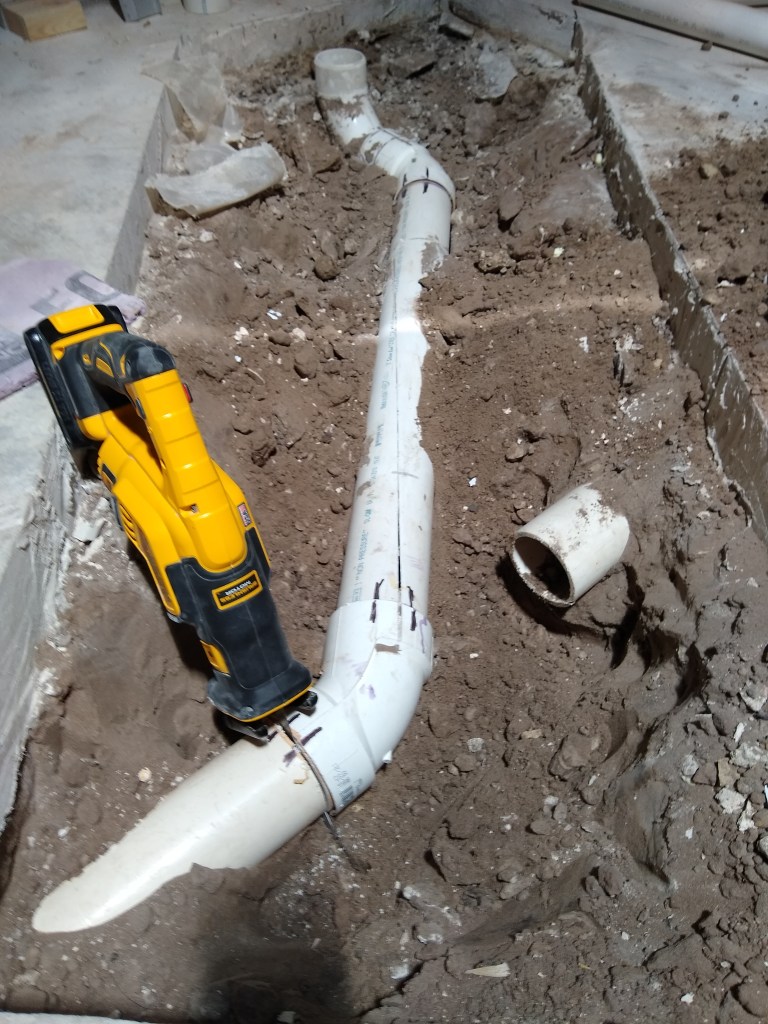

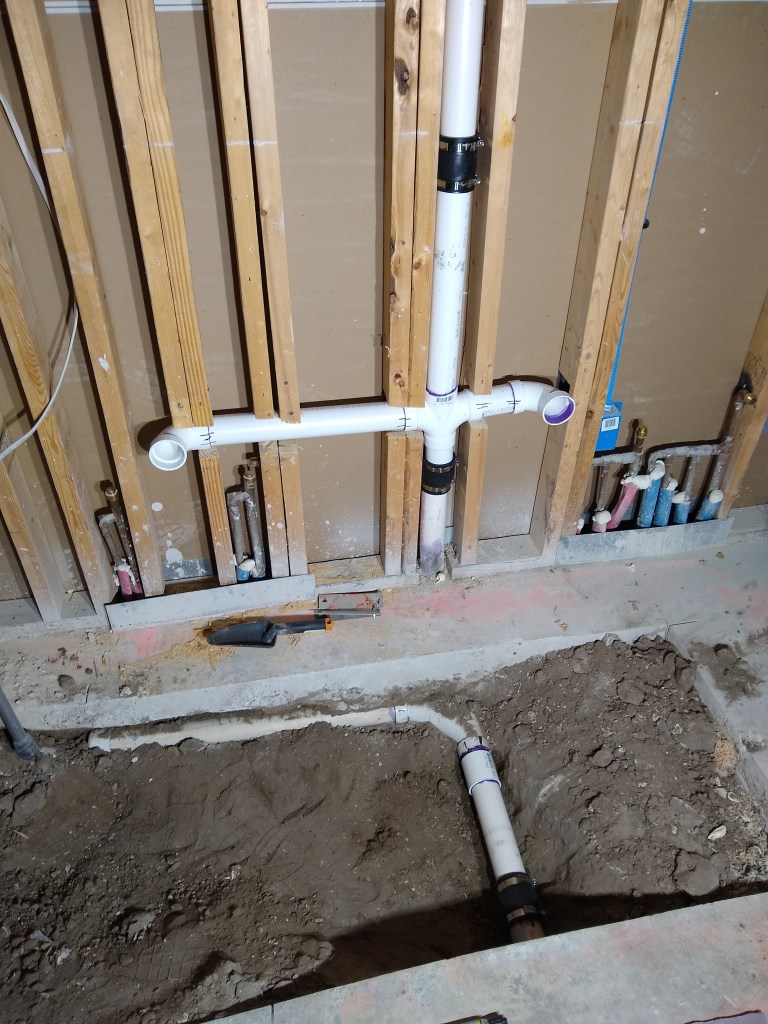
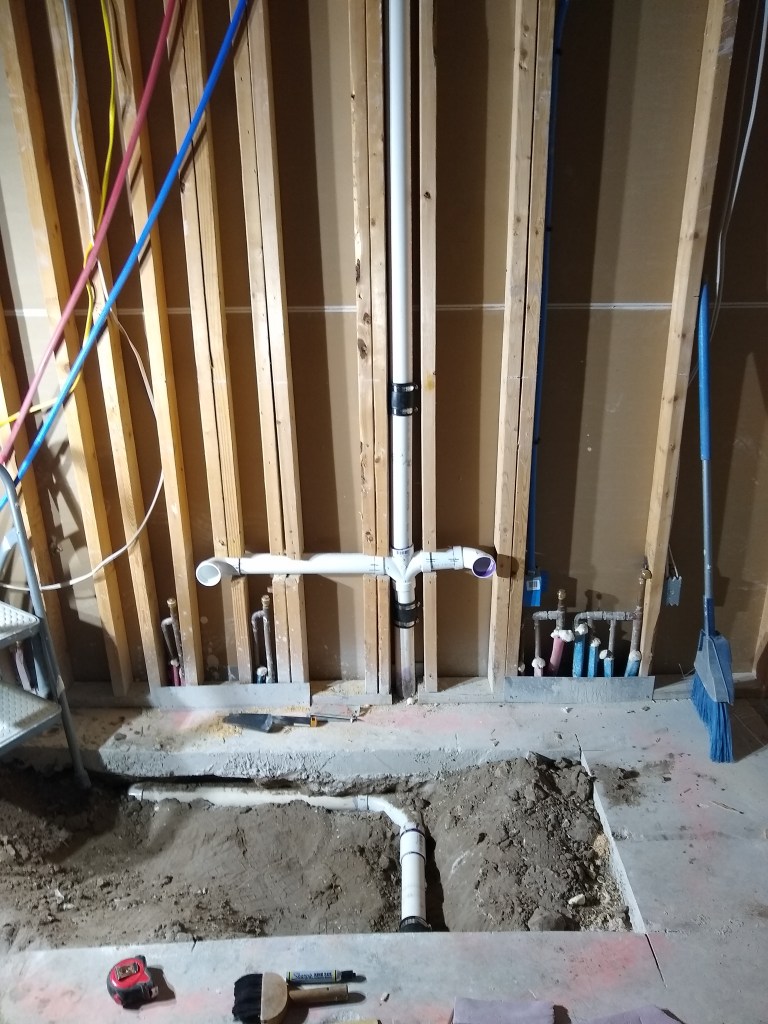
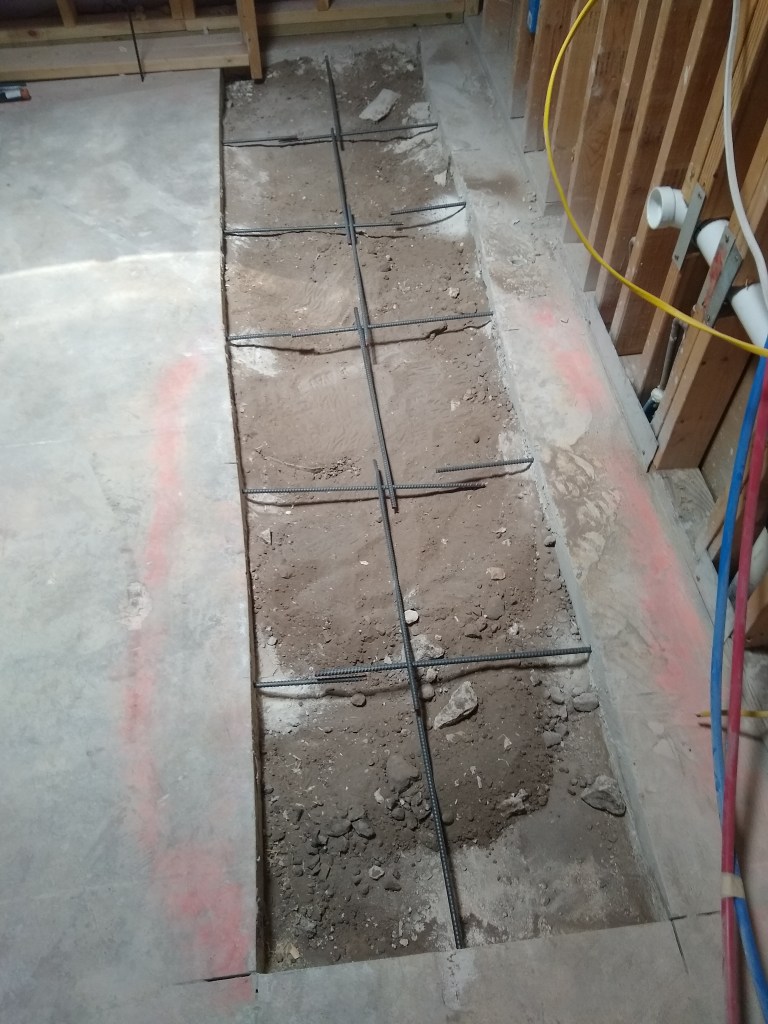

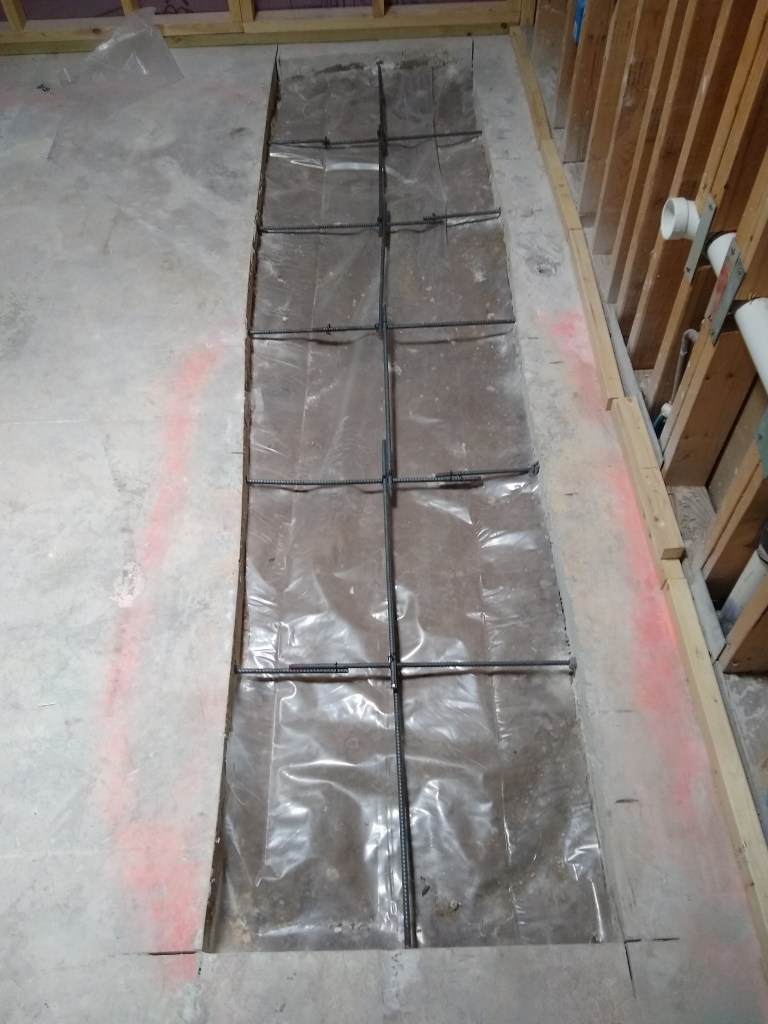

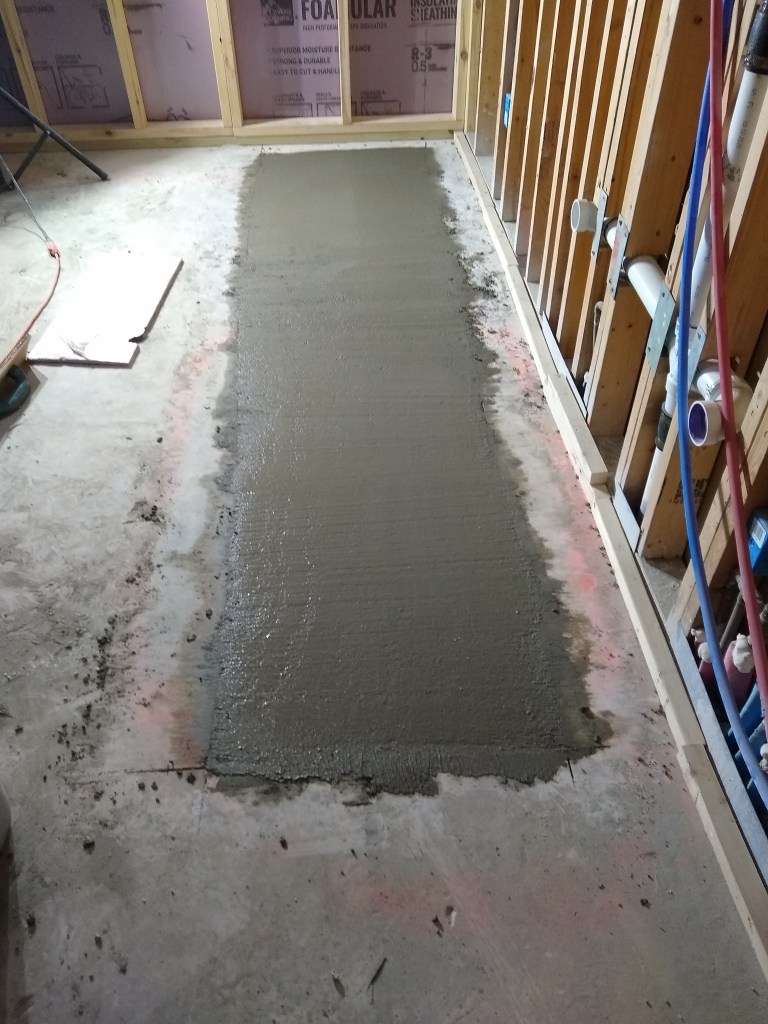
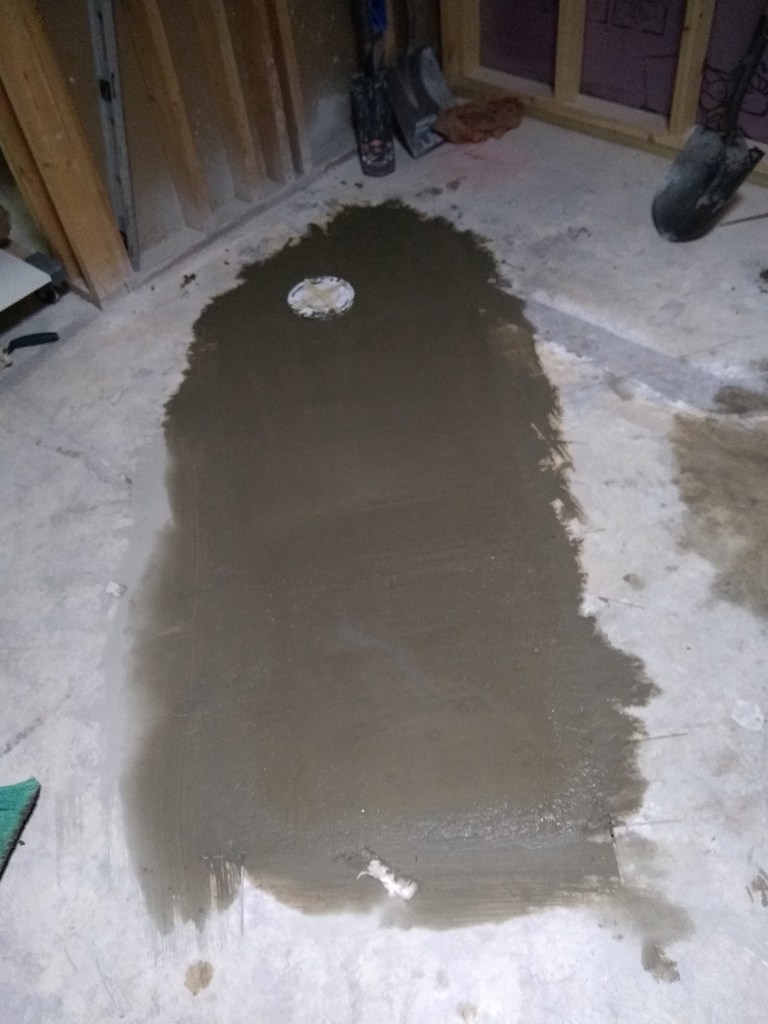
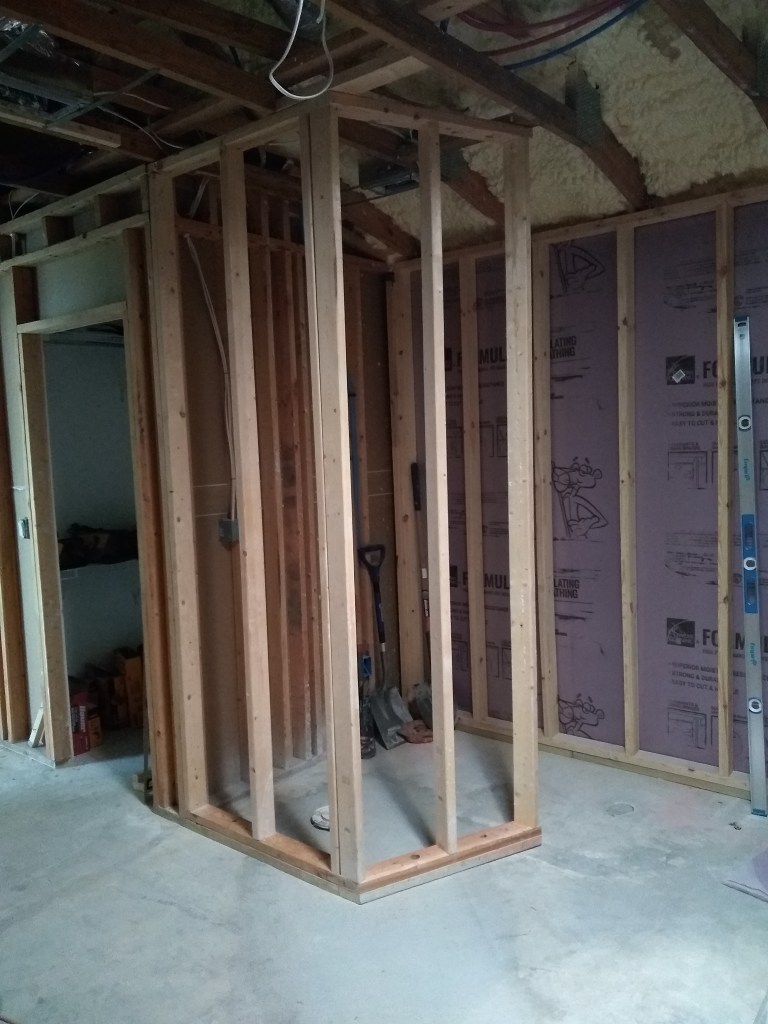


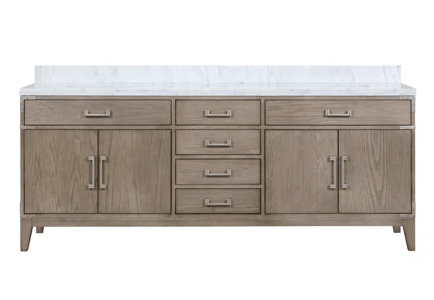

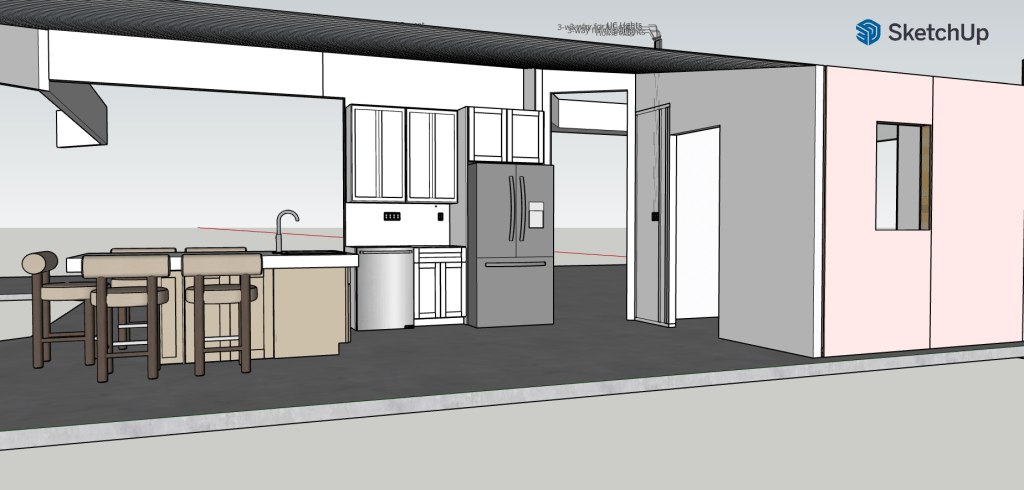
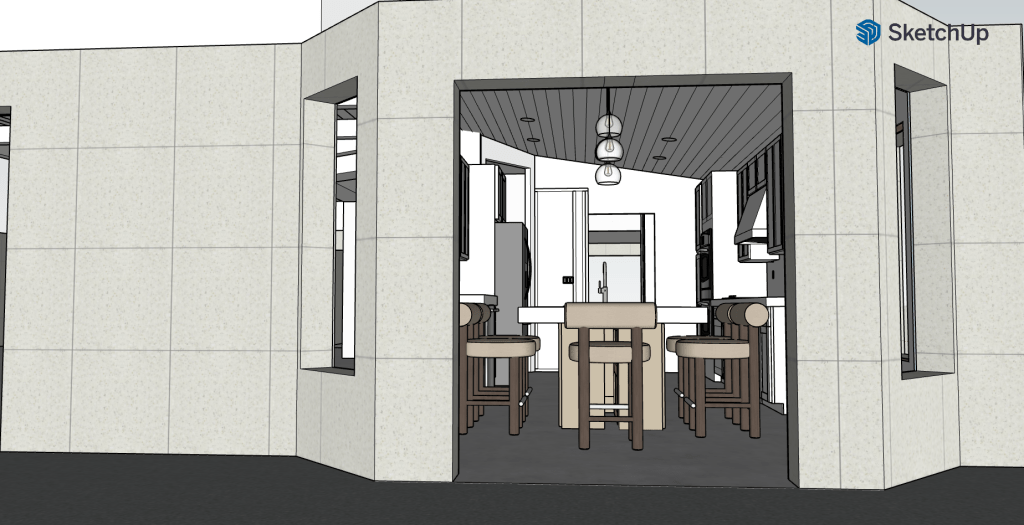
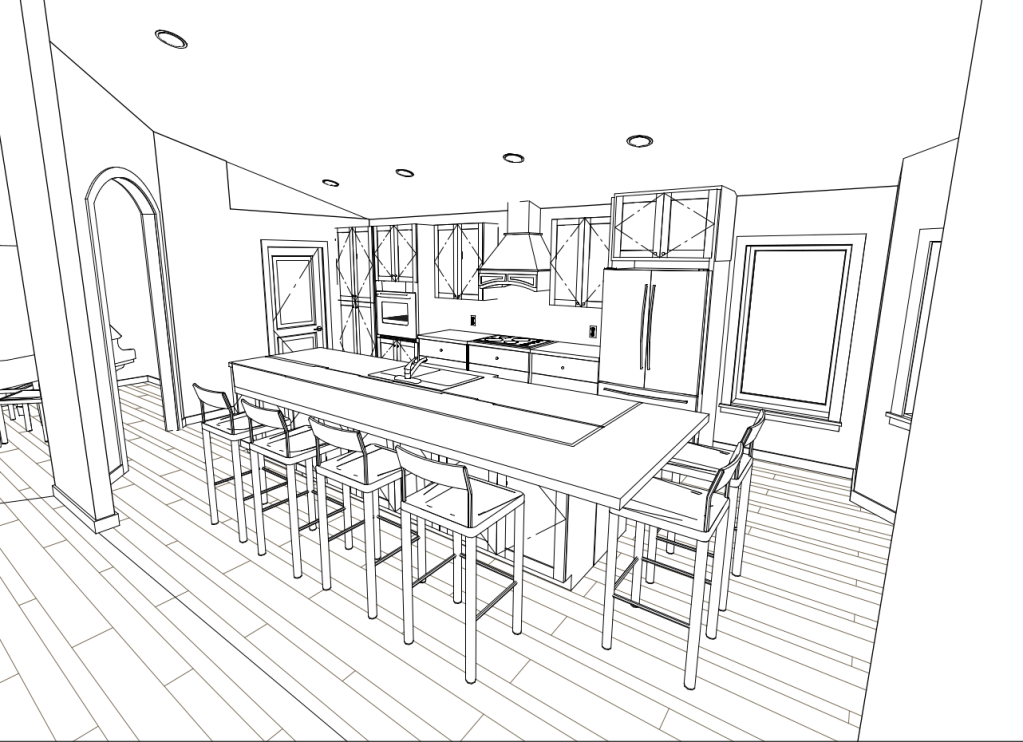
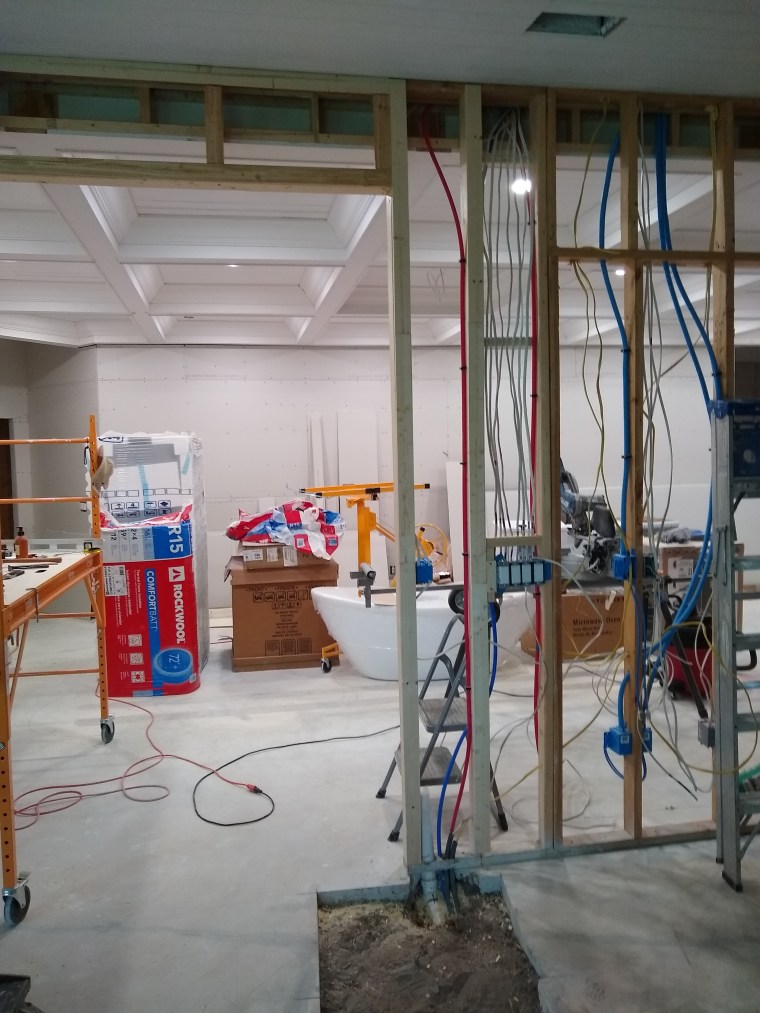
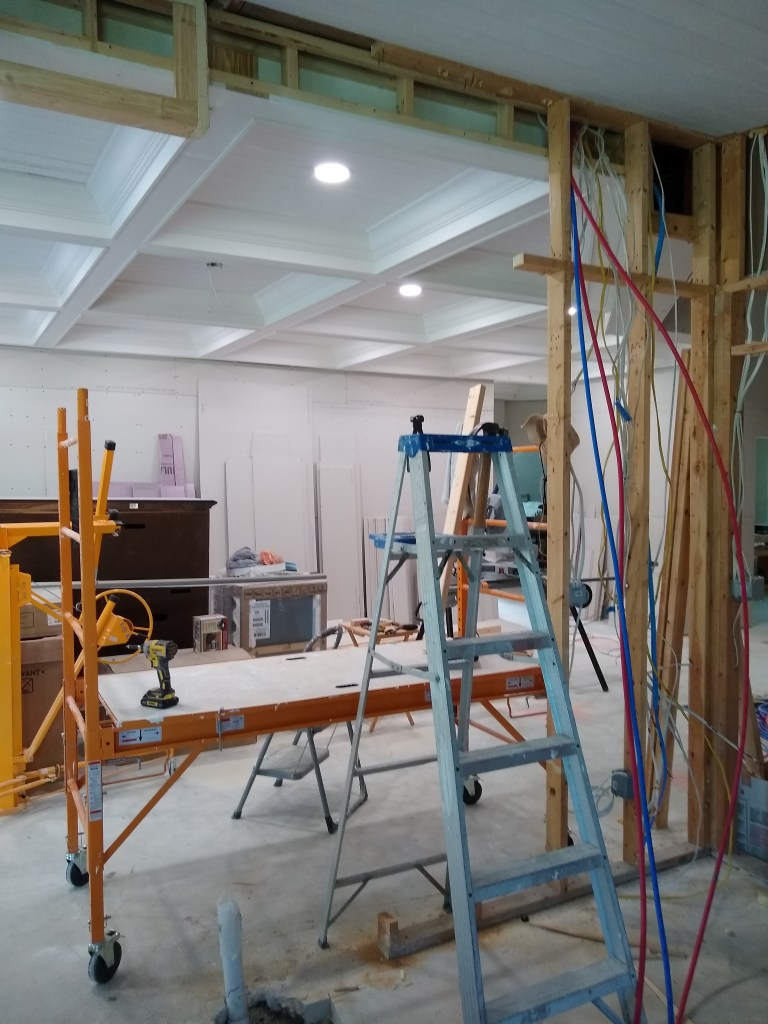
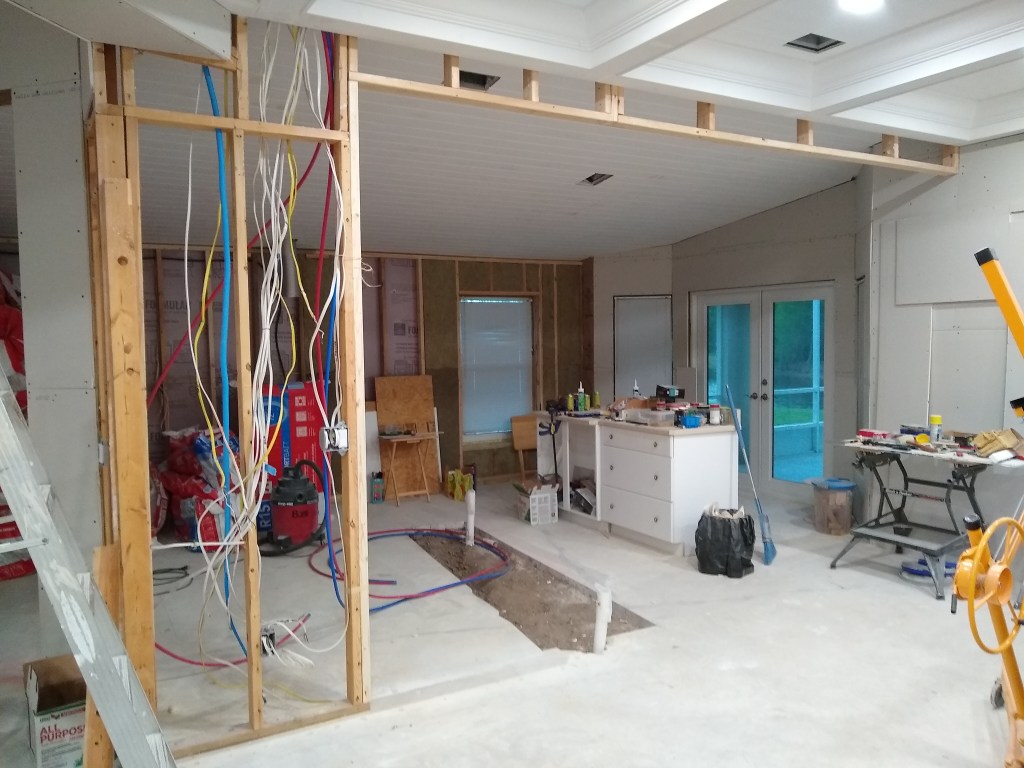
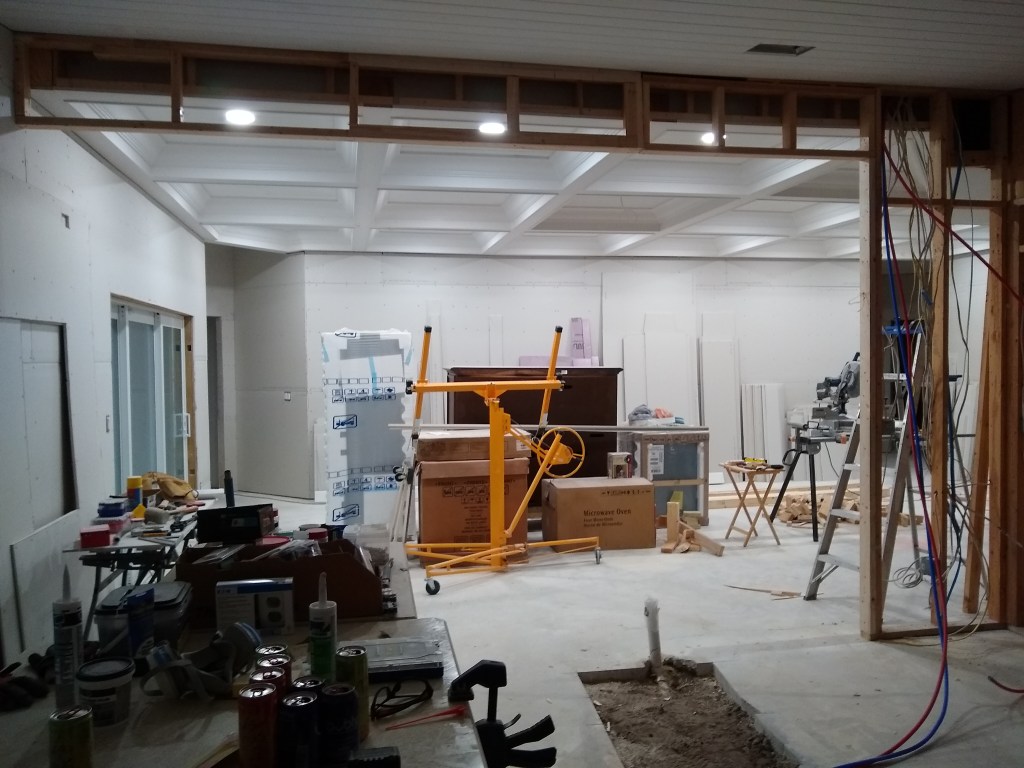


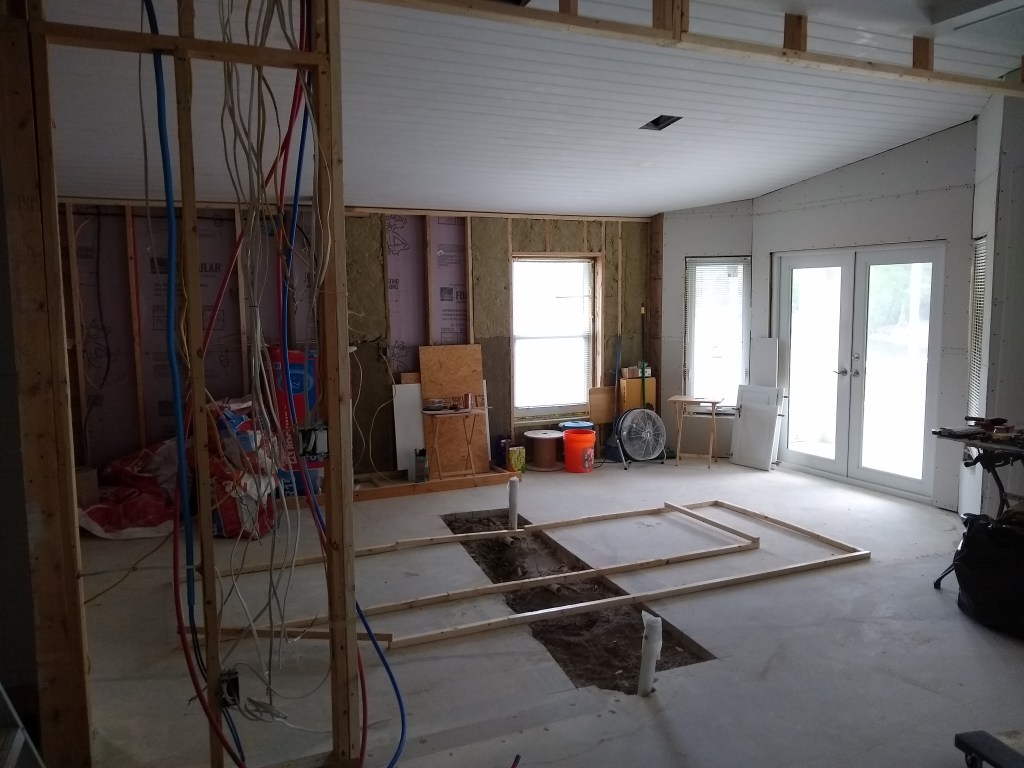
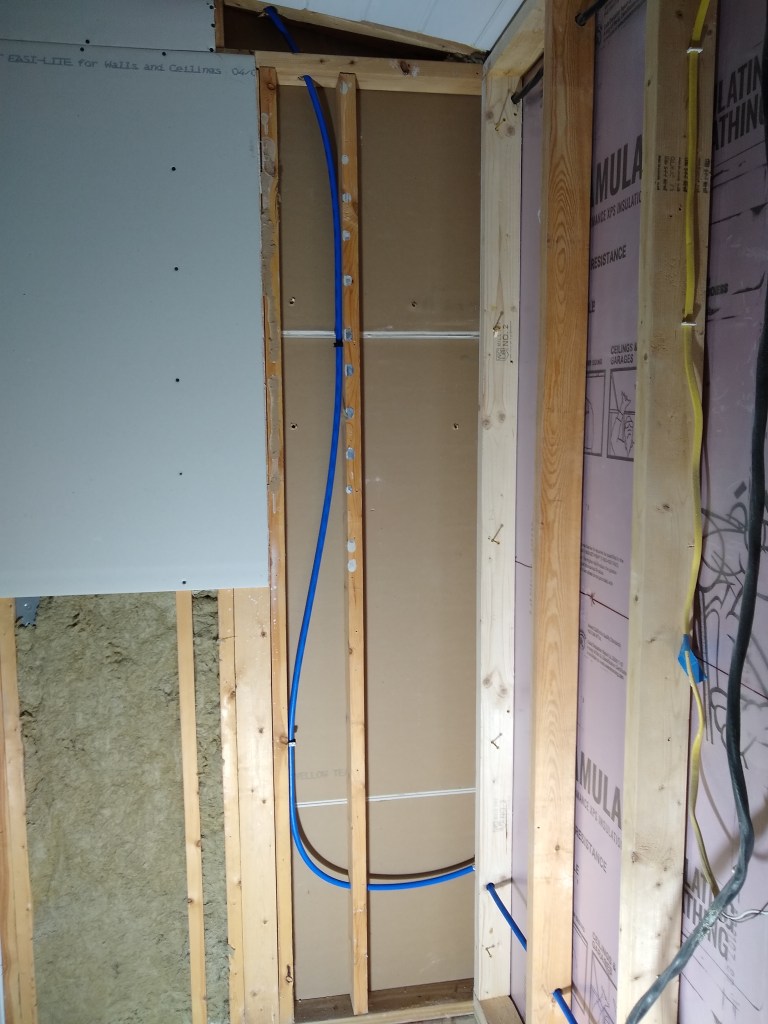
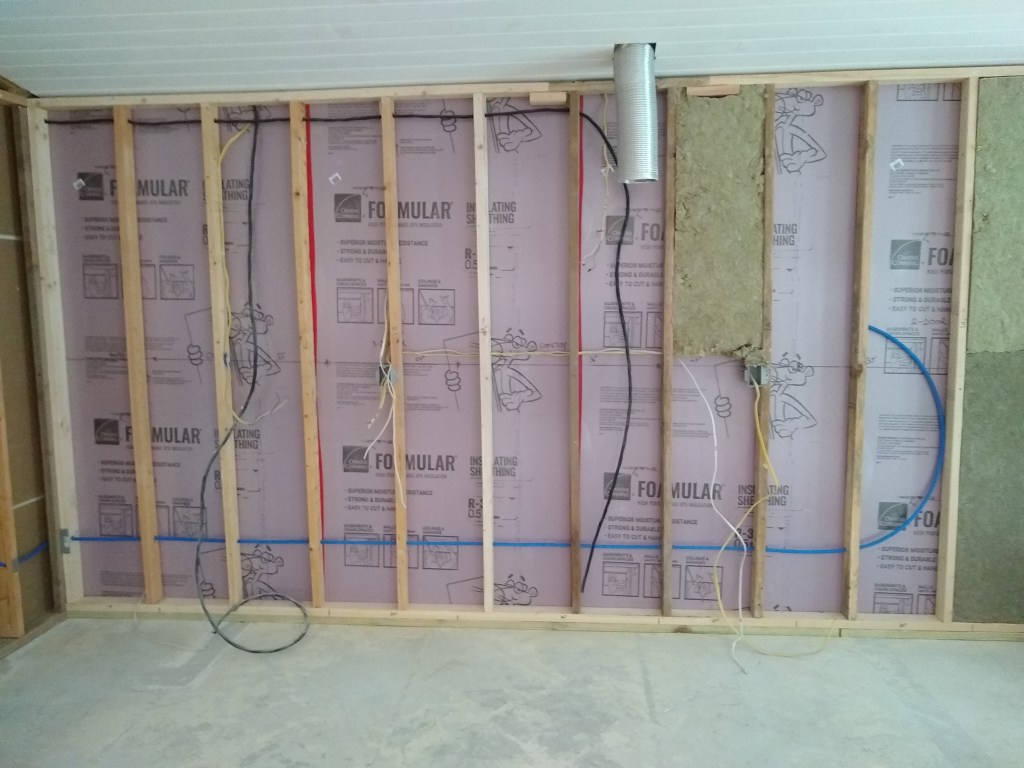
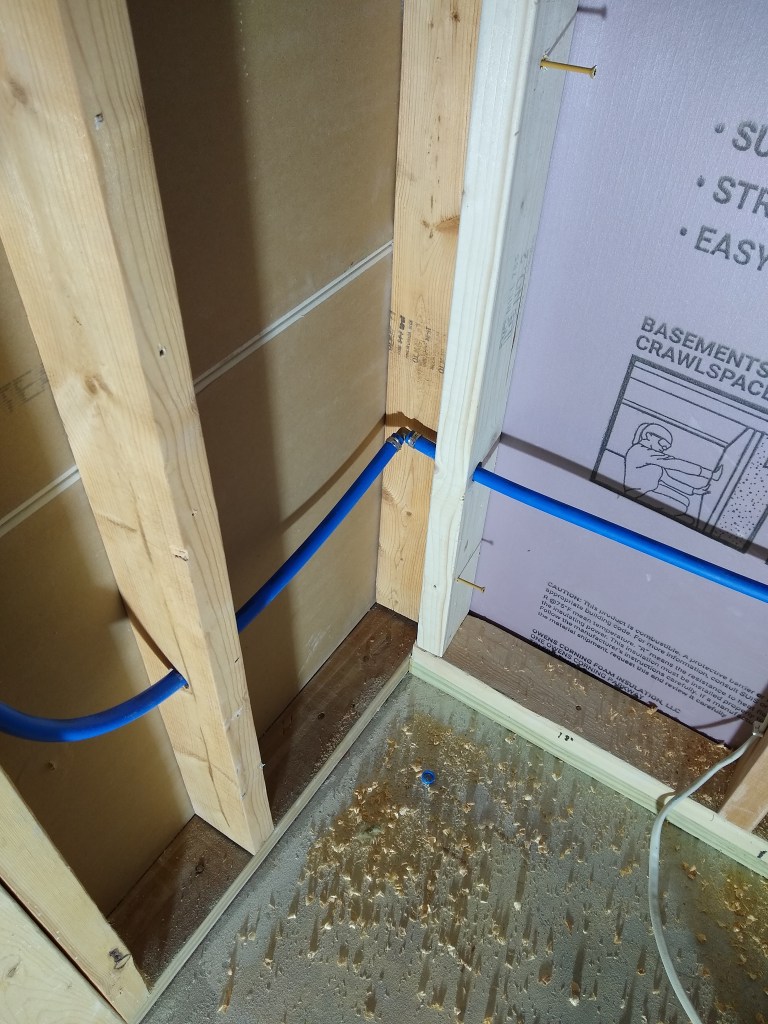
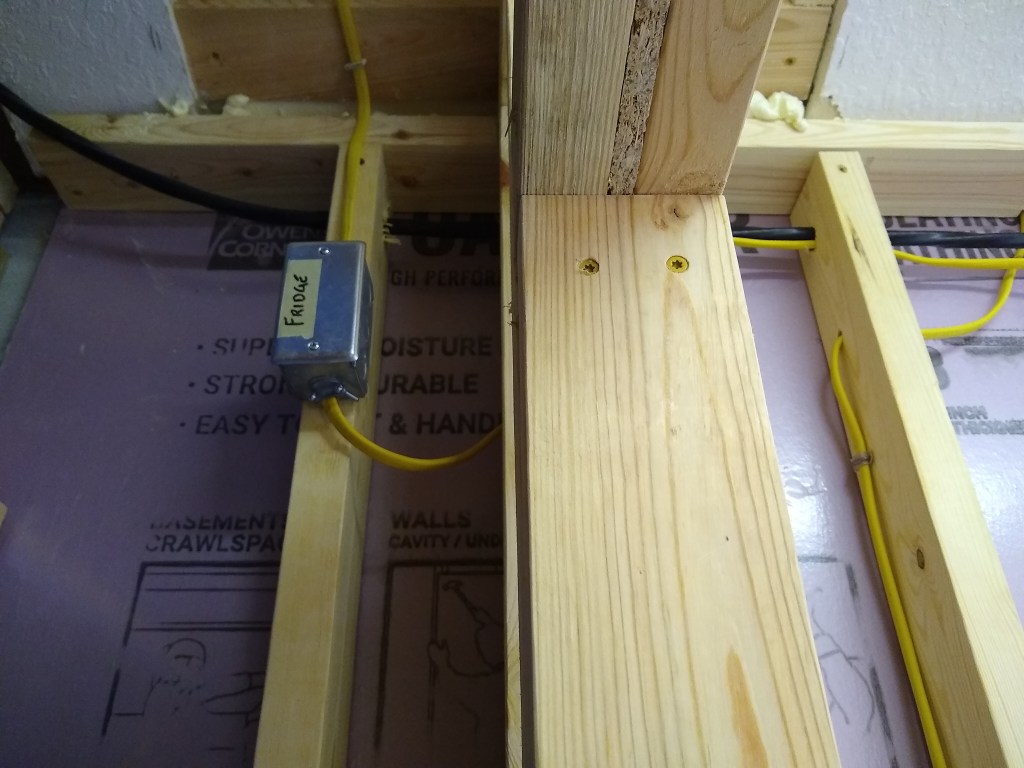
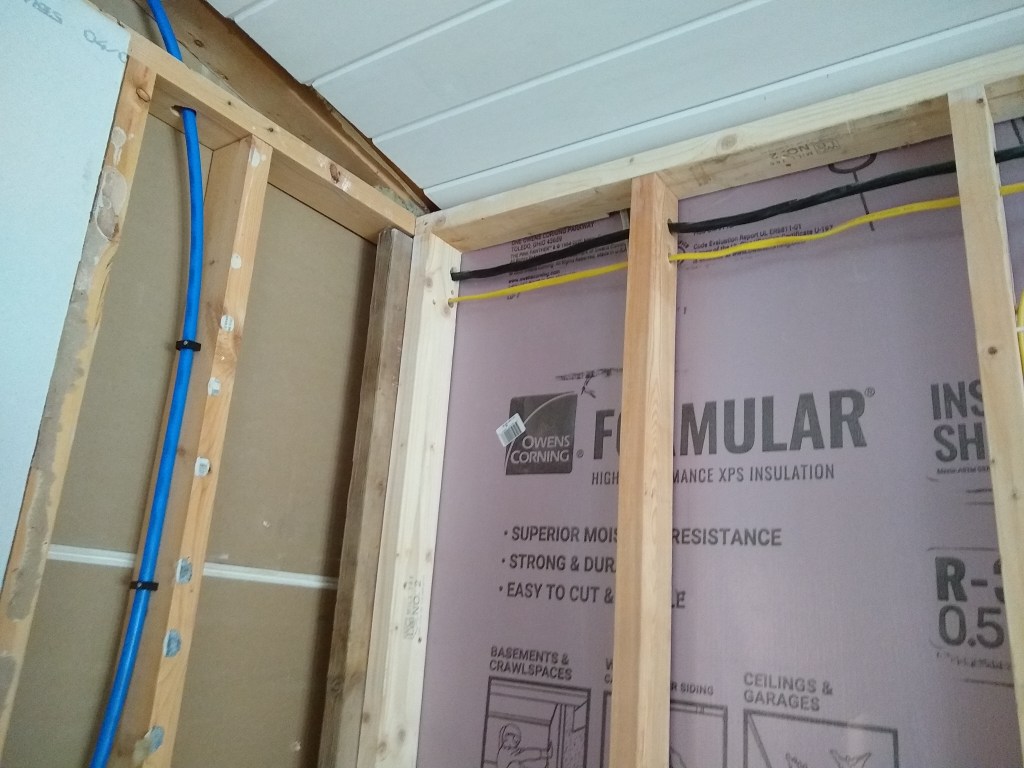

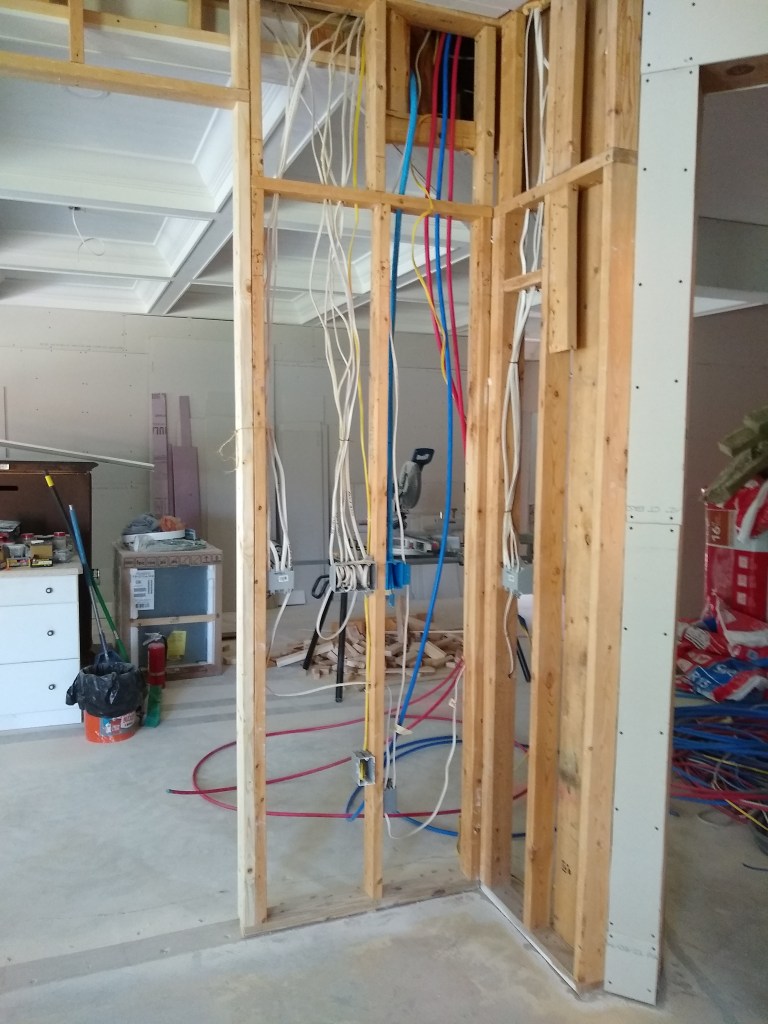

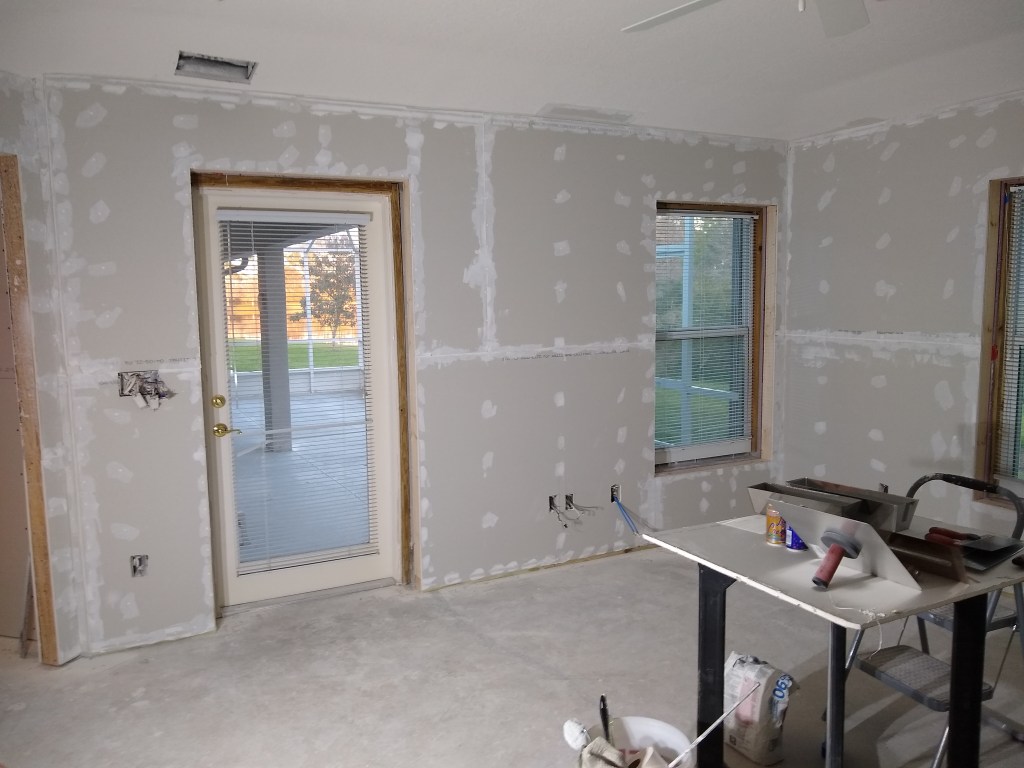
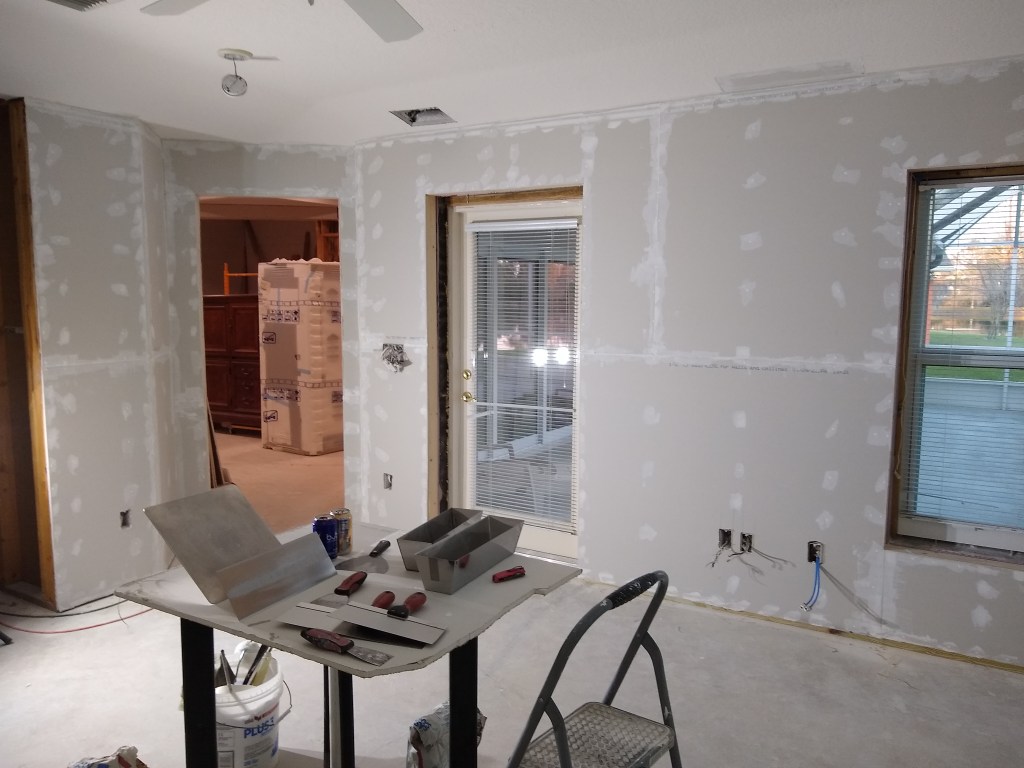

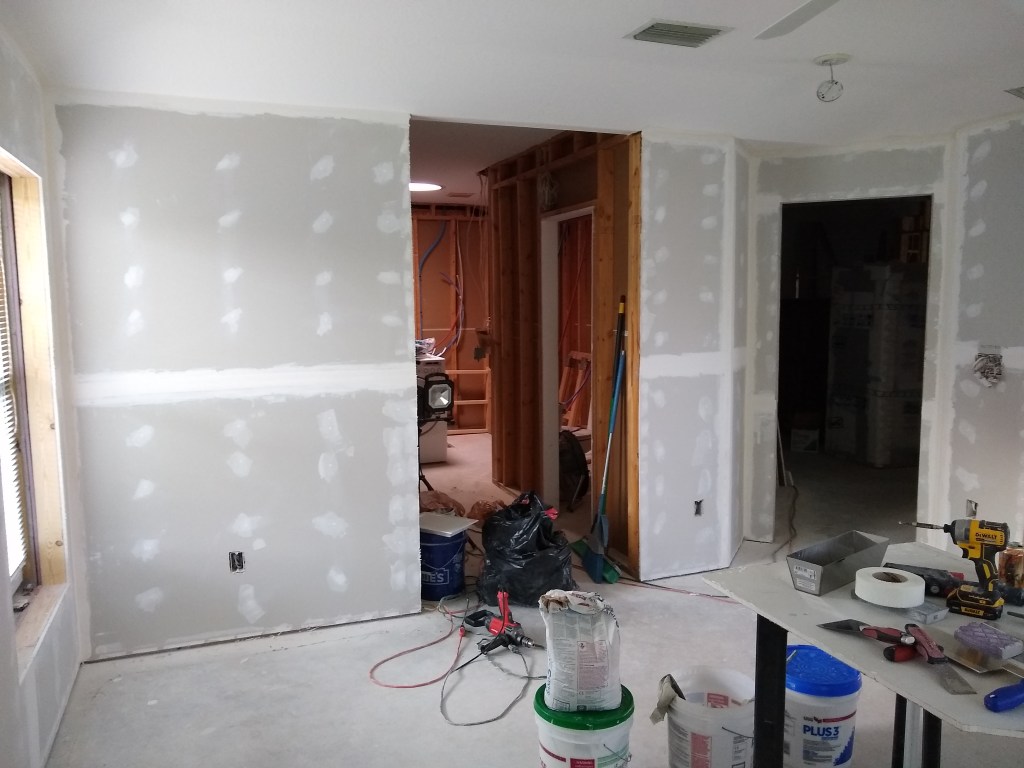
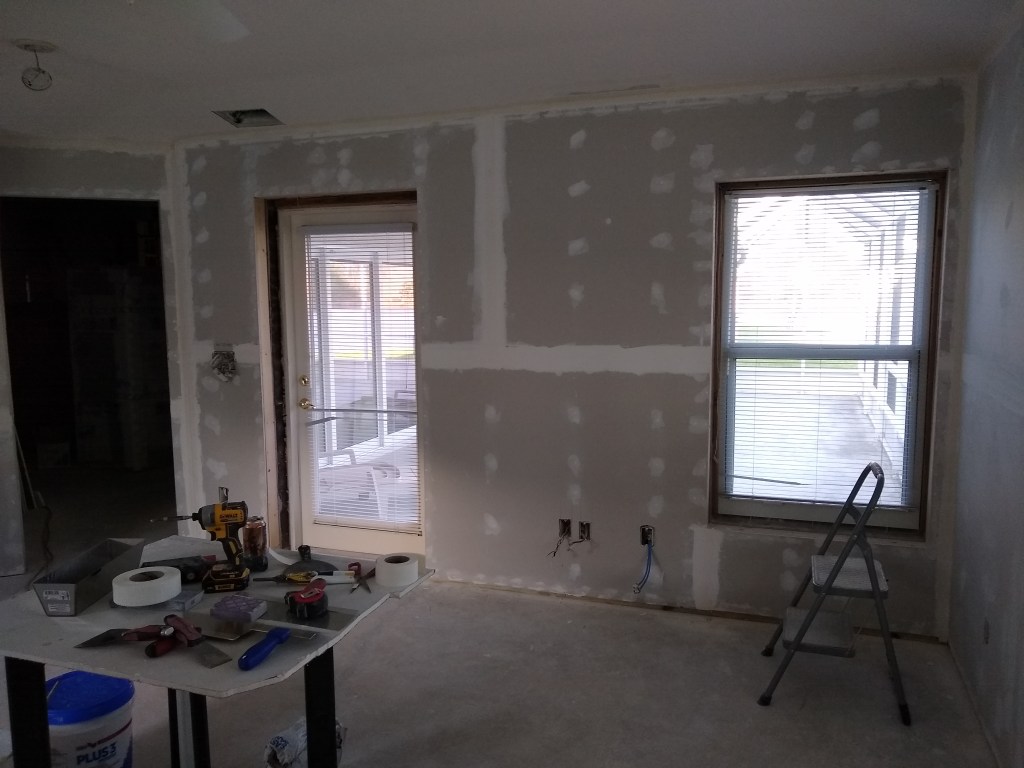
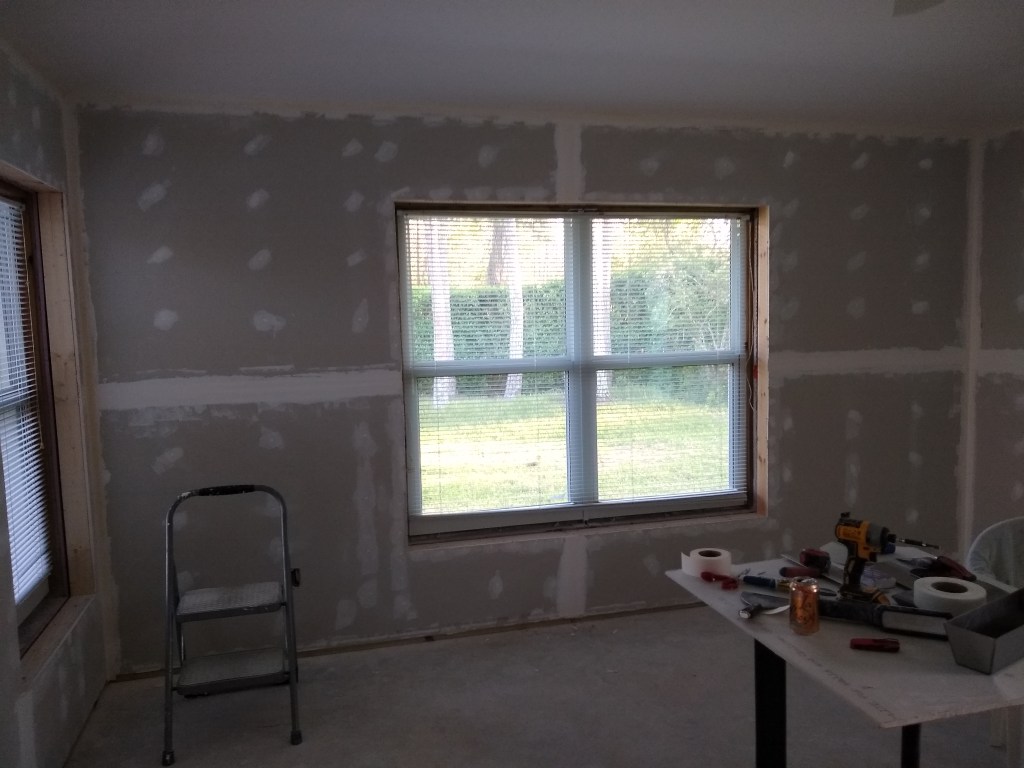
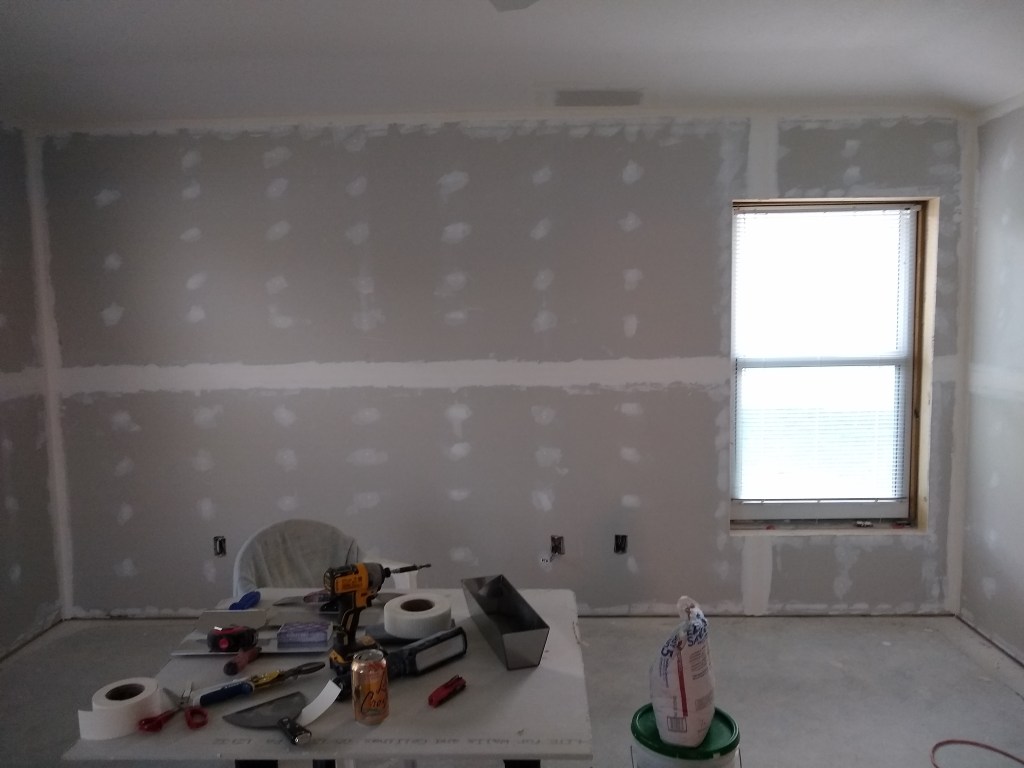


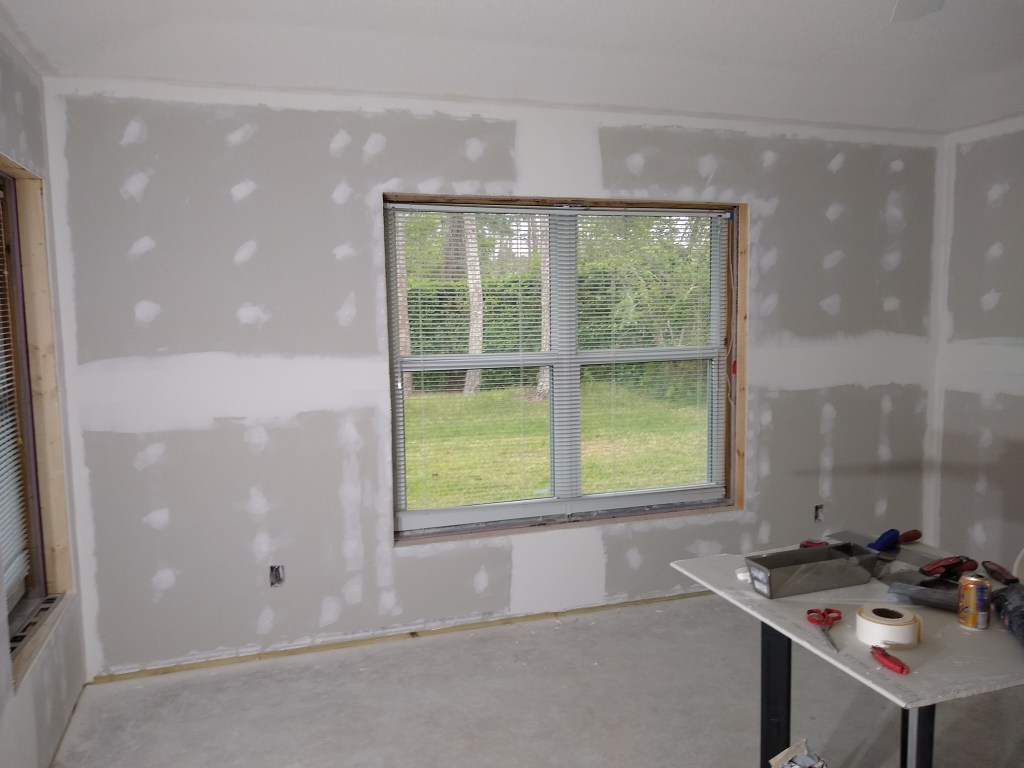
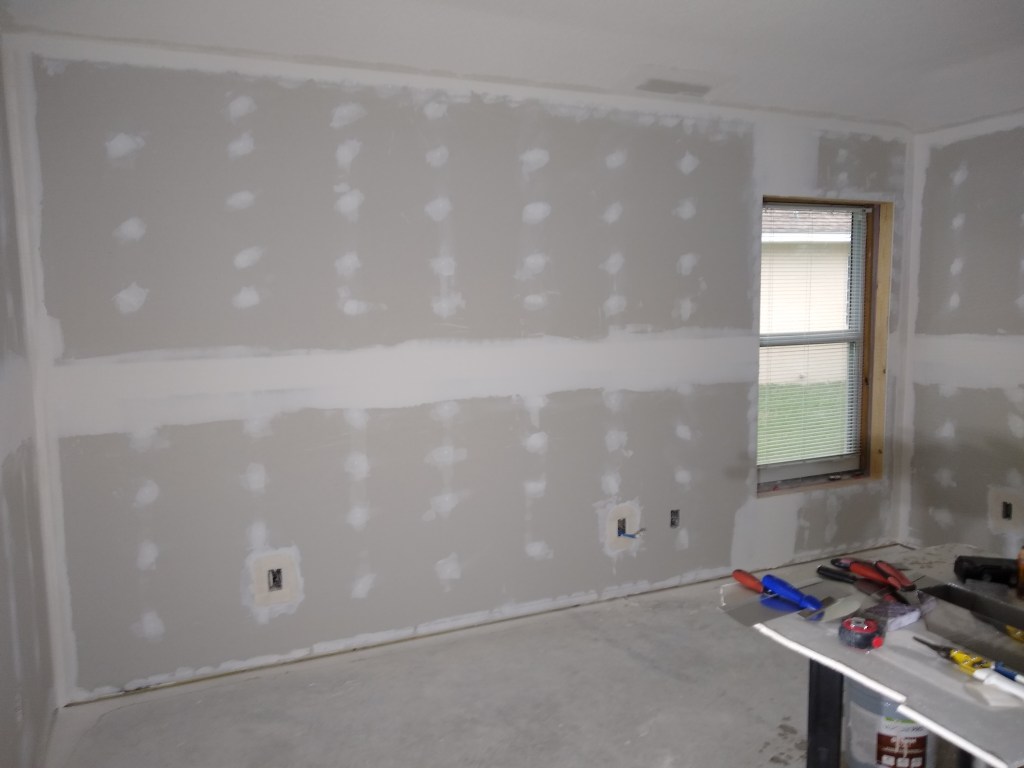
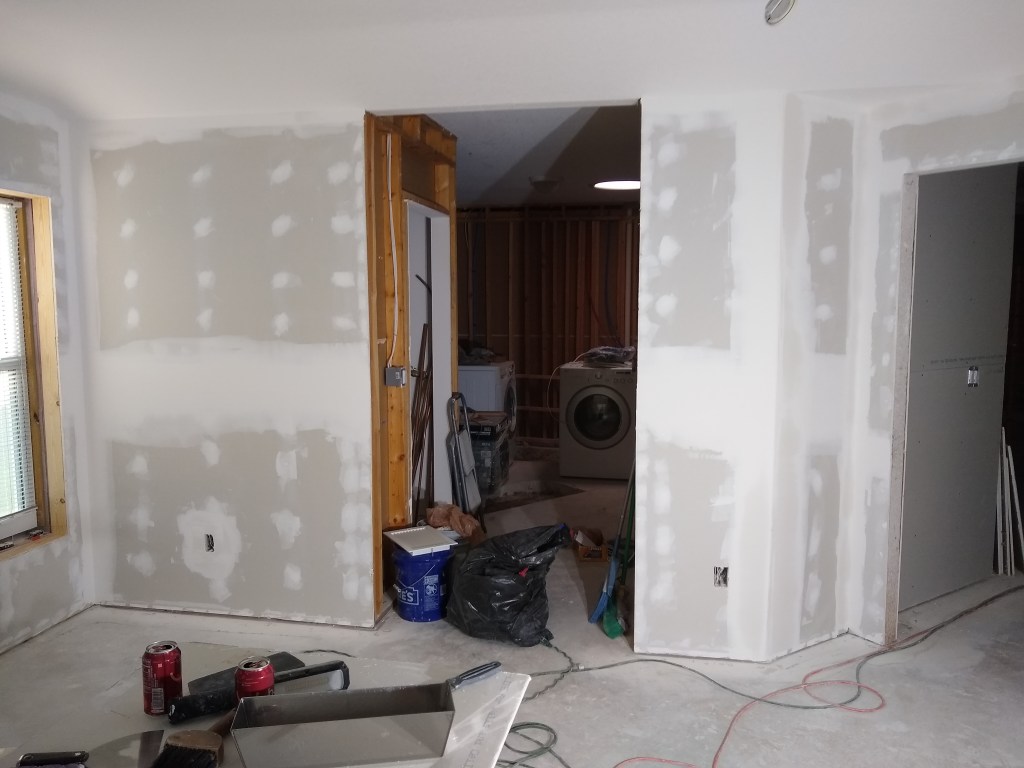

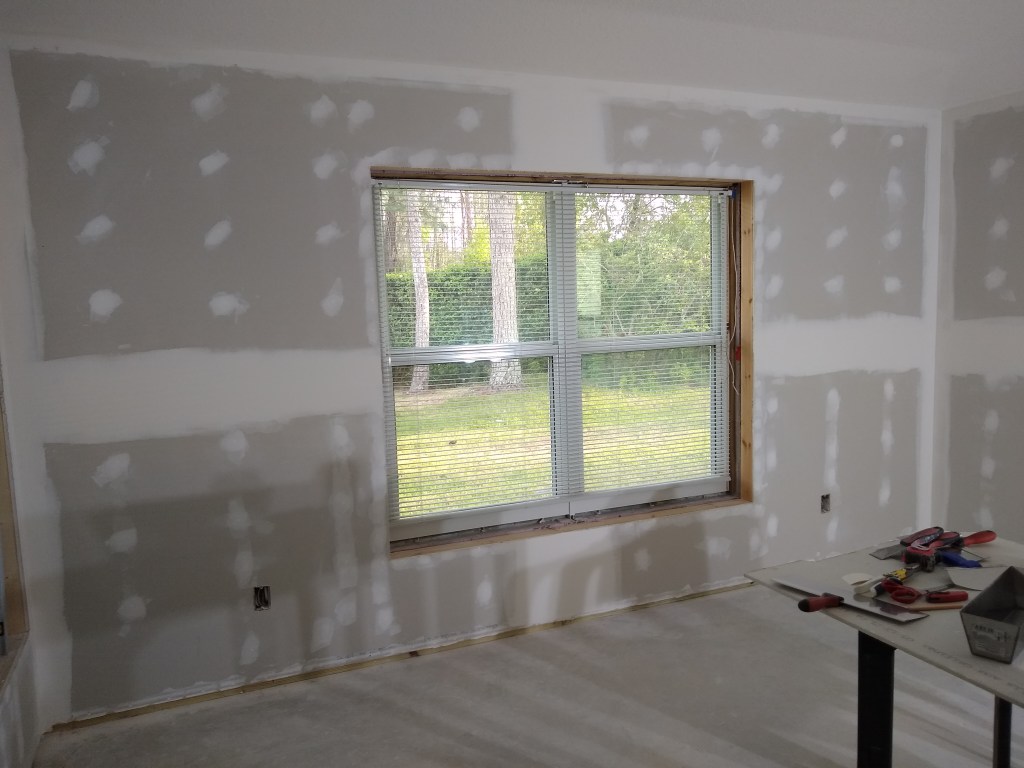
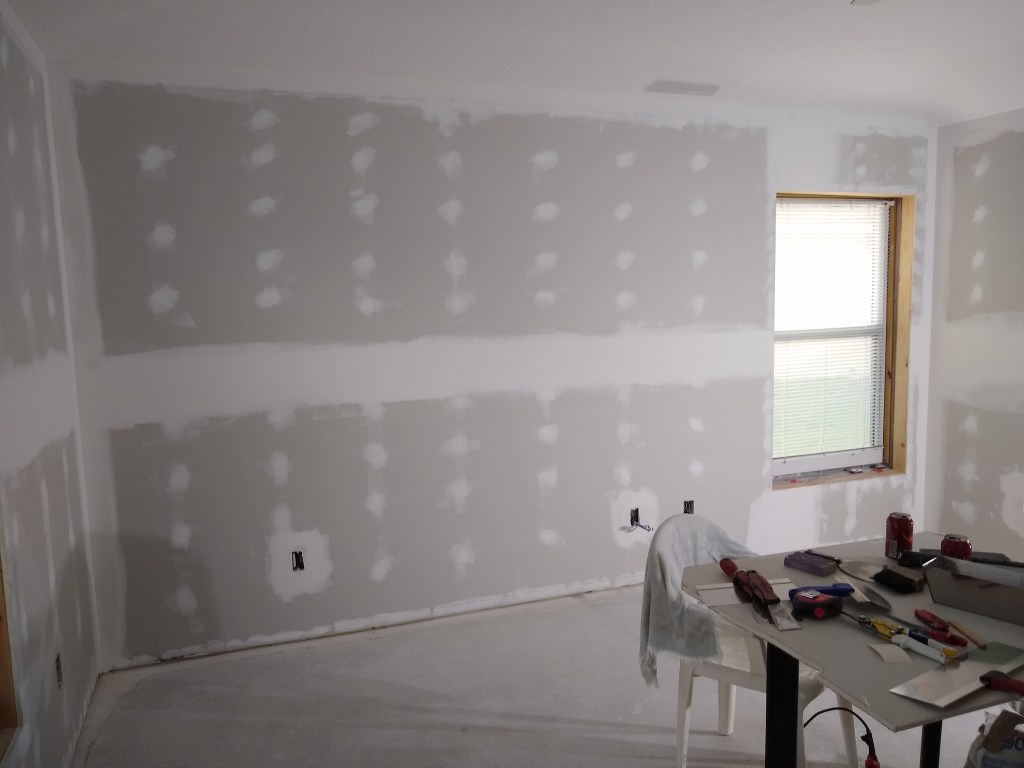

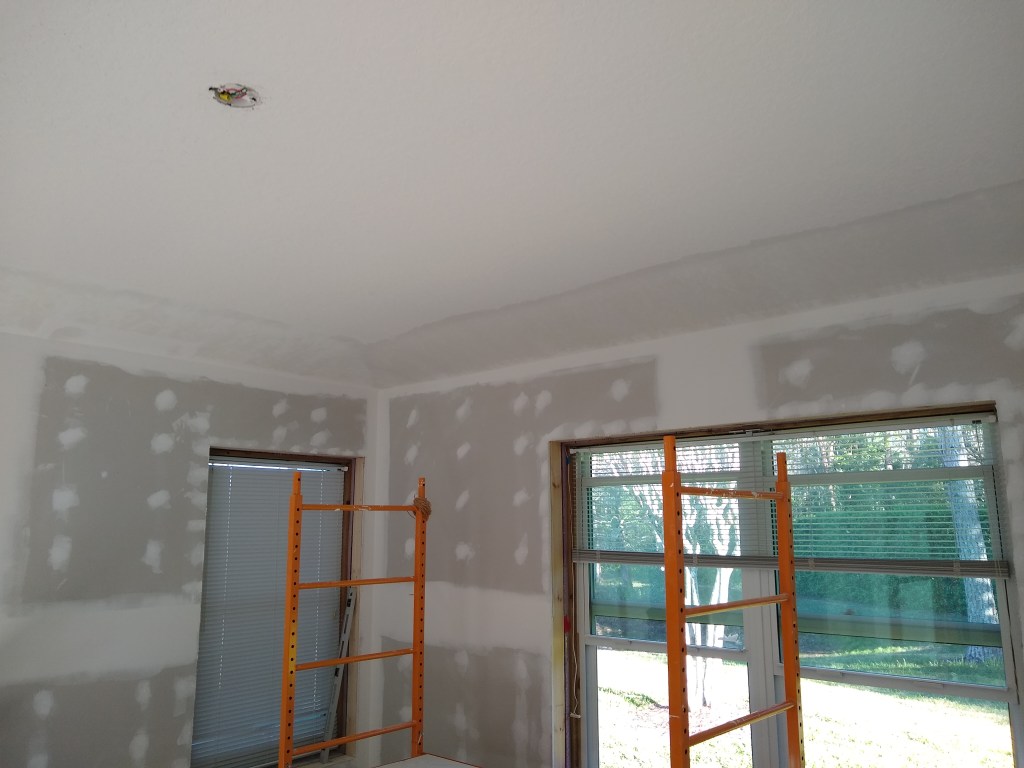
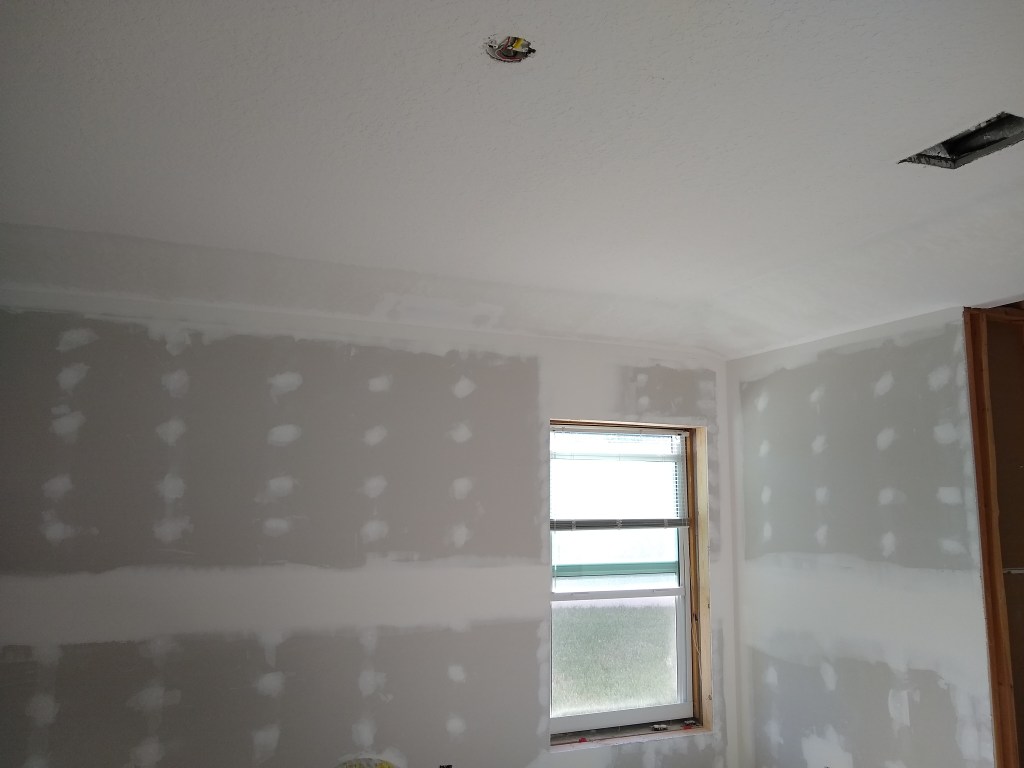
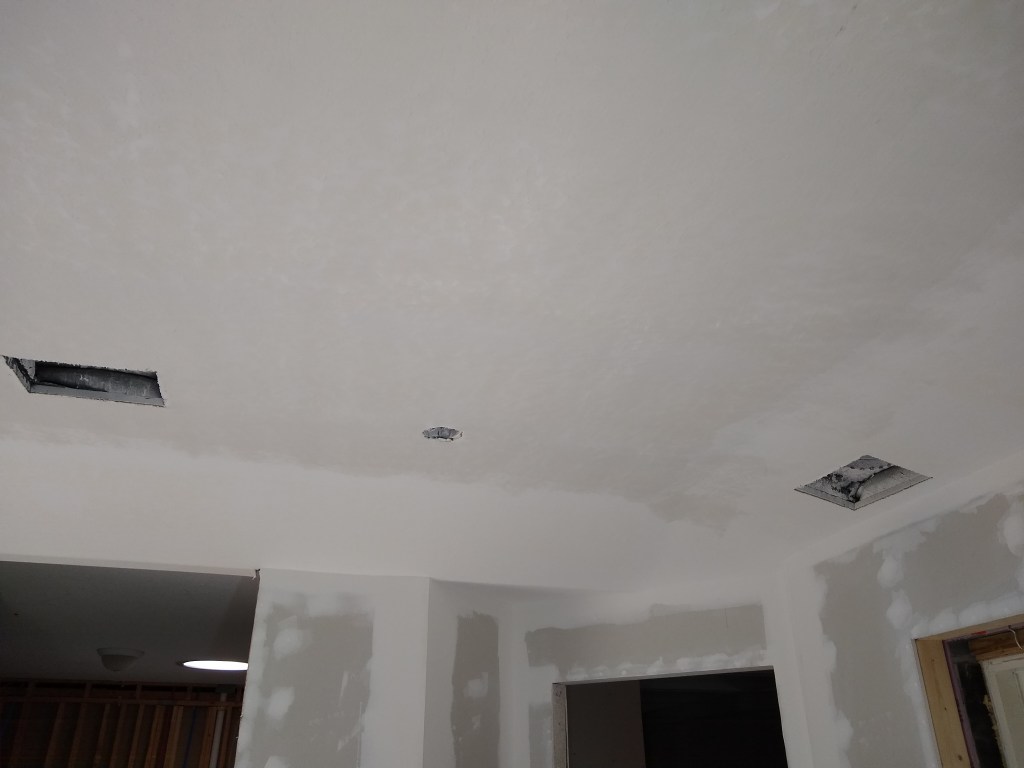


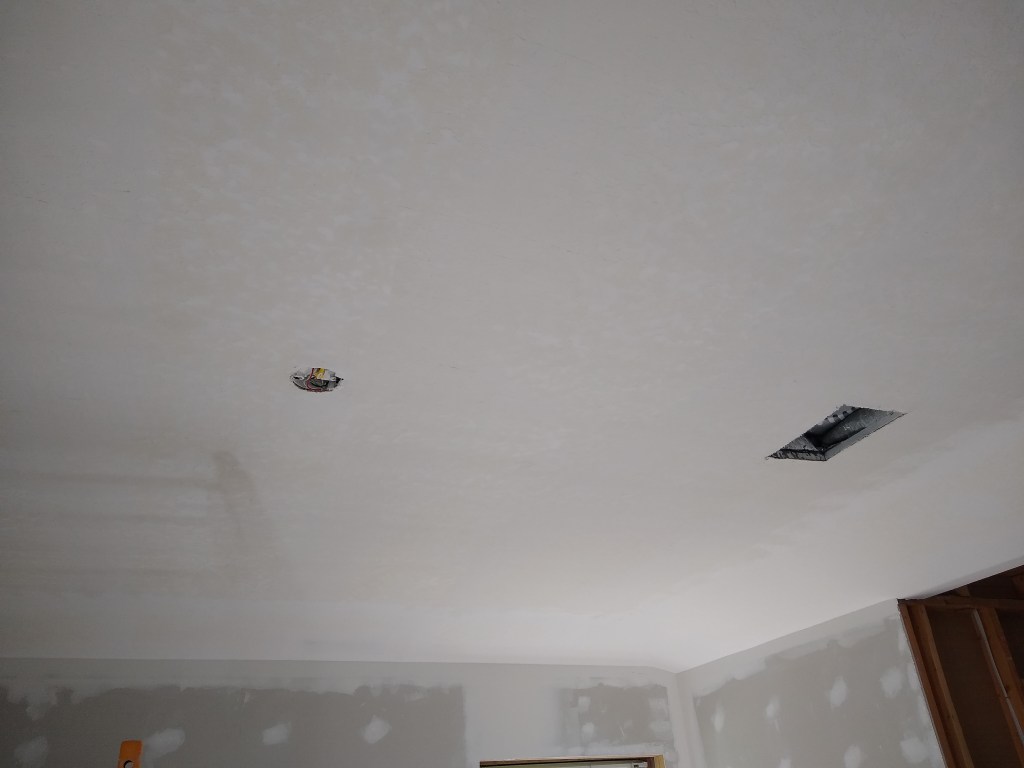

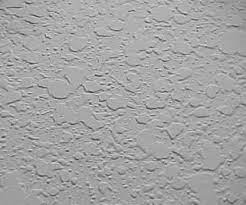
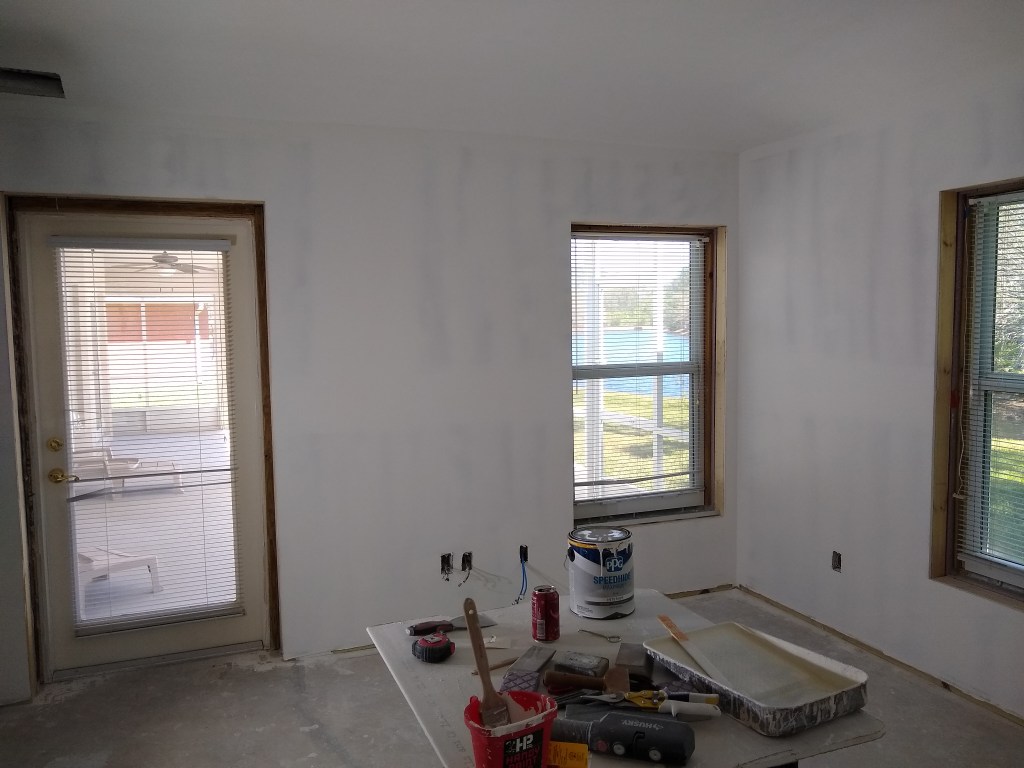


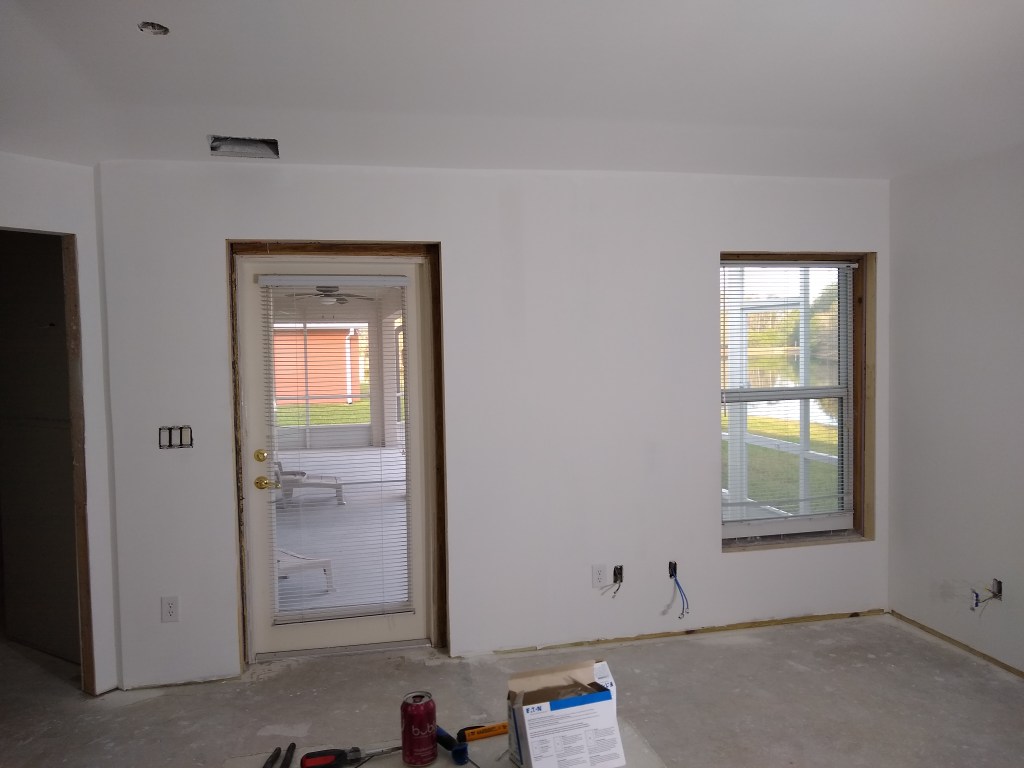
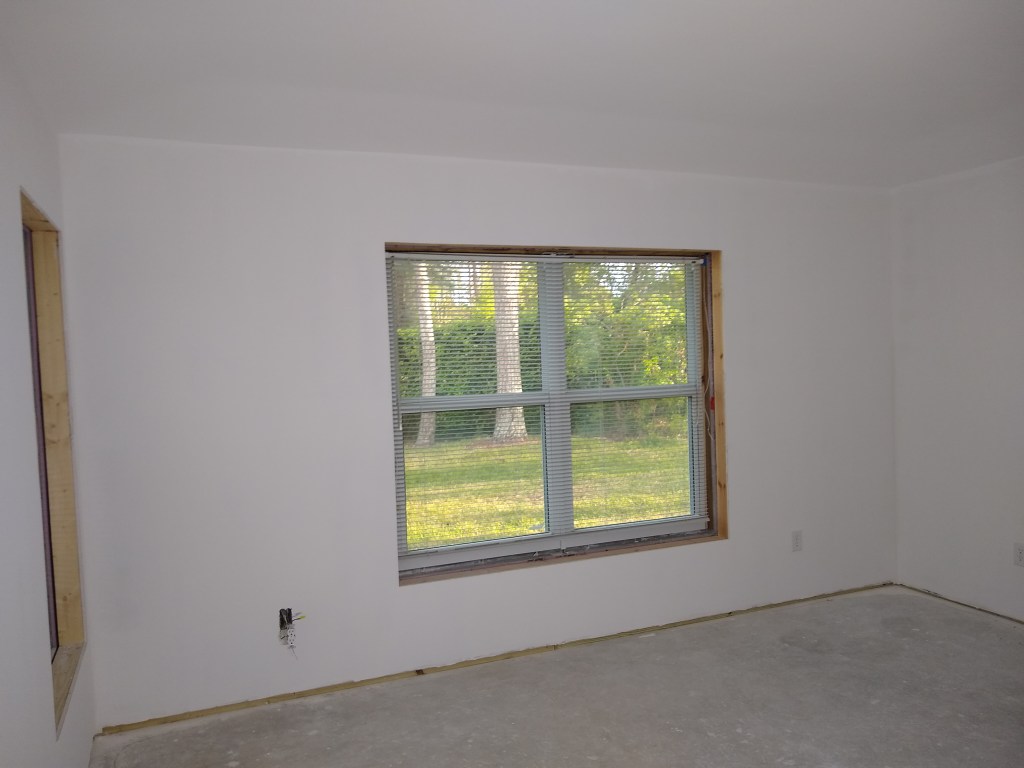
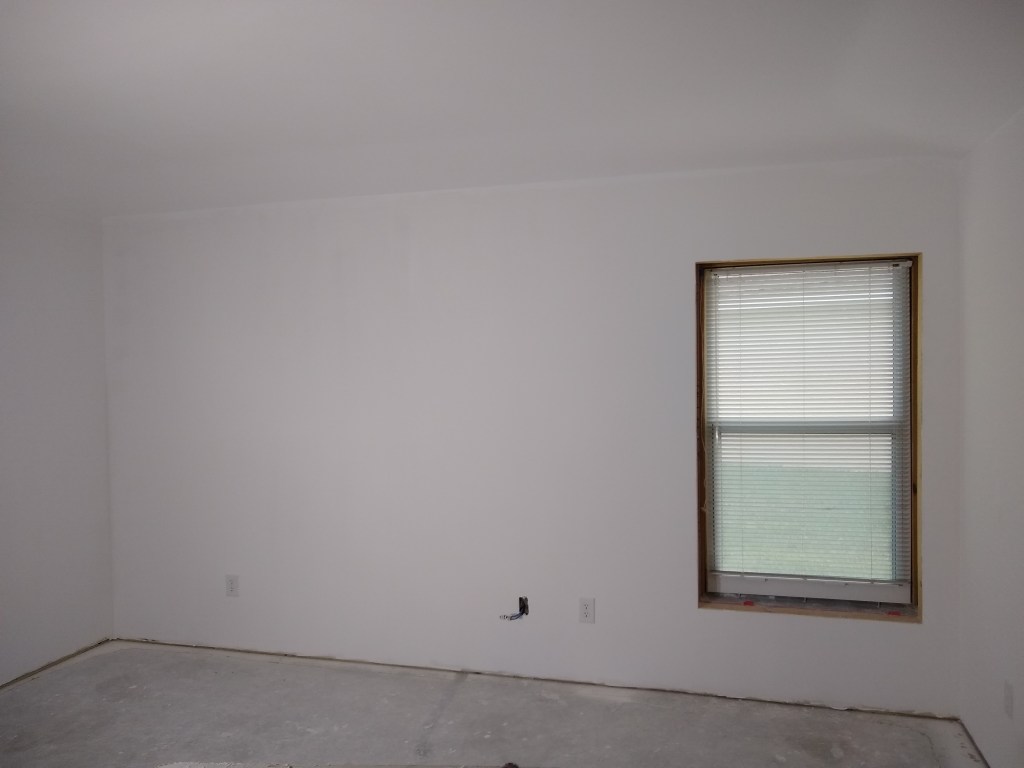

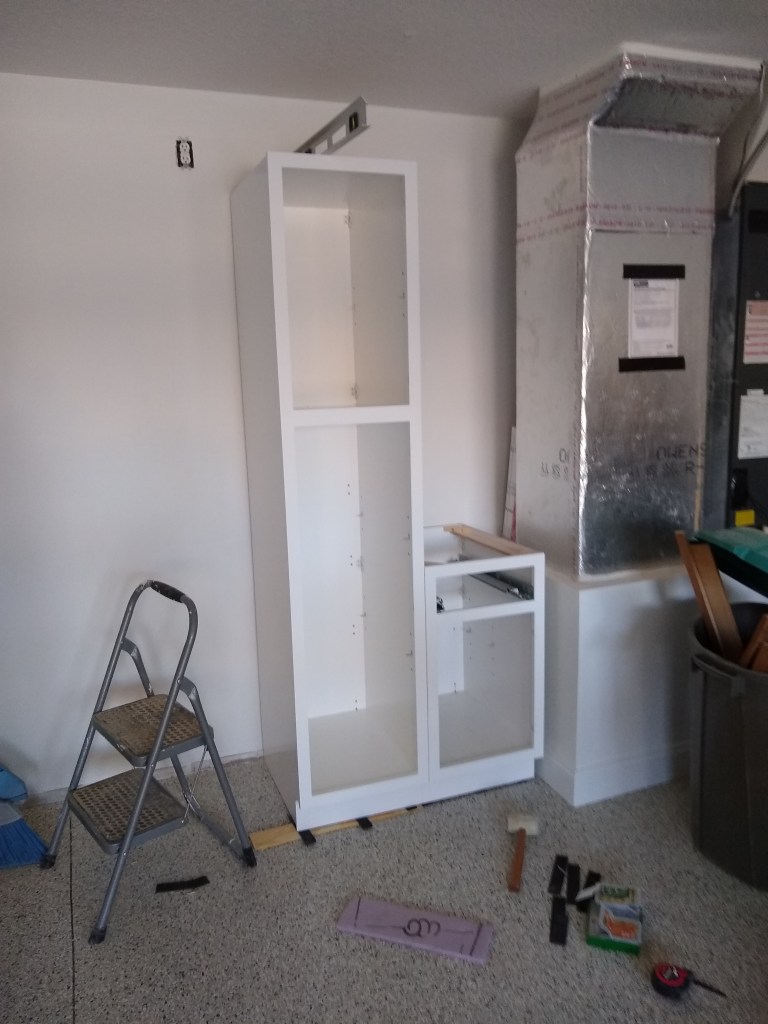
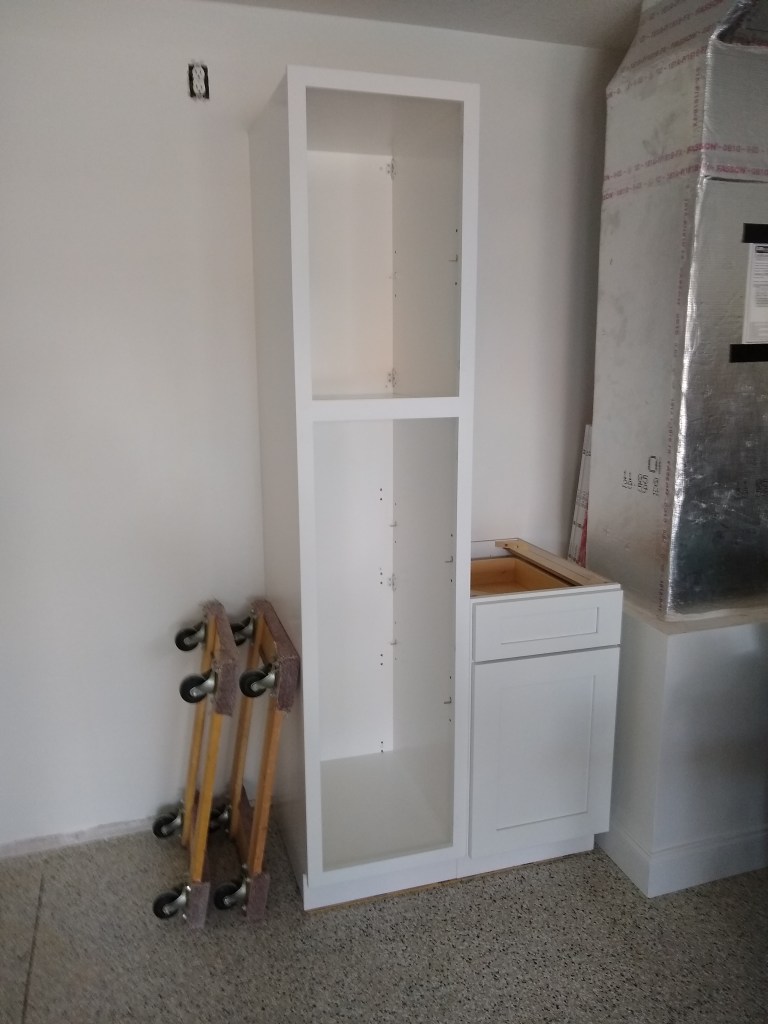
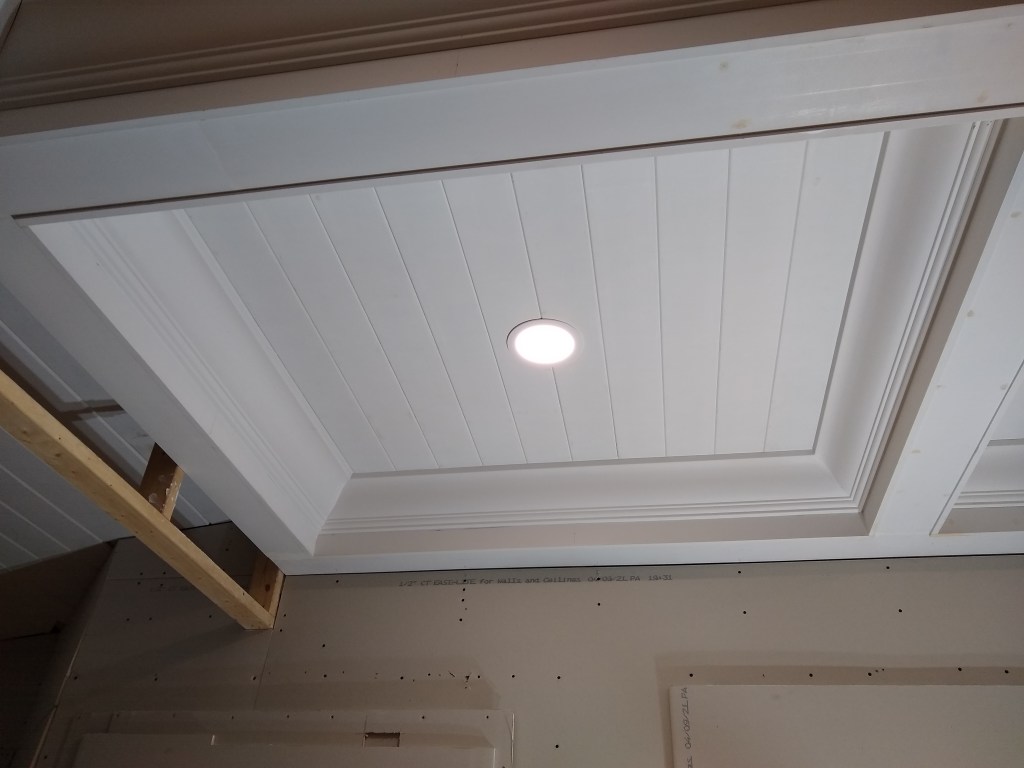

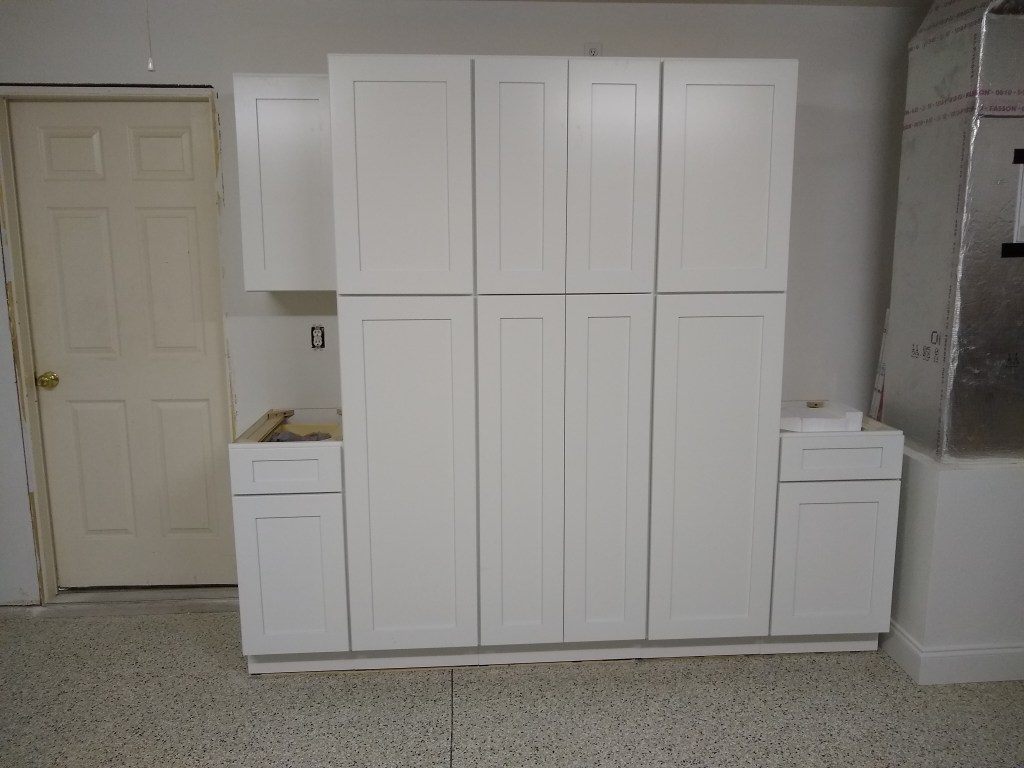

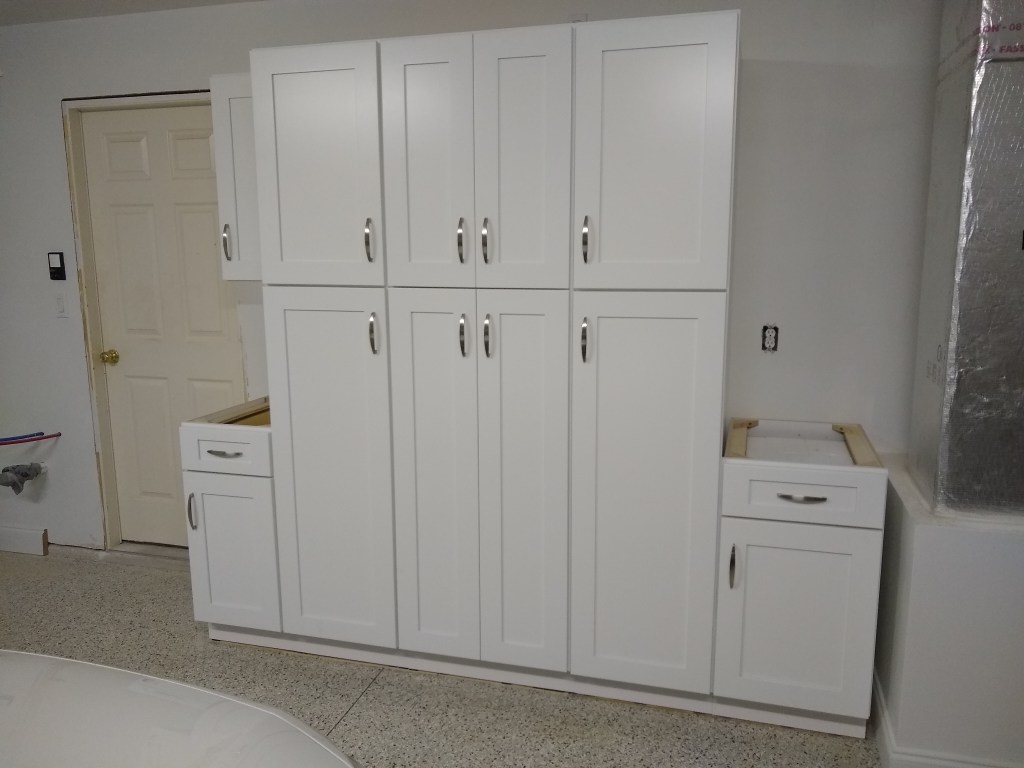
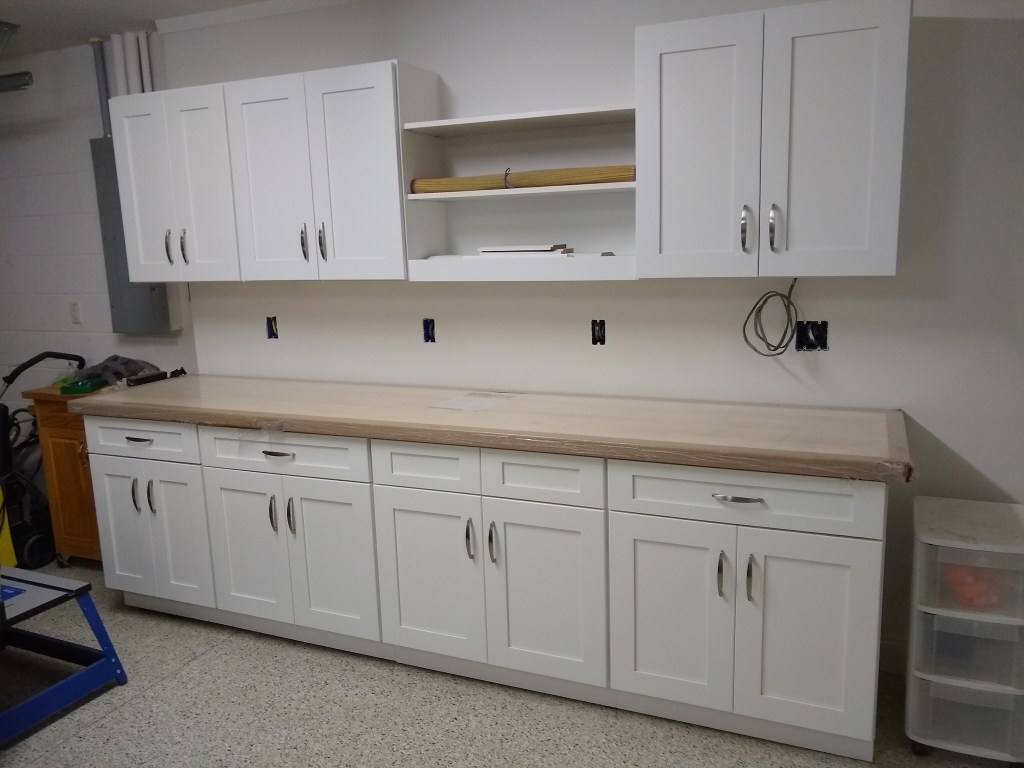


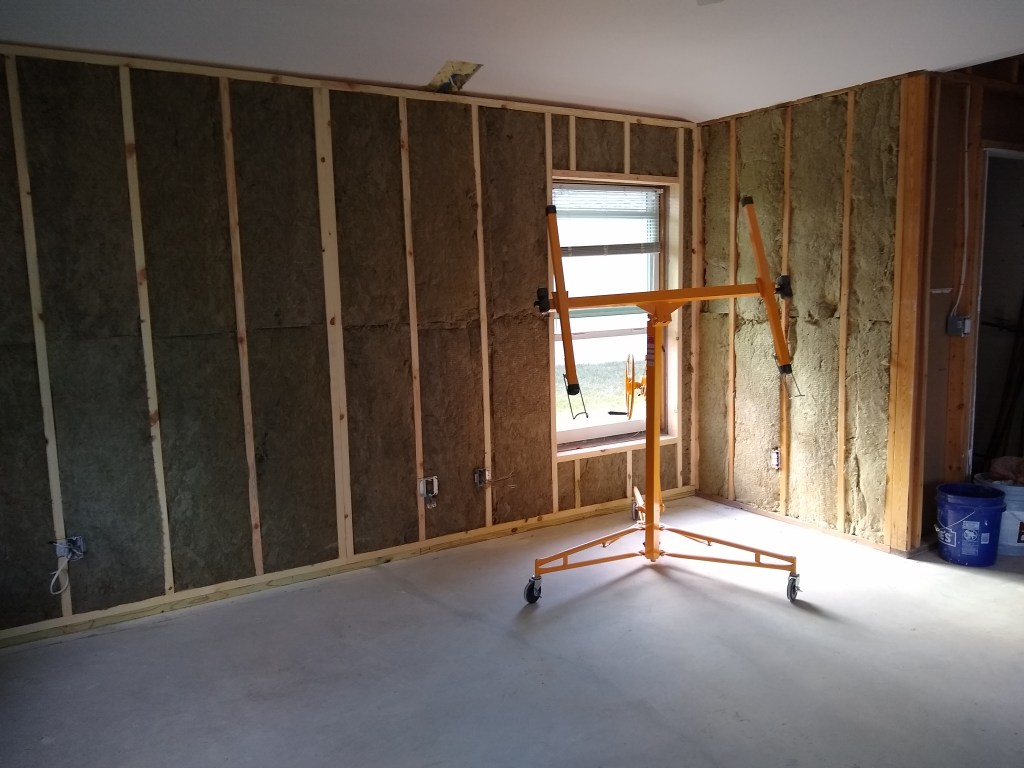
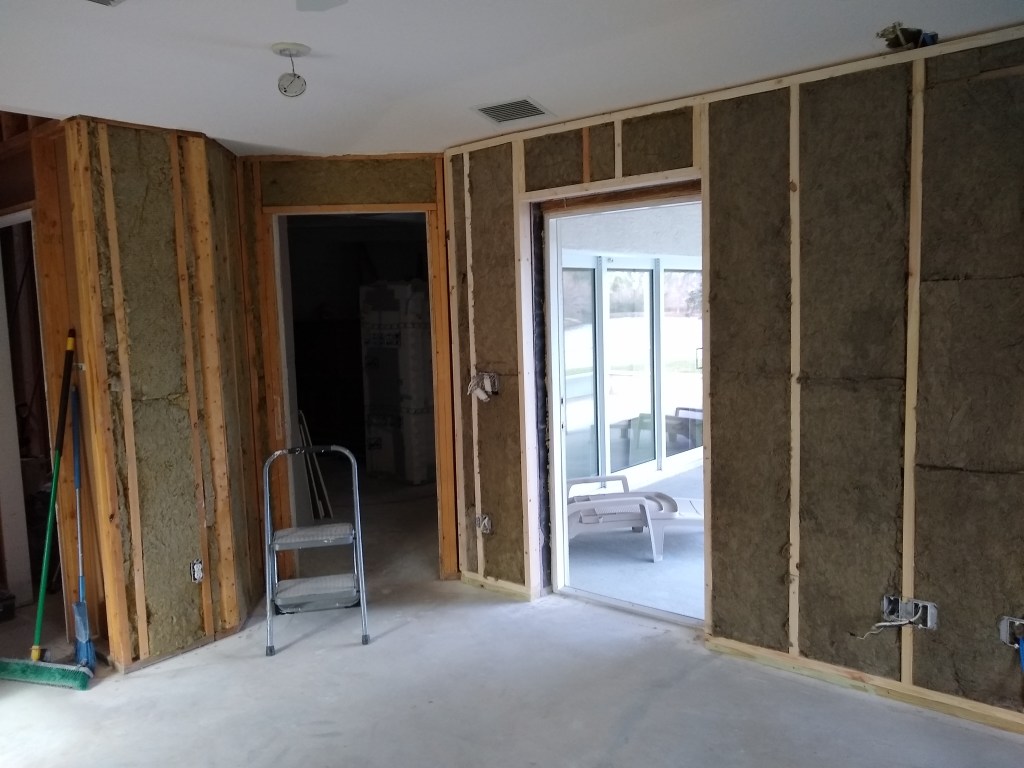

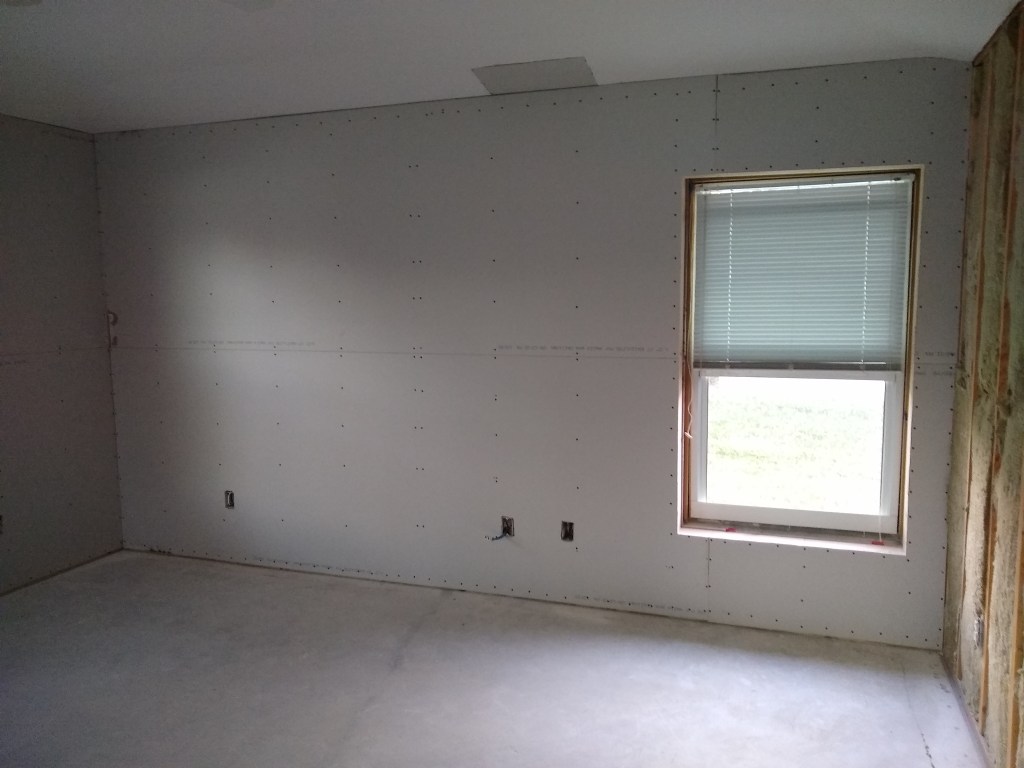
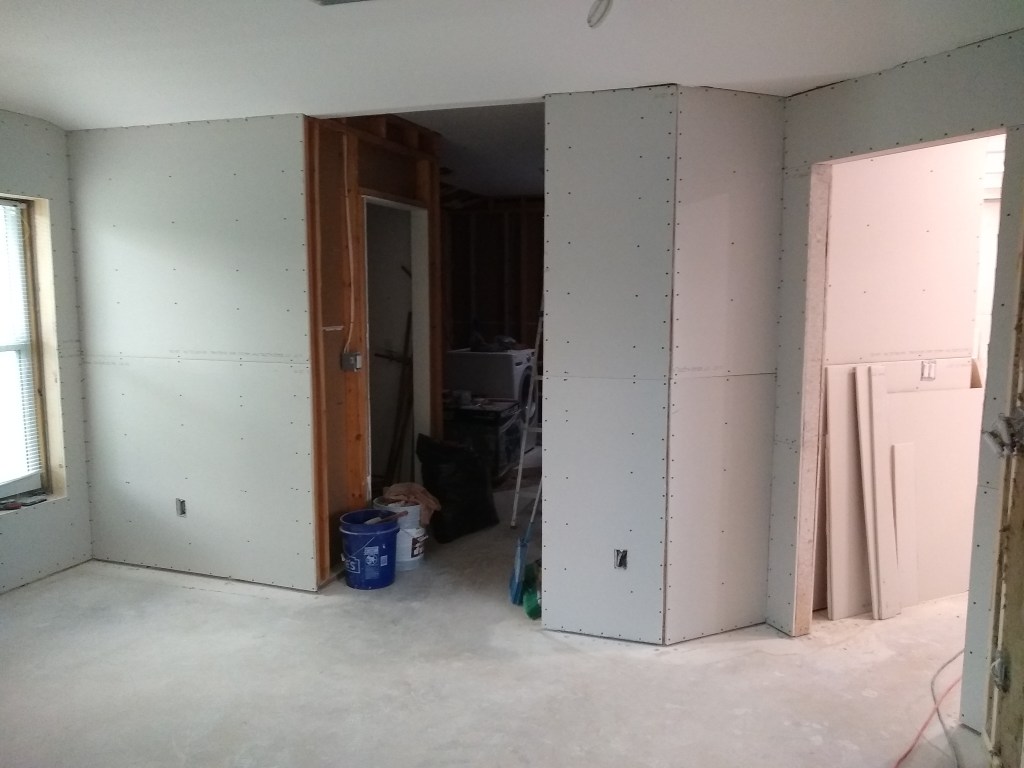

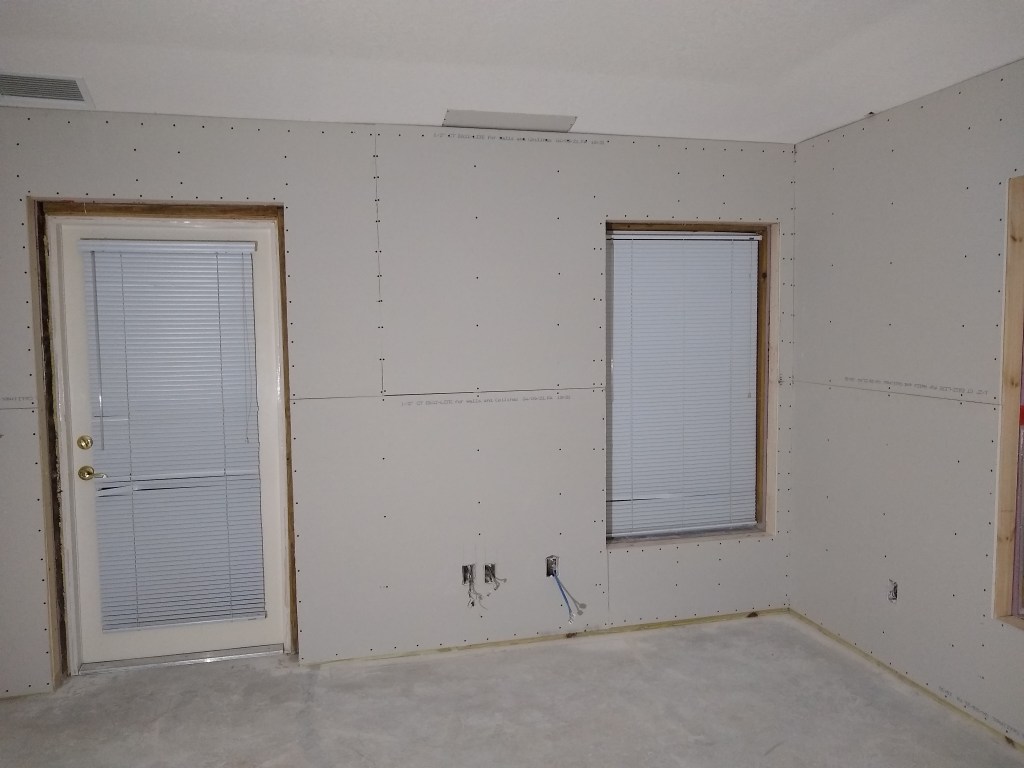


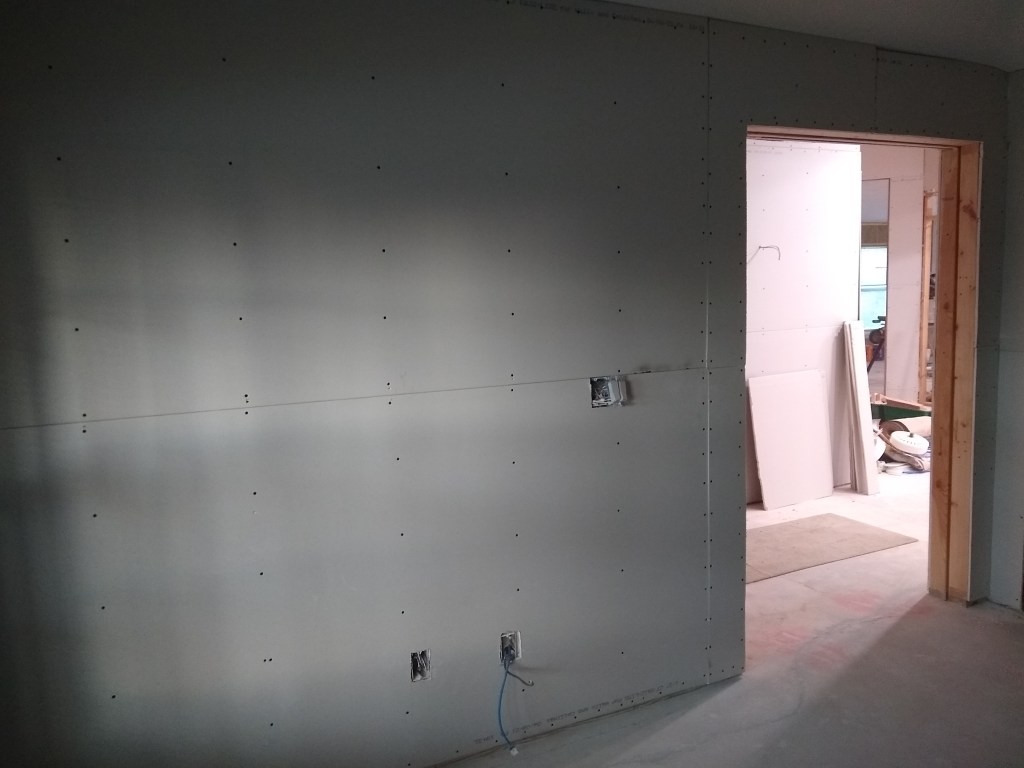
 nuntawob